Obama Hope Posters

2008Political poster / exploitable image templateclassic

Also known as: Hope Poster · Obama Hope · PROGRESS poster

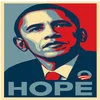
Obama Hope Posters is a 2008 political poster by street artist Shepard Fairey, featuring a red, white, and blue stylized portrait of Barack Obama with the word "Hope," becoming the most recognizable image of the 2008 election.

The Obama "Hope" poster is a stylized red, white, and blue portrait of Barack Obama designed by Los Angeles street artist Shepard Fairey in January 2008. Distributed as posters, stickers, and free digital downloads during the presidential campaign, it became the single most recognizable image of the 2008 election. The poster also triggered a major copyright lawsuit between Fairey and the Associated Press that dragged on for years and ended with Fairey pleading guilty to destroying evidence.

TL;DR

The Obama "Hope" poster is a stylized red, white, and blue portrait of Barack Obama designed by Los Angeles street artist Shepard Fairey in January 2008.

Overview

The Obama "Hope" poster is a stencil-style portrait of Barack Obama rendered in flat blocks of red, beige, light blue, and dark blue, with a single word printed beneath the image1. The earliest version carried the word "PROGRESS," but the Obama campaign requested a switch to "HOPE" to align with their messaging8. Later editions used "CHANGE" and "VOTE" as well16.

Fairey shaded the face half blue and half red on purpose, representing the convergence of blue states and red states, left and right1. The upward gaze and strong contrast gave the image an idealized, almost propaganda-like quality that set it apart from standard campaign photography. Fairey told the Smithsonian he wanted something that "seemed to transcend the limitations of a photograph" and felt like "a passionate art piece" reflecting the idealism of the subject1.

The design drew on social realist traditions. Design writer Steven Heller placed it in a lineage of contemporary artists making "posters that break the mold not only in terms of color and style but also in message and tone"16. Fairey himself cited a photo of John F. Kennedy and the image of Abraham Lincoln on the U.S. five-dollar bill as visual touchstones16.

In October 2007, Shepard Fairey discussed Barack Obama's candidacy with publicist Yosi Sergant16. Sergant reached out to the Obama campaign for permission, which came through a few weeks before Super Tuesday16. Fairey completed the design in a single day using a photograph he found through Google Image Search1.

The source photo was taken by freelance photographer Mannie Garcia on April 27, 2006, at a National Press Club event in Washington, D.C.2. Garcia's assignment that day was to photograph George Clooney, who had just returned from visiting refugee camps in Darfur. Obama, then a junior senator from Illinois, accompanied Clooney at the news conference and wound up in several of Garcia's shots2. Garcia estimated he made a thousand images that day alone and never connected his photo to the poster until someone pointed it out more than a year later2.

Fairey announced the print on his Obey Giant website in late January 2008, writing: "I believe with great conviction that Barack Obama should be the next President"8. The screenprint was 24 by 36 inches in an edition of 350, with the "PROGRESS" version exclusive to OBEY and the "HOPE" offset print distributed by the Obama camp8. The edition sold out within minutes at $45 each, and Fairey used the revenue to fund 10,000 more prints for distribution at rallies17.

Origin & Background

Platform
Obey Giant website (poster sales), street art (wheat-pasting)
Key People
Shepard Fairey, Mannie Garcia, Yosi Sergant
Date
2008

In October 2007, Shepard Fairey discussed Barack Obama's candidacy with publicist Yosi Sergant. Sergant reached out to the Obama campaign for permission, which came through a few weeks before Super Tuesday. Fairey completed the design in a single day using a photograph he found through Google Image Search.

The source photo was taken by freelance photographer Mannie Garcia on April 27, 2006, at a National Press Club event in Washington, D.C.. Garcia's assignment that day was to photograph George Clooney, who had just returned from visiting refugee camps in Darfur. Obama, then a junior senator from Illinois, accompanied Clooney at the news conference and wound up in several of Garcia's shots. Garcia estimated he made a thousand images that day alone and never connected his photo to the poster until someone pointed it out more than a year later.

Fairey announced the print on his Obey Giant website in late January 2008, writing: "I believe with great conviction that Barack Obama should be the next President". The screenprint was 24 by 36 inches in an edition of 350, with the "PROGRESS" version exclusive to OBEY and the "HOPE" offset print distributed by the Obama camp. The edition sold out within minutes at $45 each, and Fairey used the revenue to fund 10,000 more prints for distribution at rallies.

How It Spread

Those initial 10,000 posters were mailed to supporters in states that hadn't yet held primaries or caucuses. Copies were handed out at Oprah's rally at USC, and a free downloadable version went up on Fairey's website so anyone could make their own sign. Sergant proved instrumental in getting posters into the hands of committed Obama supporters around the country.

By mid-February 2008, about a month after Fairey created the design, it was everywhere. Obama's campaign reached out directly, and the image was showing up at rallies, on C-SPAN, and on CNN. Obama met Fairey at a Los Angeles fundraiser, pulled the sticker from his pocket, and said "Wow, I love this image" and asked how he'd gotten it spread so fast.

Unofficial reproduction exploded. By July 2008, over 200,000 vinyl stickers had been printed. The Wall Street Journal began tracking eBay prices for the original prints, which climbed from $45 to $3,000 and hit $10,000 by June. A mixed-media painting by Fairey in the same style sold for $108,000 that July. By October 2008, Fairey and Sergant reported printing 300,000 posters, fewer than 2,000 of which were sold, the rest given away or displayed. Over 1,000,000 stickers were also printed and distributed.

At the Democratic National Convention in Denver, every vendor on the street had unauthorized pins, stickers, posters, and T-shirts bearing the design. Fairey himself was arrested during the convention for illegally posting art, spending a night in jail. Time magazine commissioned a similar portrait from Fairey for its 2008 Person of the Year cover.

How to Use This Meme

The "Hope" poster became one of the most reproduced political image templates. The typical process:

1

Start with a portrait photo, ideally showing the subject looking slightly upward

2

Apply a four-color filter (red, beige/cream, light blue, dark blue) to create the high-contrast stencil look

3

Add a single bold word beneath the image

Cultural Impact

The poster landed in major institutional collections. The National Portrait Gallery acquired Fairey's original collage for its permanent collection in January 2009. The Museum of Modern Art in New York holds an example of the *Obama Hope Gold* serigraph. Time magazine commissioned Fairey to create Obama's Person of the Year cover in December 2008.

The copyright case between Fairey and the AP became a reference point for debates about fair use and artistic freedom. Stanford's Fair Use Project took up Fairey's defense, framing the case as critical for "the right to fair use so that all artists can create freely". The AP's position, backed by their eventual partial victory, reinforced the principle that photojournalists deserve compensation when their work is used commercially. AP President Gary Pruitt said after sentencing that he hoped the case would "serve as a clear reminder to all of the importance of fair compensation for those who gather and produce original news content".

The poster also influenced political imagery in the opposite direction. The Obama "Joker" poster, created by 20-year-old student Firas Alkhateeb in January 2009, was partly inspired by Fairey's approach to Obama portraiture. Alkhateeb used Photoshop to apply Joker face paint from *The Dark Knight* over an Obama photograph, and an unknown person later added the caption "socialism". The Guardian called it "the American right's first successful use of street art".

Anti-Gaddafi protesters in Chicago co-opted the "Hope" style during the 2011 Libyan civil war, and *Mad* magazine parodied it with an Alfred E. Neuman "NOPE" poster.

Full History

After Obama won the election on November 4, 2008, the poster's afterlife shifted from campaign tool to cultural artifact and legal battleground.

In January 2009, art collectors Heather and Tony Podesta donated Fairey's original 60-by-44-inch collage to the Smithsonian's National Portrait Gallery. The work joined the permanent collection alongside portraits of George Washington by Gilbert Stuart and Richard Nixon by Norman Rockwell. Fairey also created a limited edition of serigraphs titled *Obama Hope Gold* through a partnership with Gemini G.E.L. printing studio and the Democratic National Committee.

The copyright fight started almost immediately. The Associated Press determined that Fairey's poster was based on a photograph they owned, and AP officials contacted Fairey's studio in late January 2009 demanding payment and a share of future revenue. On February 9, 2009, Fairey filed a pre-emptive lawsuit in federal court in Manhattan, asking a judge to declare that his poster was protected under fair use. His lawyers, including Anthony T. Falzone of Stanford's Fair Use Project, argued that Fairey had "transformed" the photograph into "a stunning, abstracted and idealized visual image that created powerful new meaning".

The AP fired back with a countersuit alleging copyright infringement, noting that the core elements of Garcia's photograph, the pose and expression, were clearly visible in Fairey's work. The central legal question was whether Fairey's creation counted as a "transformative" use of the photo, which would be allowed under fair use law.

The case took a damaging turn in October 2009. Fairey admitted he had lied about which photograph he used. He initially claimed to have worked from a wider shot showing Obama seated next to George Clooney, but the AP had correctly identified a close-up solo shot as the real source. Fairey's lawyers also revealed that he had destroyed documents and fabricated fake evidence, including altered printouts and fake stencil patterns, to hide which photo he actually used. His legal team at Stanford's Fair Use Project announced their intention to withdraw from the case.

In his own statement, Fairey apologized: "In an attempt to conceal my mistake I submitted false images and deleted other images. I sincerely apologize for my lapse in judgment". He maintained that the fair use argument still held regardless of which photo was used.

Fairey wrote a lengthy defense on his website, arguing that reference from photographs is a standard artistic technique taught at the Rhode Island School of Design, and that "illustrating from a photograph" is not "cheating". He pointed out that Garcia himself had not recognized the poster as being based on his photo for over a year, and that the photo was "now more famous and valuable than it ever would have been" without the poster.

The civil suit settled in January 2011. Both sides agreed to share rights to make posters and merchandise bearing the "Hope" image, with confidential financial terms. Fairey agreed not to use another AP photo without obtaining a license. A separate infringement lawsuit against Obey Clothing was not included in the settlement.

The criminal case came next. In February 2012, Fairey pleaded guilty to one count of criminal contempt in Federal District Court in Manhattan for destroying documents and fabricating evidence. A prosecutor said the government was likely to seek imprisonment. In September 2012, Fairey was sentenced to two years of probation, 300 hours of community service, and a $25,000 fine, avoiding jail time despite the charge carrying a maximum of six months. In a statement, Fairey called his actions "wrong-headed" and "born out of a moment of fear and embarrassment".

Garcia, the photographer, navigated his own complicated position throughout the saga. He appeared on NPR's "Fresh Air" and admitted he never made the connection between his photo and the poster despite seeing it constantly. A Chelsea gallery began selling limited-edition prints of the original photograph for $1,200 each, with one purchased by the Museum of Fine Arts, Houston. Garcia also disputed the AP's ownership claim, arguing his freelance contract gave him the copyright. Cultural critic Luc Sante compared the Obama and Che Guevara photos, noting both shared "a key iconic feature: the subject is looking heavenward, and is posed against a neutral or empty background".

Fun Facts

Fairey sold his first 350 prints for $45 each. Resellers flipped them on eBay for up to $10,000 within months, much to Fairey's annoyance.

Mannie Garcia, the photographer whose image was used, didn't realize the poster was based on his photo until someone told him over a year after it was created. He still said he was "so proud of the photograph and that Fairey did what he did artistically with it".

The mystery of which photographer took the source image involved a months-long detective hunt by bloggers and gallery owners, with multiple false leads pointing to a Reuters photographer and a Getty photographer before Garcia was identified.

Fairey was arrested and spent a night in jail at the Denver Democratic National Convention for illegally posting his art, the same convention that nominated Obama.

Fairey's OBEY street art career started in 1989 with a sticker of wrestler Andre the Giant made on a whim while teaching a friend to make stencils at the Rhode Island School of Design.

Derivatives & Variations

"NOPE" / "DOPE" / "GROPE" parodies

— Anti-Obama and humorous variations replacing the slogan, widely distributed online and at political events[17].

McCain and Palin versions

— Opponents got the same treatment with words like "NOPE" beneath their portraits[7].

Obamicon.Me and Paste generators

— Web tools that let anyone create their own "Hope"-style poster from uploaded photos[13][16].

Obama "Joker" poster

— Firas Alkhateeb's Photoshop mashup placing Heath Ledger's Joker face paint on Obama, with "socialism" added by an unknown person[18].

Time Person of the Year cover

— Fairey created a commissioned portrait in the same style for Time's December 2008 cover[1].

The People's Cube political satires

— A satirical website collected and created dozens of "Hope"-style parodies featuring everyone from the Pope to Hitler to Winnie the Pooh[17].

Alfred E. Neuman "NOPE" poster

— *Mad* magazine's parody using their mascot in the "Hope" template[16].

Frequently Asked Questions

References (23)

  1. 1
  2. 2
  3. 3
  4. 4
  5. 5
  6. 6
  7. 7
  8. 8
  9. 9
  10. 10
  11. 11
  12. 12
  13. 13
  14. 14
  15. 15
  16. 16
  17. 17
  18. 18
  19. 19
  20. 20
  21. 21
  22. 22
  23. 23

ObamaHopePosters

2008Political poster / exploitable image templateclassic

Also known as: Hope Poster · Obama Hope · PROGRESS poster

Obama Hope Posters is a 2008 political poster by street artist Shepard Fairey, featuring a red, white, and blue stylized portrait of Barack Obama with the word "Hope," becoming the most recognizable image of the 2008 election.

The Obama "Hope" poster is a stylized red, white, and blue portrait of Barack Obama designed by Los Angeles street artist Shepard Fairey in January 2008. Distributed as posters, stickers, and free digital downloads during the presidential campaign, it became the single most recognizable image of the 2008 election. The poster also triggered a major copyright lawsuit between Fairey and the Associated Press that dragged on for years and ended with Fairey pleading guilty to destroying evidence.

TL;DR

The Obama "Hope" poster is a stylized red, white, and blue portrait of Barack Obama designed by Los Angeles street artist Shepard Fairey in January 2008.

Overview

The Obama "Hope" poster is a stencil-style portrait of Barack Obama rendered in flat blocks of red, beige, light blue, and dark blue, with a single word printed beneath the image. The earliest version carried the word "PROGRESS," but the Obama campaign requested a switch to "HOPE" to align with their messaging. Later editions used "CHANGE" and "VOTE" as well.

Fairey shaded the face half blue and half red on purpose, representing the convergence of blue states and red states, left and right. The upward gaze and strong contrast gave the image an idealized, almost propaganda-like quality that set it apart from standard campaign photography. Fairey told the Smithsonian he wanted something that "seemed to transcend the limitations of a photograph" and felt like "a passionate art piece" reflecting the idealism of the subject.

The design drew on social realist traditions. Design writer Steven Heller placed it in a lineage of contemporary artists making "posters that break the mold not only in terms of color and style but also in message and tone". Fairey himself cited a photo of John F. Kennedy and the image of Abraham Lincoln on the U.S. five-dollar bill as visual touchstones.

In October 2007, Shepard Fairey discussed Barack Obama's candidacy with publicist Yosi Sergant. Sergant reached out to the Obama campaign for permission, which came through a few weeks before Super Tuesday. Fairey completed the design in a single day using a photograph he found through Google Image Search.

The source photo was taken by freelance photographer Mannie Garcia on April 27, 2006, at a National Press Club event in Washington, D.C.. Garcia's assignment that day was to photograph George Clooney, who had just returned from visiting refugee camps in Darfur. Obama, then a junior senator from Illinois, accompanied Clooney at the news conference and wound up in several of Garcia's shots. Garcia estimated he made a thousand images that day alone and never connected his photo to the poster until someone pointed it out more than a year later.

Fairey announced the print on his Obey Giant website in late January 2008, writing: "I believe with great conviction that Barack Obama should be the next President". The screenprint was 24 by 36 inches in an edition of 350, with the "PROGRESS" version exclusive to OBEY and the "HOPE" offset print distributed by the Obama camp. The edition sold out within minutes at $45 each, and Fairey used the revenue to fund 10,000 more prints for distribution at rallies.

Origin & Background

Platform
Obey Giant website (poster sales), street art (wheat-pasting)
Key People
Shepard Fairey, Mannie Garcia, Yosi Sergant
Date
2008

In October 2007, Shepard Fairey discussed Barack Obama's candidacy with publicist Yosi Sergant. Sergant reached out to the Obama campaign for permission, which came through a few weeks before Super Tuesday. Fairey completed the design in a single day using a photograph he found through Google Image Search.

The source photo was taken by freelance photographer Mannie Garcia on April 27, 2006, at a National Press Club event in Washington, D.C.. Garcia's assignment that day was to photograph George Clooney, who had just returned from visiting refugee camps in Darfur. Obama, then a junior senator from Illinois, accompanied Clooney at the news conference and wound up in several of Garcia's shots. Garcia estimated he made a thousand images that day alone and never connected his photo to the poster until someone pointed it out more than a year later.

Fairey announced the print on his Obey Giant website in late January 2008, writing: "I believe with great conviction that Barack Obama should be the next President". The screenprint was 24 by 36 inches in an edition of 350, with the "PROGRESS" version exclusive to OBEY and the "HOPE" offset print distributed by the Obama camp. The edition sold out within minutes at $45 each, and Fairey used the revenue to fund 10,000 more prints for distribution at rallies.

How It Spread

Those initial 10,000 posters were mailed to supporters in states that hadn't yet held primaries or caucuses. Copies were handed out at Oprah's rally at USC, and a free downloadable version went up on Fairey's website so anyone could make their own sign. Sergant proved instrumental in getting posters into the hands of committed Obama supporters around the country.

By mid-February 2008, about a month after Fairey created the design, it was everywhere. Obama's campaign reached out directly, and the image was showing up at rallies, on C-SPAN, and on CNN. Obama met Fairey at a Los Angeles fundraiser, pulled the sticker from his pocket, and said "Wow, I love this image" and asked how he'd gotten it spread so fast.

Unofficial reproduction exploded. By July 2008, over 200,000 vinyl stickers had been printed. The Wall Street Journal began tracking eBay prices for the original prints, which climbed from $45 to $3,000 and hit $10,000 by June. A mixed-media painting by Fairey in the same style sold for $108,000 that July. By October 2008, Fairey and Sergant reported printing 300,000 posters, fewer than 2,000 of which were sold, the rest given away or displayed. Over 1,000,000 stickers were also printed and distributed.

At the Democratic National Convention in Denver, every vendor on the street had unauthorized pins, stickers, posters, and T-shirts bearing the design. Fairey himself was arrested during the convention for illegally posting art, spending a night in jail. Time magazine commissioned a similar portrait from Fairey for its 2008 Person of the Year cover.

How to Use This Meme

The "Hope" poster became one of the most reproduced political image templates. The typical process:

1

Start with a portrait photo, ideally showing the subject looking slightly upward

2

Apply a four-color filter (red, beige/cream, light blue, dark blue) to create the high-contrast stencil look

3

Add a single bold word beneath the image

Cultural Impact

The poster landed in major institutional collections. The National Portrait Gallery acquired Fairey's original collage for its permanent collection in January 2009. The Museum of Modern Art in New York holds an example of the *Obama Hope Gold* serigraph. Time magazine commissioned Fairey to create Obama's Person of the Year cover in December 2008.

The copyright case between Fairey and the AP became a reference point for debates about fair use and artistic freedom. Stanford's Fair Use Project took up Fairey's defense, framing the case as critical for "the right to fair use so that all artists can create freely". The AP's position, backed by their eventual partial victory, reinforced the principle that photojournalists deserve compensation when their work is used commercially. AP President Gary Pruitt said after sentencing that he hoped the case would "serve as a clear reminder to all of the importance of fair compensation for those who gather and produce original news content".

The poster also influenced political imagery in the opposite direction. The Obama "Joker" poster, created by 20-year-old student Firas Alkhateeb in January 2009, was partly inspired by Fairey's approach to Obama portraiture. Alkhateeb used Photoshop to apply Joker face paint from *The Dark Knight* over an Obama photograph, and an unknown person later added the caption "socialism". The Guardian called it "the American right's first successful use of street art".

Anti-Gaddafi protesters in Chicago co-opted the "Hope" style during the 2011 Libyan civil war, and *Mad* magazine parodied it with an Alfred E. Neuman "NOPE" poster.

Full History

After Obama won the election on November 4, 2008, the poster's afterlife shifted from campaign tool to cultural artifact and legal battleground.

In January 2009, art collectors Heather and Tony Podesta donated Fairey's original 60-by-44-inch collage to the Smithsonian's National Portrait Gallery. The work joined the permanent collection alongside portraits of George Washington by Gilbert Stuart and Richard Nixon by Norman Rockwell. Fairey also created a limited edition of serigraphs titled *Obama Hope Gold* through a partnership with Gemini G.E.L. printing studio and the Democratic National Committee.

The copyright fight started almost immediately. The Associated Press determined that Fairey's poster was based on a photograph they owned, and AP officials contacted Fairey's studio in late January 2009 demanding payment and a share of future revenue. On February 9, 2009, Fairey filed a pre-emptive lawsuit in federal court in Manhattan, asking a judge to declare that his poster was protected under fair use. His lawyers, including Anthony T. Falzone of Stanford's Fair Use Project, argued that Fairey had "transformed" the photograph into "a stunning, abstracted and idealized visual image that created powerful new meaning".

The AP fired back with a countersuit alleging copyright infringement, noting that the core elements of Garcia's photograph, the pose and expression, were clearly visible in Fairey's work. The central legal question was whether Fairey's creation counted as a "transformative" use of the photo, which would be allowed under fair use law.

The case took a damaging turn in October 2009. Fairey admitted he had lied about which photograph he used. He initially claimed to have worked from a wider shot showing Obama seated next to George Clooney, but the AP had correctly identified a close-up solo shot as the real source. Fairey's lawyers also revealed that he had destroyed documents and fabricated fake evidence, including altered printouts and fake stencil patterns, to hide which photo he actually used. His legal team at Stanford's Fair Use Project announced their intention to withdraw from the case.

In his own statement, Fairey apologized: "In an attempt to conceal my mistake I submitted false images and deleted other images. I sincerely apologize for my lapse in judgment". He maintained that the fair use argument still held regardless of which photo was used.

Fairey wrote a lengthy defense on his website, arguing that reference from photographs is a standard artistic technique taught at the Rhode Island School of Design, and that "illustrating from a photograph" is not "cheating". He pointed out that Garcia himself had not recognized the poster as being based on his photo for over a year, and that the photo was "now more famous and valuable than it ever would have been" without the poster.

The civil suit settled in January 2011. Both sides agreed to share rights to make posters and merchandise bearing the "Hope" image, with confidential financial terms. Fairey agreed not to use another AP photo without obtaining a license. A separate infringement lawsuit against Obey Clothing was not included in the settlement.

The criminal case came next. In February 2012, Fairey pleaded guilty to one count of criminal contempt in Federal District Court in Manhattan for destroying documents and fabricating evidence. A prosecutor said the government was likely to seek imprisonment. In September 2012, Fairey was sentenced to two years of probation, 300 hours of community service, and a $25,000 fine, avoiding jail time despite the charge carrying a maximum of six months. In a statement, Fairey called his actions "wrong-headed" and "born out of a moment of fear and embarrassment".

Garcia, the photographer, navigated his own complicated position throughout the saga. He appeared on NPR's "Fresh Air" and admitted he never made the connection between his photo and the poster despite seeing it constantly. A Chelsea gallery began selling limited-edition prints of the original photograph for $1,200 each, with one purchased by the Museum of Fine Arts, Houston. Garcia also disputed the AP's ownership claim, arguing his freelance contract gave him the copyright. Cultural critic Luc Sante compared the Obama and Che Guevara photos, noting both shared "a key iconic feature: the subject is looking heavenward, and is posed against a neutral or empty background".

Fun Facts

Fairey sold his first 350 prints for $45 each. Resellers flipped them on eBay for up to $10,000 within months, much to Fairey's annoyance.

Mannie Garcia, the photographer whose image was used, didn't realize the poster was based on his photo until someone told him over a year after it was created. He still said he was "so proud of the photograph and that Fairey did what he did artistically with it".

The mystery of which photographer took the source image involved a months-long detective hunt by bloggers and gallery owners, with multiple false leads pointing to a Reuters photographer and a Getty photographer before Garcia was identified.

Fairey was arrested and spent a night in jail at the Denver Democratic National Convention for illegally posting his art, the same convention that nominated Obama.

Fairey's OBEY street art career started in 1989 with a sticker of wrestler Andre the Giant made on a whim while teaching a friend to make stencils at the Rhode Island School of Design.

Derivatives & Variations

"NOPE" / "DOPE" / "GROPE" parodies

— Anti-Obama and humorous variations replacing the slogan, widely distributed online and at political events[17].

McCain and Palin versions

— Opponents got the same treatment with words like "NOPE" beneath their portraits[7].

Obamicon.Me and Paste generators

— Web tools that let anyone create their own "Hope"-style poster from uploaded photos[13][16].

Obama "Joker" poster

— Firas Alkhateeb's Photoshop mashup placing Heath Ledger's Joker face paint on Obama, with "socialism" added by an unknown person[18].

Time Person of the Year cover

— Fairey created a commissioned portrait in the same style for Time's December 2008 cover[1].

The People's Cube political satires

— A satirical website collected and created dozens of "Hope"-style parodies featuring everyone from the Pope to Hitler to Winnie the Pooh[17].

Alfred E. Neuman "NOPE" poster

— *Mad* magazine's parody using their mascot in the "Hope" template[16].

Frequently Asked Questions

References (23)

  1. 1
  2. 2
  3. 3
  4. 4
  5. 5
  6. 6
  7. 7
  8. 8
  9. 9
  10. 10
  11. 11
  12. 12
  13. 13
  14. 14
  15. 15
  16. 16
  17. 17
  18. 18
  19. 19
  20. 20
  21. 21
  22. 22
  23. 23