Pigtail Theory
Published October 16, 2026
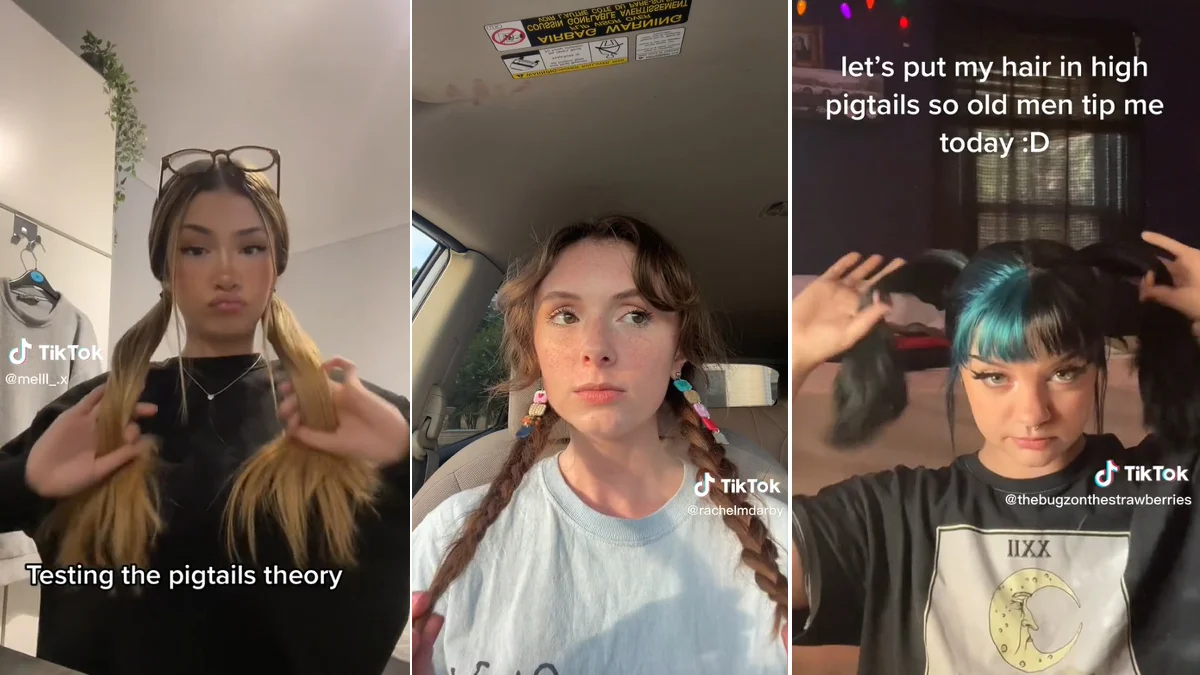
Pigtail Theory, also called Hair Theory, is a TikTok claim from late 2021 that women working as servers, bartenders and strippers earn bigger tips when they style their hair in pigtails. A September 2021 video from TikToker @aliveandwellandsexy kicked off a stream of test clips through 2022 and 2023, with waitresses filming before-and-after shifts to see if the hairstyle really changed their take-home. By March 2023, Business Insider and The Tab had both written it up as a working TikTok theory about hairstyles and customer behavior.
Overview
Posts about Pigtail Theory tend to follow a simple pattern. A service worker films herself wearing pigtails during or after a shift, then compares the tip total to a normal shift, usually finding that pigtail shifts bring in noticeably more cash1. Many creators blame older male customers who, in their telling, react to the hairstyle because it reads as younger or more girlish3. The tone sits somewhere between joke and resigned complaint, with women calling the trick gross while also recommending it to coworkers5.
Hair Theory is the related umbrella idea. It argues that any hairstyle, not just pigtails, changes how strangers behave toward the wearer, with pigtails only the most-cited example from waitressing videos5. Pigtails are the usual demonstration because the tip number is easy to measure and the before-and-after video edits well into a short clip.
Gallery
Origin & Background
How It Spread
Timeline
How to Use This Meme
A typical Pigtail Theory post is a short TikTok where a service worker films herself in pigtails at the start of a shift, then at the end counts her tips to the camera and compares them to a normal shift's take. Common conventions include calling out the age or type of customer who tipped the most, often framed as a complaint about older male regulars, and using captions like "testing hair theory" or "pigtails to work again"6.
Frequently Asked Questions
References (8)
- 1
- 2
- 3
- 4
- 5
- 6
- 7
- 8