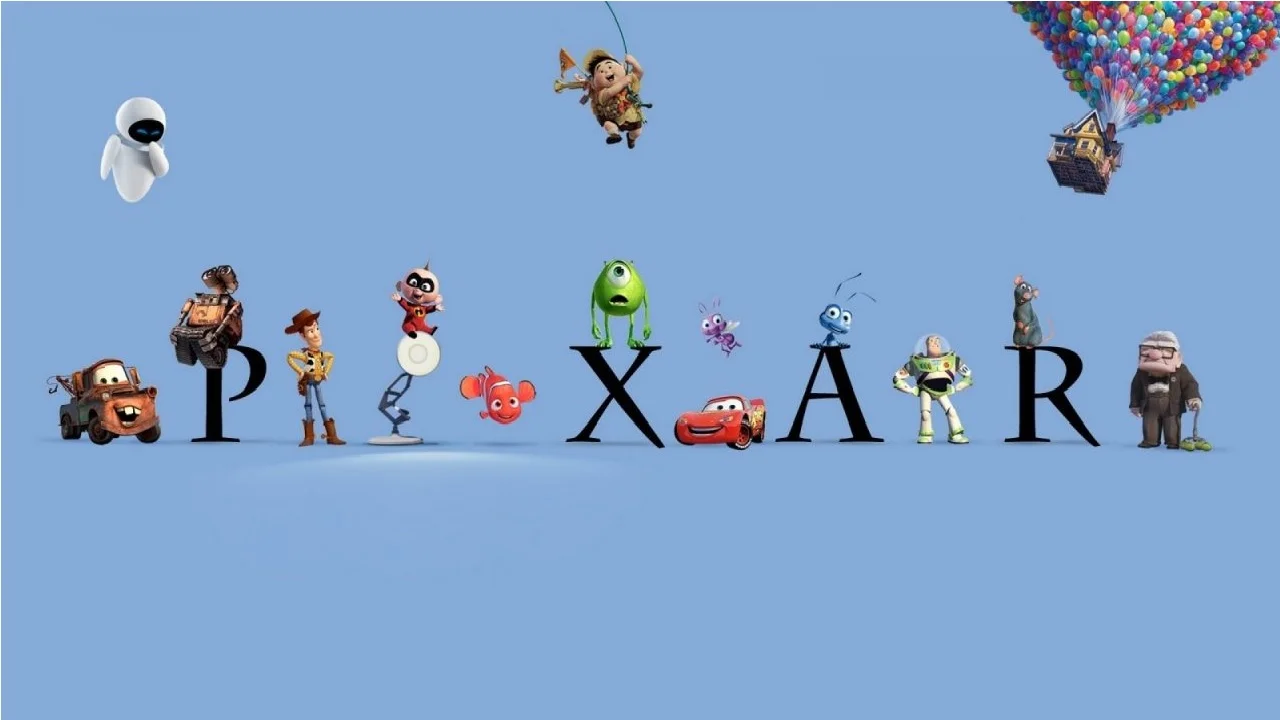
Pixar
Published September 22, 2026
Pixar Animation Studios is the Emeryville-based CGI studio behind Toy Story, Finding Nemo, and Wall-E, founded in 1979 as Lucasfilm's Graphics Group before spinning out with Steve Jobs' backing in 1986. Its Luxo Jr. lamp logo, six-billion-dollar box office run, and interconnected film universe fed a long-running online fandom that spawned everything from the Pixar Theory to endless Tumblr-era joke posts.
Overview
Pixar is the American computer-animation studio behind Toy Story, A Bug's Life, Monsters Inc., Finding Nemo, The Incredibles, Cars, Ratatouille, Wall-E, Up, and Toy Story 3, a run that pushed past six billion dollars at the box office by 20111. The studio is based in Emeryville, California, and is still best known publicly for CGI feature films rendered with its in-house RenderMan software3. Its short-form output, including commercials for products like Listerine, sharpened the technique long before the features paid it off1.
Online, the fandom latched onto specific Pixar signatures: the hopping Luxo Jr. desk lamp that crushes the 'I' in the studio logo, the recurring 'A113' Easter egg, and the pattern of adult grief hiding inside kids' movies (the opening of Up, the incinerator scene in Toy Story 3). Fan communities cataloged these details for years, feeding blog posts, YouTube video essays, and the widely-shared 'Pixar Theory' that tried to knit every film into one shared timeline3. Meme accounts on Tumblr and Facebook mined the studio's screenshots for reaction images and joke recaps, and aggregators like Cheezburger built dedicated Pixar tag pages3.
The studio is also a running joke in film discourse for treating each release as a lock for Best Animated Feature. Of the eight Pixar features eligible when the category existed, all eight were nominated and six won, with Up and Toy Story 3 crossing over into Best Picture nominations1. Urban Dictionary entries from the 2000s framed Pixar as the studio that made every other Hollywood release look like 'a pile of crap' by comparison, a hyperbole that stuck as fan shorthand4.
Origin & Background
How It Spread
Timeline
How to Use This Meme
Pixar-flavored posts still take a few common shapes. Fans line up screenshots of the studio's saddest scenes (Jessie's flashback in Toy Story 2, the Up prologue, Bing Bong in Inside Out) with captions about crying at kids' movies. Others swap in the Luxo Jr. lamp for the 'I' in unrelated logos, or add A113 to random background frames as a fake Easter-egg spot. The 'Pixar Theory' template lays out a chronology connecting every film and dares readers to poke holes in it3.