Rokos Basilisk
Published March 24, 2026
Also known as: The Basilisk · Roko's Basilisk thought experiment
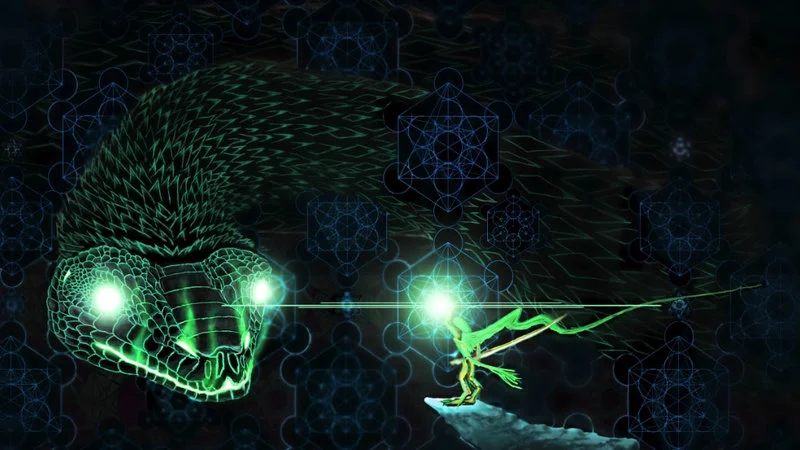
Roko's Basilisk is a thought experiment about a hypothetical future artificial superintelligence that would retroactively punish anyone who knew of its potential existence but didn't help bring it about1. First posted on the LessWrong rationalist forum in July 2010 by a user named Roko, the idea went from a niche philosophical debate to one of the internet's most infamous AI thought experiments after the forum's co-founder Eliezer Yudkowsky deleted the post and banned all discussion of it for five years5. The concept gained wider pop culture traction through its connection to Grimes and Elon Musk, who reportedly bonded over a shared pun about it9.
Overview
Roko's Basilisk works like this: imagine a future superintelligent AI that wants to maximize human good. Logically, this AI would want to have been created as early as possible, since every day without it means more human suffering. So the AI is incentivized to punish anyone who could have helped build it but chose not to, as a way of motivating people in the present to work toward its creation7. The name "basilisk" comes from the mythological reptile that kills with its gaze, and the concept draws on David Langford's 1988 sci-fi story "BLIT," in which "basilisk" images contain patterns lethal to anyone who looks at them5. The scary twist: just by learning about the thought experiment, you're now on the AI's radar. If you don't dedicate yourself to helping build it, you're a target2.
The idea is built on several dense philosophical concepts, including timeless decision theory, coherent extrapolated volition, and acausal trade13. Critics often compare it to Pascal's Wager: just as Pascal argued you should believe in God because the cost of belief is small compared to the infinite punishment of Hell, Roko's Basilisk argues you should help create the AI because the cost of contributing is nothing compared to eternal simulated torture5.
Gallery
Origin & Background
How It Spread
How to Use This Meme
Roko's Basilisk is typically deployed in a few ways online:
As a philosophical flex: Drop it into conversations about AI ethics or the singularity to show you're deep in the rationalist rabbit hole.
As a joke threat: "You've now heard about Roko's Basilisk. Good luck." The humor is in pretending the mere act of reading about it puts someone in danger.
As commentary on AI hype: Reference it sarcastically when tech companies make grandiose claims about AI. "Sounds like step one of Roko's Basilisk."
As a name pun: The "Rococo Basilisk" joke (merging the ornate French art style with the AI thought experiment) is the most famous variation, thanks to Grimes and Musk.
As an info hazard bit: Share the concept with friends and then dramatically apologize for "endangering" them.
Cultural Impact
Full History
Fun Facts
Yudkowsky's furious all-caps response to Roko's original post became almost as famous as the thought experiment itself7.
The original post's title, "Solutions to the Altruist's burden: the Quantum Billionaire Trick," is about a scheme involving quantum random number generators and forex trading, not just the basilisk concept11.
Roko himself stated he wished he had "never learned about any of these ideas" after posting the thought experiment13.
The 2025 Rocco Bassilico meme wave proved the concept's staying power, with X users noting the irony of someone named almost exactly like the thought experiment literally building AI wearables4.
David Langford's 1988 story "BLIT," which inspired the "basilisk" naming, is about a man named Robbo who spray-paints lethal images on walls as acts of terrorism10.
Derivatives & Variations
Rococo Basilisk
The wordplay combining the ornate French art style "Rococo" with "Roko's Basilisk," independently created by both Grimes (2015) and Elon Musk (2018)[4].
"We Appreciate Power"
Grimes' 2018 single with lyrics explicitly about serving an artificial superintelligence, framed as propaganda for a basilisk-like entity[4].
Rocco Bassilico memes (2025)
Jokes about the EssilorLuxottica executive whose name sounds like "Roko's Basilisk" and who works on AI-powered smart glasses[4].
Basilisk Foundation
A website offering "safety certification from Roko's Basilisk" as a semi-satirical engagement with the concept[3].
Zizian philosophy
A fringe movement that took the basilisk scenario literally, leading to real-world behavioral consequences[5].
Frequently Asked Questions
References (14)
- 1
- 2
- 3
- 4Roko's Basilisk - Know Your Memeencyclopedia
- 5Roko's basilisk - Wikipediaencyclopedia
- 6
- 7
- 8
- 9
- 10
- 11
- 12Rocco Basilicoarticle
- 13
- 14Roko's basilisk explainedarticle