Stay At Home Girlfriend
Published August 11, 2026
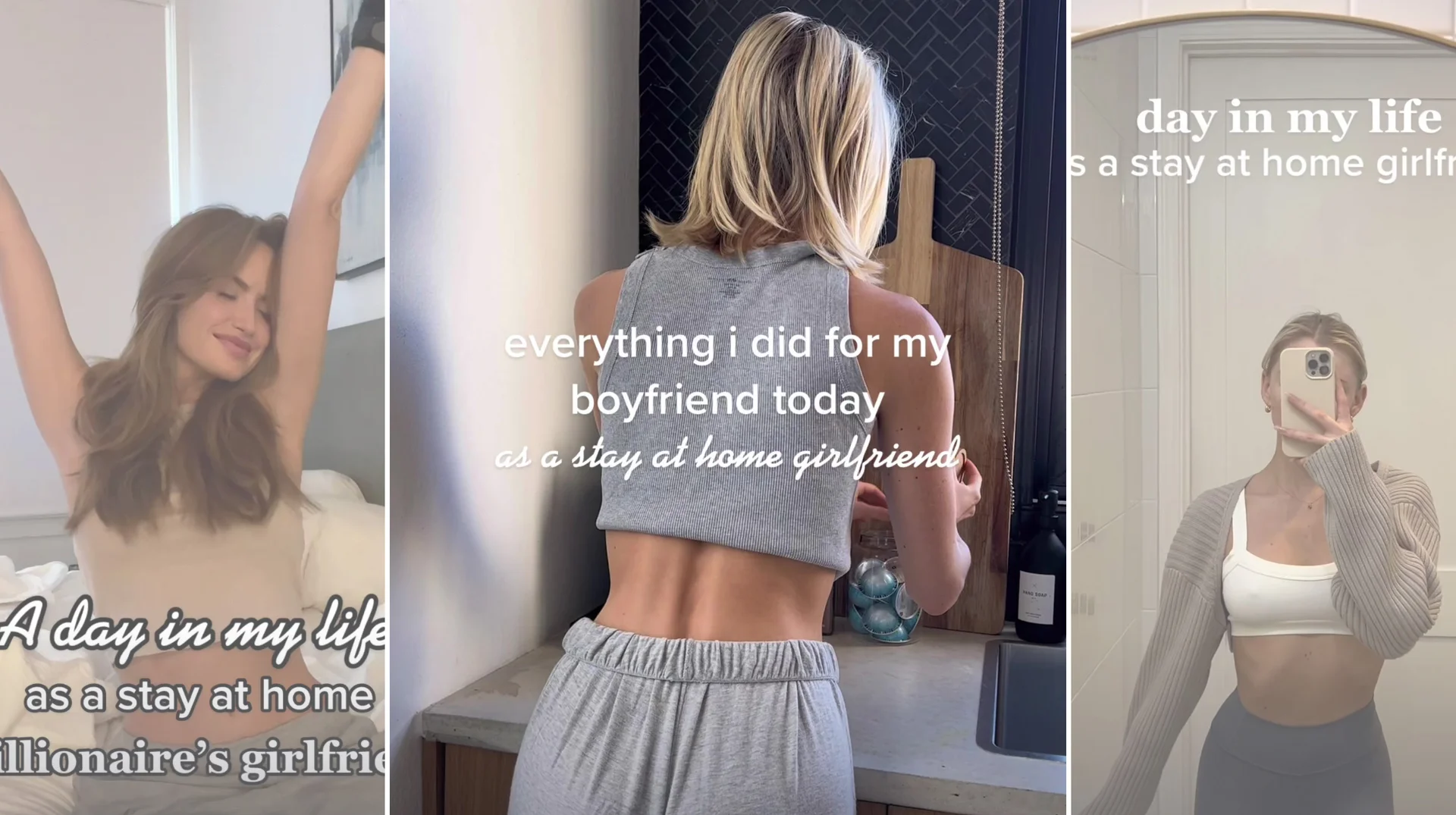
Stay At Home Girlfriend is a TikTok content genre where young women in heterosexual relationships film soft-lit day-in-the-life vlogs of routines paid for by their working boyfriends. The label first showed up on TikTok in January 2021 but exploded in fall 2022 after Kendel Kay's viral clips referencing her boyfriend Luke sparked mass discourse about financial dependence and gender roles.
Overview
Stay At Home Girlfriend is a TikTok content genre and self-applied label used by young, typically 20-something women whose boyfriends earn enough to cover shared expenses, freeing them up to film day-in-the-life vlogs at home1. A typical clip walks viewers through a slow morning routine involving green juice, a multi-step skin care regimen, Pilates or a walk, tidying the bedroom, and prepping meals for the boyfriend2. The framing openly borrows the 'stay at home mom' template minus the kids, and it treats the setup less as a joke than as an aspirational identity1.
The format became one of the most argued-about TikTok concepts of late 2022, drawing envy from viewers wanting the same low-stress schedule and sharp pushback from commenters worried it romanticized rigid gender roles and financial dependence on a partner3. Kendel Kay (@kendelkay), the creator most associated with the trend, picked up the nickname 'Luke's Girlfriend' because she named her boyfriend so often in a single vlog4. Parody accounts pushed the same aesthetic into darker territory, mimicking the vlogs' soft lighting and quiet music while joking that the boyfriend controlled the day2.
Gallery
Origin & Background
How It Spread
How to Use This Meme
A Stay At Home Girlfriend vlog is a soft-lit day-in-the-life set to lo-fi or dream-pop music, opening with the creator waking up without an alarm and moving through a green juice or smoothie, a lengthy skin care routine, Pilates or a hot girl walk, and prep work for the boyfriend's meals1. Text overlays often name the exact age of the creator, most famously '25-year-old stay at home girlfriend,' and stress that she does not work. Voiceover is common convention but not required, and creators typically end on either dinner service or a shared evening with the boyfriend2. Parody entries keep the format identical but subvert one line, often implying the boyfriend controls the money, the schedule, or even the creator's medication2.
Cultural Impact
Frequently Asked Questions
References (5)
- 1
- 2
- 3
- 4
- 5