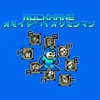
110 Million Memories Okkusenman
Published April 6, 2026
Also known as: Okkusenman · Omoide wa Okkusenman! · 思い出は億千万 · おっくせんまん
Omoide wa Okkusenman! (思い出は億千万, "110 Million Memories!") is a Japanese internet song built on a fan arrangement of the Dr. Wily's Castle stage theme from *Mega Man 2*. First posted to YouTube in February 2007 with collaboratively written lyrics about childhood nostalgia, the song exploded across Nico Nico Douga through hundreds of vocal covers and instrumental performances, becoming one of the defining songs of early NND culture.
Overview
Okkusenman is a fan-made song set to a rearranged version of the iconic Dr. Wily's Castle (Stage 1) theme from *Mega Man 2*. The arrangement was created by an individual known only as "Blue Fang" (蒼い牙, Aoi Kiba), while the lyrics were written collaboratively by anonymous users across Japanese internet communities3. The song's title roughly translates to "110 Million Memories" or "Countless Memories," and the lyrics follow a narrator looking back on his childhood with deep longing2.
The most memorable imagery in the song involves the narrator and his friends pretending to be heroes from the Japanese tokusatsu TV series *Ultraman* and *Ultra Seven*, holding spoons over their eyes to mimic the characters' signature eye pieces3. As the song progresses, it shifts from carefree childhood play to the quiet disappointment of adult life, where friends have scattered and days blur together1.
Gallery
Origin & Background
How It Spread
How to Use This Meme
Okkusenman is primarily a participatory music meme rather than a visual template. The most common forms are:
- Utattemita ("tried to sing") videos: Users record themselves singing along to the song's lyrics, often with the original Mega Man 2 footage or the Douro of DNA animation as backing video2. - Ensoushitemita ("tried to perform") videos: Instrumental covers by guitarists, violinists, pianists, and other musicians performing their own arrangements of the melody2. - Medley inclusion: The song commonly appears in NND mashup medleys spliced between other iconic platform songs2. - Nostalgic sharing: The song often gets posted in contexts about missing childhood or growing up, since its lyrics hit that specific emotional frequency1.
Cultural Impact
Fun Facts
The song's lyricist was never identified. Nico Nico Douga ran an active campaign to find them for a CD release and failed, confirming the lyrics were a genuine anonymous collaboration3.
The *Mega Man 2* stage theme that inspired Okkusenman was ranked the #2 greatest video game theme of all time by ScrewAttack2.
The word "okkusenman" (億千万) literally means "a hundred million and ten million" but is used colloquially to mean "countless" or "an enormous number"3.
One English-speaking fan described discovering the song through a piano medley and assumed it was just a Mega Man theme, only to be surprised when it turned out to have full lyrics about childhood nostalgia1.
The Animelo Summer Live 2008 performance featured five professional anime vocalists covering an anonymous internet song as an opening act3.
Derivatives & Variations
Gomu's vocal cover (2007):
The breakout version that defined how most people hear the song, with over 3 million YouTube views[2].
CHROMES vocal cover (2007):
The first NND-native vocal version, reaching 5.7 million views on the platform[2].
Douro of DNA flash animation (2007):
An original animated music video depicting the song's narrative rather than using game footage, with combined views exceeding 4 million across platforms[3].
JAM Project cover (2009):
A professional studio recording by one of Japan's most prominent anime vocal groups, included on the *Sainō no Mudazukai* album[3].
"Together as One" by Nano (2012):
An English-language adaptation on Sound Holic's officially licensed *Rockman Holic* album for the Mega Man 25th anniversary[3].
Frequently Asked Questions
References (4)
- 1
- 2
- 3
- 4Omoide wa Okkusenman!encyclopedia