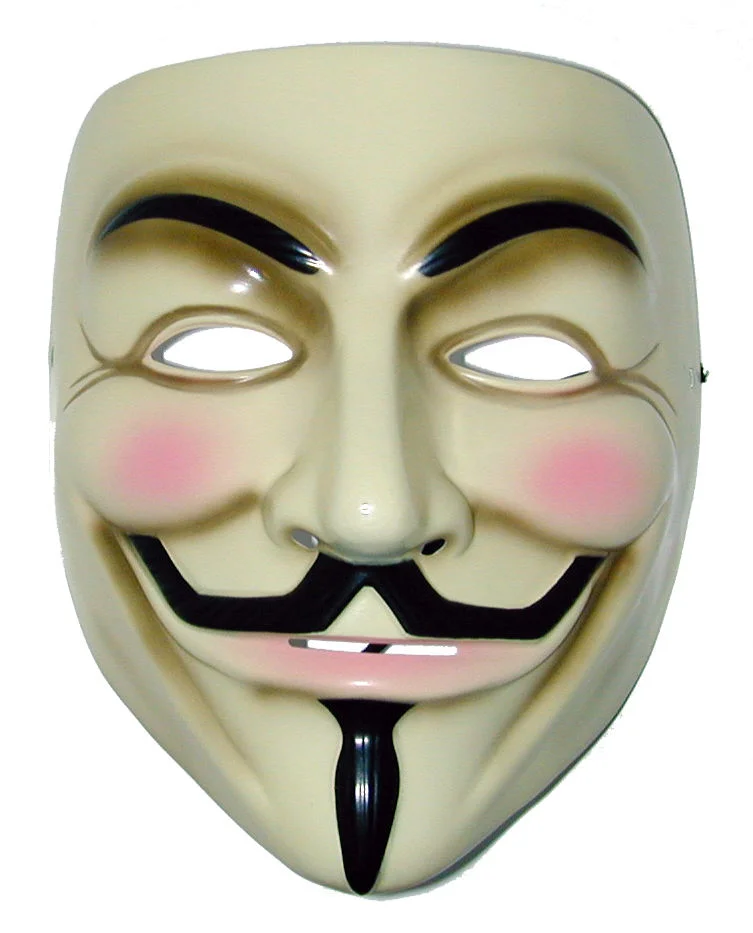
Anonymous
Published August 15, 2026
Anonymous is a leaderless collective of internet users best known for hacktivist campaigns against the Church of Scientology, PayPal, and various governments. The identity grew out of 4chan's default username in the mid-2000s and became a shared banner anyone could adopt for online protest and DDoS actions.
Overview
Anonymous is a loose, leaderless collective of internet users tied to hacktivism, online protest, and coordinated denial-of-service attacks1. Members organize through IRC channels, image boards, and social media, and anyone is free to claim the name or launch actions under the Anonymous banner without approval from anyone else5.
Because there is no membership roster or hierarchy, actions attributed to the group range from message-board stunts to multinational cyber campaigns that have drawn federal prosecutions across the US, UK, Netherlands, and Turkey3. Most Anonymous operations frame themselves as protests against censorship, corporate overreach, or government corruption, and are announced through video statements and press releases that use the group's shared 'We are Legion' vocabulary1.
Gallery
Origin & Background
How It Spread
How to Use This Meme
The Anonymous identity works less like a meme template and more like a badge anyone can pick up. People typically claim the name in text posts, videos, and manifestos to signal they are acting as part of the collective, with no verification or vetting involved5. Actions credited to Anonymous have ranged from message-board pranks to street protests to server-crashing DDoS raids, and the group's messages are usually framed as responses to a specific censorship or corruption target rather than a general slogan1.
Cultural Impact
Fun Facts
The Low Orbit Ion Cannon used in Operation Payback exposed users' real IP addresses, letting targeted websites hand server logs over to law enforcement1.
The only person publicly convicted for the 2008 Scientology DDoS was 19-year-old Dmitriy Guzner from Verona, New Jersey, sentenced days before his 20th birthday2.
GCHQ's Rolling Thunder attack against Anonymous IRC channels was the first known DDoS campaign run by a Western government, revealed through documents Edward Snowden took from the NSA5.
Turkish police arrested 32 alleged Anonymous members in a single sweep across a dozen cities in June 2011 over one protest against an internet-filtering plan3.
Actress Alyssa Milano modeled the Hacktivist comic's protagonist on Twitter cofounder Jack Dorsey, telling the Daily Dot she was 'obsessed' with the idea of 'what if Anonymous was one guy'7.
Derivatives & Variations
LulzSec, a smaller offshoot hacker group linked publicly to Anonymous through overlapping members including 'Tflow,' a 16-year-old arrested in the UK during the July 2011 PayPal roundup[1].
sve_Urs3lf, the fictional Anonymous stand-in group in the Hacktivist comic that Alyssa Milano co-conceived and Archaia published starting January 2014[7].
Frequently Asked Questions
References (7)
- 1
- 2
- 3
- 4
- 5
- 6
- 7