Goatse

1999Shock site / bait-and-switch prankclassic

Also known as: Goatse.cx · hello.jpg

Goatse was one of the internet's earliest and most infamous shock sites, hosted at goatse.cx from 1999 until its domain was suspended in 2004. Built around a single explicit photograph of a man stretching his anus, the site became the default weapon for bait-and-switch pranks across early web forums and chatrooms, turning "goatse" into a widely recognized verb for tricking someone into viewing something they can never unsee.

Overview

Goatse was a shock website hosting one graphic photograph of a man stretching his anus open with both hands1. Launched at the domain goatse.cx, the site had a single purpose: shock anyone who landed on it.

The real meme was never the image itself. It was the act of making someone see it. "Goatse" became a verb for disguising a link to the image and tricking an unsuspecting person into clicking it4. The victim's look of horror was the entire payoff.

The photograph depicted Kirk Johnson, a pornographic model1. The image first circulated through pornographic Usenet groups around 1997 as "gap3.jpg," one file in a 40-image zip archive called "Gap.zip"3. A hacker group called the Hick Crew found it and started spamming the image into Christian chatrooms for laughs. In 1999, a Hick Crew member going by "Merl1n" created the goatse.cx website to host the image and make it easier to spread2.

The ".cx" top-level domain belonged to Christmas Island, a small Australian territory whose registry had loose content policies at the time. The domain name was a deliberate play on words. Read phonetically, "goatse.cx" sounds like "goat sex."

Origin & Background

Platform
Usenet (source photo, ~1997), goatse.cx (website, 1999)
Key People
"Merl1n" / Hick Crew, Kirk Johnson
Date
1999

The photograph depicted Kirk Johnson, a pornographic model1. The image first circulated through pornographic Usenet groups around 1997 as "gap3.jpg," one file in a 40-image zip archive called "Gap.zip"3. A hacker group called the Hick Crew found it and started spamming the image into Christian chatrooms for laughs. In 1999, a Hick Crew member going by "Merl1n" created the goatse.cx website to host the image and make it easier to spread2.

The ".cx" top-level domain belonged to Christmas Island, a small Australian territory whose registry had loose content policies at the time. The domain name was a deliberate play on words. Read phonetically, "goatse.cx" sounds like "goat sex."

How It Spread

Goatse ripped through early 2000s internet culture. On November 24, 2000, someone posted the images to the official Oprah Winfrey Message Boards, driving regular users away and leading to the board's retirement3. Slashdot, the popular tech news forum, was forced to redesign its threaded comment display because users had turned tricking readers into clicking Goatse links into a competitive game3.

On January 14, 2004, Christmas Island Internet Administration suspended the goatse.cx domain after a local resident filed a complaint, and the original site owner shut it down around the same time1. None of this mattered. Dozens of mirror sites kept the image alive under various aliases, and the Goatse prank carried on without the original URL.

The domain went through several strange reinventions. An anonymous entrepreneur purchased it for more than $10,000, asked the Something Awful forums for suggestions, and backed an Indiegogo campaign in late 2012 that raised $20,000 for a Goatse-branded email service that never launched1. In February 2014, the site pivoted to endorsing Dogecoin, featuring a man in a suit who falsely introduced himself as Kirk Johnson's attorney and pitched the cryptocurrency as "the most powerful financial force on the internet"1.

Platforms

RedditTwitterTikTokInstagram

Timeline

1999

Goatse first appears online

1999

Gains traction on social media

2000

Reaches peak popularity

2001-01-01

Goatse reached mainstream popularity and media coverage

2002-01-01

Brands and companies started using Goatse in marketing

2004-01-01

Goatse entered the broader pop culture conversation

View on Google Trends

How to Use This Meme

Goatse isn't a meme template in the traditional sense. There's no blank image format to customize. The meme typically works in a few specific ways:

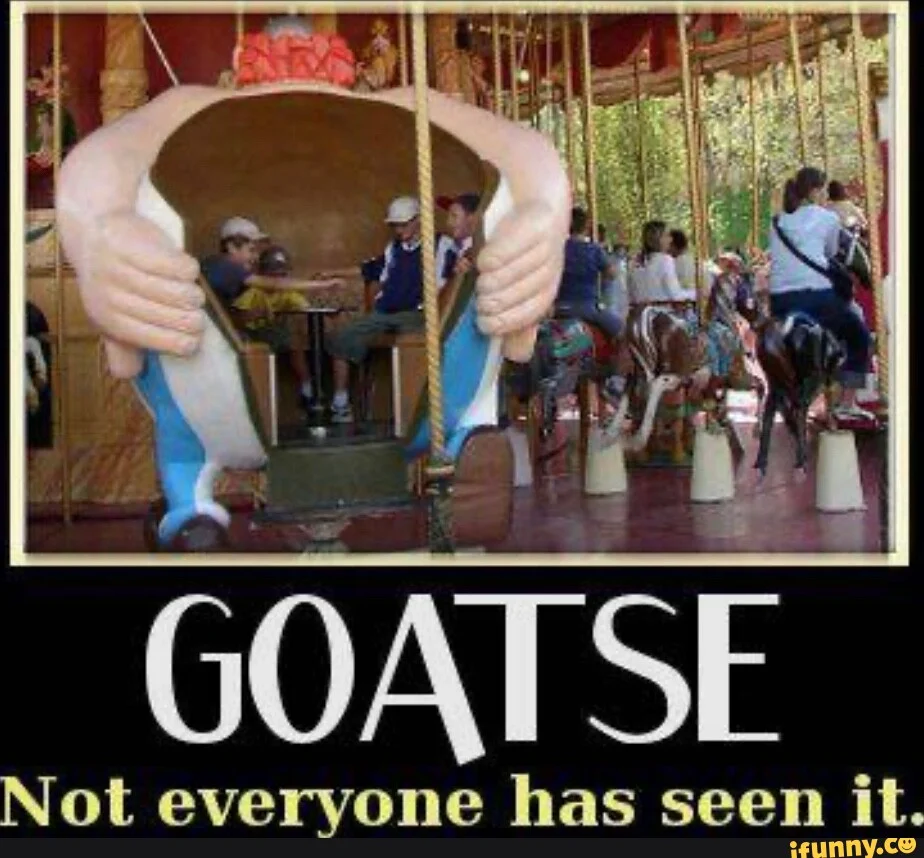
- Bait-and-switch link: Disguise a link to a Goatse mirror as something innocent and send it to an unsuspecting target. This was the original use case throughout the early 2000s. - Visual reference: The two-handed stretching pose became a recognizable shape. People reference it through hand gestures, stylized logos, or objects that accidentally resemble the silhouette. - Hot-link trap: Website administrators sometimes replace stolen images with the Goatse photograph when they catch other sites leeching their bandwidth.

The meme is widely understood as shorthand for early internet shock culture, even among people who never actually saw the original image.

Create Your Own

Cultural Impact

If you spent enough time online in the early 2000s, encountering a Goatse link was practically a rite of passage. The prank was so widespread that it forced major platforms to change how they operated, and the image's cultural footprint grew far beyond forums.

In June 2010, a group of computer security researchers calling themselves "Goatse Security" exposed a major flaw in AT&T's systems that leaked the email addresses of iPad users. The group name generated significant media attention on its own. When the case reached the Third Circuit Court of Appeals in September 2013, the U.S. Department of Justice had to explain in its brief that the group's name referenced "a notoriously obscene internet shock image"2.

The goatse.cx domain became something of an internet artifact after its 2004 suspension. It passed through multiple owners who each tried to attach a new purpose to the name, from email hosting to cryptocurrency promotion1. None stuck. The domain's notoriety was its only lasting asset.

Fun Facts

Someone paid over $10,000 for the goatse.cx domain and then asked the Something Awful forums what to do with it1.

The Indiegogo campaign for a Goatse email service hit its $20,000 funding goal, but the service was never built1.

The man in the 2014 Dogecoin endorsement video mispronounced "shibe," the Dogecoin community's term for its members1.

Derivatives & Variations

Goatse.cx email service:

An Indiegogo campaign in late 2012 raised $20,000 to turn the domain into a webmail provider, but the service was never built[1].

Goatse Coin:

A short-lived cryptocurrency project promoted on the domain before the owner pivoted to endorsing Dogecoin[1].

Dogecoin endorsement:

In February 2014, the site featured an infomercial-style video endorsing Dogecoin. The spokesman was not Kirk Johnson or an actual attorney[1].

Frequently Asked Questions