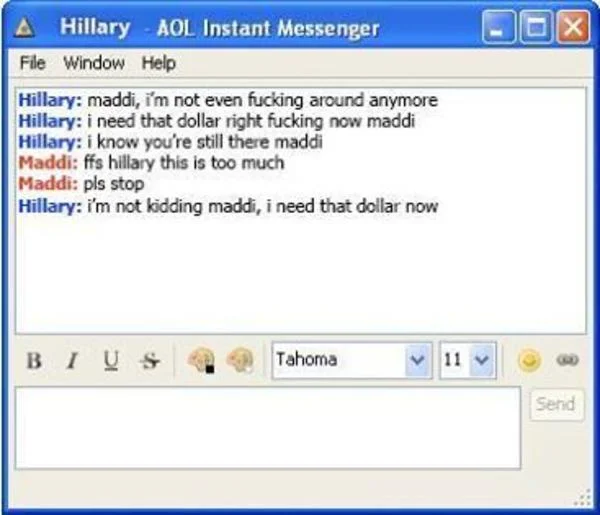
AOL Instant Messenger
Published March 10, 2026 · Updated March 23, 2026
Also known as: AIM · A.I.M.
AOL Instant Messenger (AIM) was the dominant instant messaging platform of the late 1990s and 2000s, and its cultural footprint turned it into a defining symbol of early internet life. Launched by AOL in 1997, AIM shaped how an entire generation communicated online, from crafting the perfect away message to obsessing over buddy list hierarchies. After AOL shut the service down in December 2017, AIM became a major nostalgia meme, with its iconic sounds, screen names, and running man logo regularly surfacing in "only 90s kids remember" content.
Overview
AOL Instant Messenger was a free instant messaging client that let users chat in real time through screen names, maintain buddy lists, set away messages, and customize profiles. At its peak, AIM had tens of millions of active users, mostly teenagers and young adults in North America. The platform became inseparable from late-90s and early-2000s internet culture. Its sound effects (the door opening when a buddy signed on, the door closing when they left), the yellow running man logo, and the ritual of carefully choosing a screen name all became deeply embedded cultural touchstones.
As a meme, AIM operates on two levels. First, the platform itself helped shape internet communication norms and slang that became meme culture's foundation2. Second, after its shutdown, AIM became a powerful nostalgia trigger, with screenshots of old conversations, references to away message culture, and jokes about the buddy list experience flooding social media.
Gallery
Origin & Background
How It Spread
Platforms
Timeline
2023-01-15
First appears
2024-01-01
AOL Instant Messenger started spreading across social media platforms
2025-01-01
AOL Instant Messenger is still actively used and shared across platforms
How to Use This Meme
AIM memes typically take a few forms:
- Nostalgia posts: Screenshots or recreations of the AIM interface, usually with a caption like "this was our social media" or "kids today will never know." The yellow running man icon and the buddy list layout are instantly recognizable triggers. - Sound effect references: Mentioning the door open/close sounds. Often paired with "if you know, you know" framing. - Away message jokes: References to the elaborate, passive-aggressive, or cryptically emotional away messages people used to set. These are often compared to modern Instagram stories or Twitter subtweeting. - Screen name humor: Jokes about the embarrassing screen names people chose as teenagers. - "Getting home from school" format: Describing the ritual of signing onto AIM after school as a core generational experience.
The tone is almost always warm and nostalgic rather than mocking. AIM memes function as generational bonding content for millennials and older Gen Z.
Cultural Impact
Fun Facts
AIM's buddy list limit was 200 people, which created genuine social stress about who to add and remove.
The service peaked at an estimated 100 million active users in the early 2000s.
SmarterChild, an AIM chatbot launched in 2001, was one of the first widely-used conversational AI experiences and is often called a precursor to Siri and Alexa.
AIM profiles, where users could write bios and post links, functioned as primitive social media pages years before Myspace.
The yellow running man logo was designed to look like he was running toward you, symbolizing the speed of instant communication.
Derivatives & Variations
AIM Bot nostalgia memes
recall the novelty chatbots like SmarterChild that users would message on AIM when bored[1]
Door sound edits
use AIM's iconic sign-on/sign-off door sounds in video memes and audio edits[2]
"AIM grammar" jokes
blame AIM for an entire generation's spelling and typing habits[2]
Frequently Asked Questions
References (2)
- 1List of Internet phenomenaencyclopedia
- 2AOL Instant Messenger - Urban Dictionarydictionary