Are You In The Right Headspace?
Published October 26, 2026
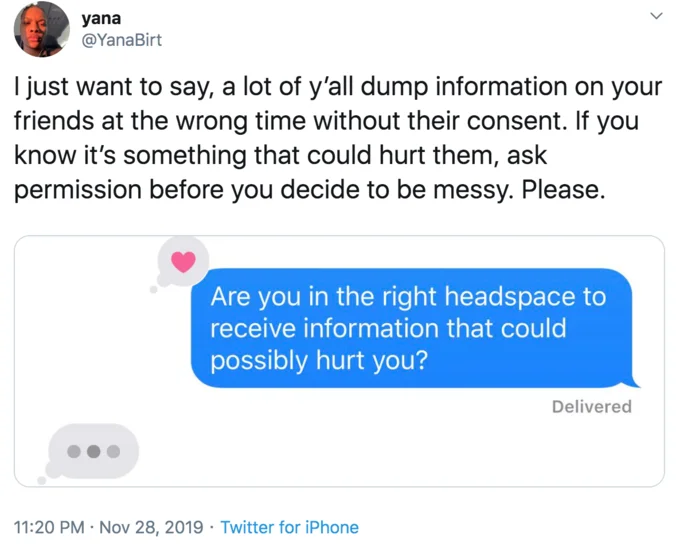
On November 28, 2019, Twitter user @YanaBirt shared a text-message template reading, 'Are you in the right headspace to receive information that could possibly hurt you?' as a gentle way to warn a friend before breaking bad news. Within days, replies turned the earnest suggestion into a joke format, with users pairing the opener to punchlines about SpongeBob anxiety, bombed-out bathrooms, and Star Wars gags.
Overview
Posts in the format typically open with the exact template question before veering into something trivial or absurd. Common setups include parody warnings before confessing to a bathroom disaster, students bracing a professor over a late assignment, or riffs on the recurring Queen Elizabeth death hoaxes2. The humor sits in the mismatch between formal consent language and stakes that do not warrant it.
Beyond direct quotes of the template, the joke mocks the earnest therapy-speak of unsolicited bad news. The Mary Sue cataloged twists spanning Breaking Bad references, Baby Yoda bits, and Bane edits, each one wrapping an everyday grievance in the softened preamble2. Users flipped a sincere mental-health suggestion into a parody of over-warning.
Gallery
Origin & Background
How It Spread
Timeline
2019-11-28
Twitter user @YanaBirt posts the text-message template with a caption asking people to warn friends before sharing hurtful information.
2019-12-01
@KylePlantEmoji compares the message to a SpongeBob episode about dreading future pain, gaining over 8,300 likes.
2019-12-02
The Tab, The Mary Sue, and Digg publish articles documenting the mocking takes.
2019-12-02
Patrick Cosmos tweets a 'TIRED / WIRED' version pairing the template against lyrics from the Barenaked Ladies song 'One Week.'
How to Use This Meme
A typical post opens with the full template question, often screenshotted as a fake text thread, then delivers a punchline where the 'hurtful' news is a petty confession, a pop culture reference, or a mundane inconvenience. The common convention is to preserve the exact phrasing of the opener so the gap between tone and content lands.
Frequently Asked Questions
References (6)
- 1
- 2
- 3
- 4
- 5
- 6