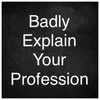
Badly Explain Your Profession

2017Survey game / hashtag challengesemi-active

Also known as: Poorly Explain Your Job · Badly Explain Your Job · #BadlyExplainYourProfession

Badly Explain Your Profession is a 2017 hashtag challenge where social media users intentionally misrepresent their occupations with absurdly oversimplified descriptions, turning corporate jargon into comedy.

Badly Explain Your Profession is an online survey game where people describe their jobs in the most inaccurate, oversimplified, or absurd way possible. The trend kicked off in early January 2017 across Reddit and Twitter, quickly spreading to Facebook, 9GAG, Imgur, and eventually TikTok2. It taps into the universal awkwardness of answering "what do you do for a living?" by turning corporate jargon into comedy2.

TL;DR

Badly Explain Your Profession** is an online survey game where people describe their jobs in the most inaccurate, oversimplified, or absurd way possible.

Overview

The premise is dead simple: take your actual profession and describe it in the worst, most reductive way you can. A dentist becomes "I get paid to hurt people's mouths." A software developer is "I argue with a computer until one of us gives up." The humor works because these terrible descriptions often land closer to truth than any LinkedIn bio ever could2.

The format works across platforms and media types. On Twitter it lives as one-liners under a hashtag. On Reddit it fills AskReddit threads with thousands of replies. On TikTok it became a sound-driven challenge with people revealing their actual job title after the punchline2. The meme's flexibility is what keeps it cycling back into relevance every few months.

On January 1, 2017, Reddit user dotbomber95 posted "How would you badly explain your hobby?" to the r/AskWomen subreddit, pulling in over 190 comments within two weeks3. That post focused on hobbies rather than jobs, but it planted the seed.

Three days later, on January 4, Twitter user @Stat__Murse posted an image with the message "Badly Explain Your Profession" along with the hashtag #BadlyExplainYourProfession3. This was the moment the concept locked into its now-familiar professional format, and the hashtag gave it a searchable, shareable identity on Twitter2.

Origin & Background

Platform
Reddit (precursor post), Twitter (hashtag format)
Key People
@Stat__Murse, dotbomber95
Date
2017

On January 1, 2017, Reddit user dotbomber95 posted "How would you badly explain your hobby?" to the r/AskWomen subreddit, pulling in over 190 comments within two weeks. That post focused on hobbies rather than jobs, but it planted the seed.

Three days later, on January 4, Twitter user @Stat__Murse posted an image with the message "Badly Explain Your Profession" along with the hashtag #BadlyExplainYourProfession. This was the moment the concept locked into its now-familiar professional format, and the hashtag gave it a searchable, shareable identity on Twitter.

How It Spread

The trend moved fast once it had the hashtag. On January 5, 2017, Redditor limbodog submitted "Reddit, how would you really badly explain your job?" to r/AskReddit. Two days later, fitness writer James Fell posted a "Badly Explain Your Profession" image to his Facebook page, where it picked up over 7,000 shares and 1,100 comments in just ten days.

The following day, January 8, the same image landed on 9GAG and pulled 9,400+ points with 6,700+ comments within nine days. By January 10, the business news site Inc. had rounded up notable responses from Fell's Facebook post. That same day, Imgur user thedivineandprofane uploaded the image, racking up 59,600+ views and 1,800+ comments over the next week. Redditor sixpancakes also submitted "How would you badly explain your profession?" to r/AskReddit that day, and a thread popped up on the WeddingBee Forums. On January 12, BodyBuilding Forums member Sinan09400 posted "ITT Badly explain your profession with one sentence" to the Misc. board.

Beyond the initial January 2017 burst, the concept kept resurfacing. The format migrated to TikTok as a video challenge, where creators would give their terrible job description on camera before revealing what they actually do. The trend's longevity comes from its low barrier to entry: anyone with a job can play, and each profession generates fresh material.

How to Use This Meme

The format is flexible, but here's how people typically approach it:

1

Pick your profession (or someone else's, if you're feeling brave)

2

Strip away all professional language and describe what you physically or functionally do in the simplest, most misleading terms

3

Post it as a one-liner on Twitter with #BadlyExplainYourProfession, as a comment in a Reddit thread, or as a short video on TikTok

4

Let others guess what you actually do (optional but adds engagement)

Cultural Impact

The trend's crossover into mainstream media happened almost immediately. Inc. magazine covered the meme just six days after the hashtag launched, highlighting responses from James Fell's viral Facebook post. The speed of that pickup reflected how workplace humor was already a proven audience magnet, and Badly Explain Your Profession gave publications an easy, shareable angle.

The meme tapped into a broader frustration with professional identity and corporate jargon. In a culture where job titles like "Growth Hacking Evangelist" and "Chief Happiness Officer" already sound made up, badly explaining your profession felt less like a joke and more like pushback. The trend's jump to TikTok in later years showed its adaptability: the core mechanic (bad description + reveal) maps perfectly to short-form video pacing.

Fun Facts

The original Reddit post by dotbomber95 asked about hobbies, not professions. The job-specific format only clicked once @Stat__Murse reframed it on Twitter three days later.

James Fell's single Facebook post generated more engagement (7,000+ shares) than many of the Reddit threads combined.

The BodyBuilding Forums version added a constraint: you had to do it in one sentence.

The trend predates TikTok's mainstream popularity but found a second life on the platform as a video format.

Frequently Asked Questions

BadlyExplainYourProfession

2017Survey game / hashtag challengesemi-active

Also known as: Poorly Explain Your Job · Badly Explain Your Job · #BadlyExplainYourProfession

Badly Explain Your Profession is a 2017 hashtag challenge where social media users intentionally misrepresent their occupations with absurdly oversimplified descriptions, turning corporate jargon into comedy.

Badly Explain Your Profession is an online survey game where people describe their jobs in the most inaccurate, oversimplified, or absurd way possible. The trend kicked off in early January 2017 across Reddit and Twitter, quickly spreading to Facebook, 9GAG, Imgur, and eventually TikTok. It taps into the universal awkwardness of answering "what do you do for a living?" by turning corporate jargon into comedy.

TL;DR

Badly Explain Your Profession** is an online survey game where people describe their jobs in the most inaccurate, oversimplified, or absurd way possible.

Overview

The premise is dead simple: take your actual profession and describe it in the worst, most reductive way you can. A dentist becomes "I get paid to hurt people's mouths." A software developer is "I argue with a computer until one of us gives up." The humor works because these terrible descriptions often land closer to truth than any LinkedIn bio ever could.

The format works across platforms and media types. On Twitter it lives as one-liners under a hashtag. On Reddit it fills AskReddit threads with thousands of replies. On TikTok it became a sound-driven challenge with people revealing their actual job title after the punchline. The meme's flexibility is what keeps it cycling back into relevance every few months.

On January 1, 2017, Reddit user dotbomber95 posted "How would you badly explain your hobby?" to the r/AskWomen subreddit, pulling in over 190 comments within two weeks. That post focused on hobbies rather than jobs, but it planted the seed.

Three days later, on January 4, Twitter user @Stat__Murse posted an image with the message "Badly Explain Your Profession" along with the hashtag #BadlyExplainYourProfession. This was the moment the concept locked into its now-familiar professional format, and the hashtag gave it a searchable, shareable identity on Twitter.

Origin & Background

Platform
Reddit (precursor post), Twitter (hashtag format)
Key People
@Stat__Murse, dotbomber95
Date
2017

On January 1, 2017, Reddit user dotbomber95 posted "How would you badly explain your hobby?" to the r/AskWomen subreddit, pulling in over 190 comments within two weeks. That post focused on hobbies rather than jobs, but it planted the seed.

Three days later, on January 4, Twitter user @Stat__Murse posted an image with the message "Badly Explain Your Profession" along with the hashtag #BadlyExplainYourProfession. This was the moment the concept locked into its now-familiar professional format, and the hashtag gave it a searchable, shareable identity on Twitter.

How It Spread

The trend moved fast once it had the hashtag. On January 5, 2017, Redditor limbodog submitted "Reddit, how would you really badly explain your job?" to r/AskReddit. Two days later, fitness writer James Fell posted a "Badly Explain Your Profession" image to his Facebook page, where it picked up over 7,000 shares and 1,100 comments in just ten days.

The following day, January 8, the same image landed on 9GAG and pulled 9,400+ points with 6,700+ comments within nine days. By January 10, the business news site Inc. had rounded up notable responses from Fell's Facebook post. That same day, Imgur user thedivineandprofane uploaded the image, racking up 59,600+ views and 1,800+ comments over the next week. Redditor sixpancakes also submitted "How would you badly explain your profession?" to r/AskReddit that day, and a thread popped up on the WeddingBee Forums. On January 12, BodyBuilding Forums member Sinan09400 posted "ITT Badly explain your profession with one sentence" to the Misc. board.

Beyond the initial January 2017 burst, the concept kept resurfacing. The format migrated to TikTok as a video challenge, where creators would give their terrible job description on camera before revealing what they actually do. The trend's longevity comes from its low barrier to entry: anyone with a job can play, and each profession generates fresh material.

How to Use This Meme

The format is flexible, but here's how people typically approach it:

1

Pick your profession (or someone else's, if you're feeling brave)

2

Strip away all professional language and describe what you physically or functionally do in the simplest, most misleading terms

3

Post it as a one-liner on Twitter with #BadlyExplainYourProfession, as a comment in a Reddit thread, or as a short video on TikTok

4

Let others guess what you actually do (optional but adds engagement)

Cultural Impact

The trend's crossover into mainstream media happened almost immediately. Inc. magazine covered the meme just six days after the hashtag launched, highlighting responses from James Fell's viral Facebook post. The speed of that pickup reflected how workplace humor was already a proven audience magnet, and Badly Explain Your Profession gave publications an easy, shareable angle.

The meme tapped into a broader frustration with professional identity and corporate jargon. In a culture where job titles like "Growth Hacking Evangelist" and "Chief Happiness Officer" already sound made up, badly explaining your profession felt less like a joke and more like pushback. The trend's jump to TikTok in later years showed its adaptability: the core mechanic (bad description + reveal) maps perfectly to short-form video pacing.

Fun Facts

The original Reddit post by dotbomber95 asked about hobbies, not professions. The job-specific format only clicked once @Stat__Murse reframed it on Twitter three days later.

James Fell's single Facebook post generated more engagement (7,000+ shares) than many of the Reddit threads combined.

The BodyBuilding Forums version added a constraint: you had to do it in one sentence.

The trend predates TikTok's mainstream popularity but found a second life on the platform as a video format.

Frequently Asked Questions