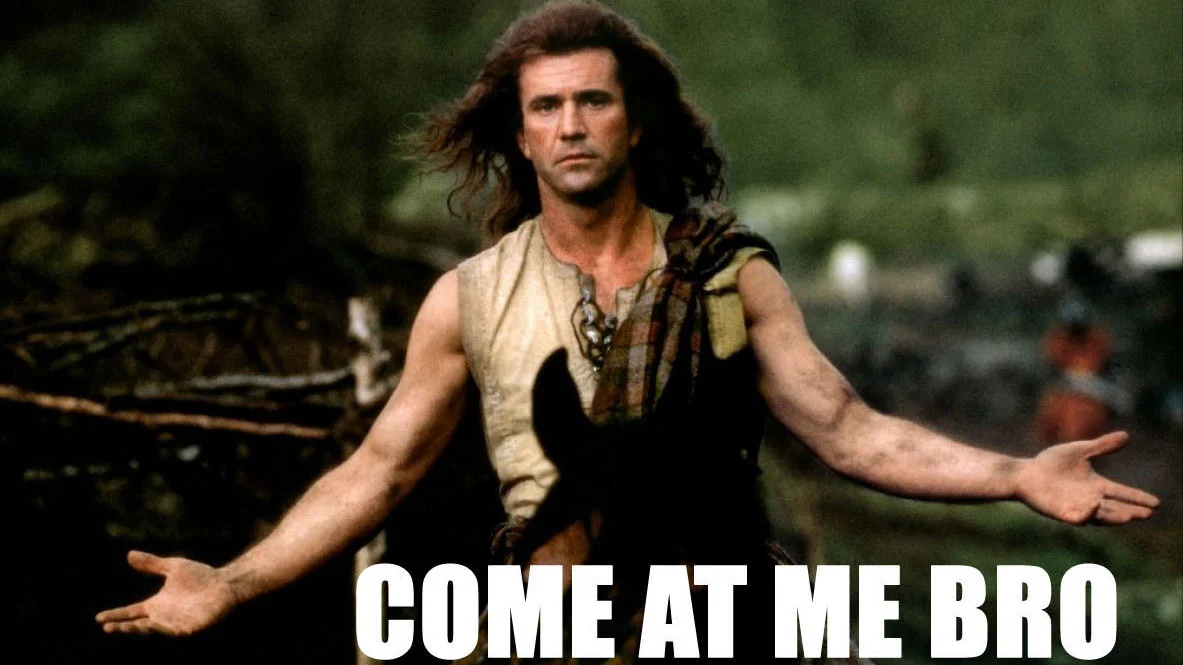
Come At Me Bro
Published August 17, 2026
Come At Me Bro is a confrontational catchphrase and image macro that started with Jersey Shore cast member Ronnie Ortiz-Magro yelling the line during a January 2010 boardwalk fight. It later became a wide-armed pose template applied to bodybuilders, animals, and US presidents.
Overview
"Come At Me Bro" is a confrontational catchphrase used to dare someone into throwing the first punch without actually starting the fight yourself4. The image macro version overlays the phrase on a photo of the subject standing with arms spread wide in an aggressive, chest-out stance3.
The line came out of reality TV and later fed a long-running image macro format applied to bodybuilders, farm animals, cartoon characters, and even sitting US presidents caught mid-gesture2.
Gallery
Origin & Background
Ronnie Ortiz-Magro popularized the phrase on MTV's Jersey Shore during Season 1, Episode 6, which aired on January 7, 20101. In the scene, Ronnie squares up against a stranger on the Seaside Heights boardwalk in New Jersey and yells the line repeatedly while the confrontation turns physical1. The clip quickly became one of the most quoted moments from the show's debut season.
How It Spread
How to Use This Meme
The template typically features a person or animal caught in a wide-armed aggressive stance, with "come at me bro" overlaid on the image4. Common versions swap the original human subject for pets, wildlife, cartoon characters, or historical figures whose original pose happens to match the challenge posture.