Crypto Winter Meme

2018Image macro / reaction image / catchphrasesemi-active

Published March 10, 2026 · Updated March 23, 2026

Also known as: Crypto Bear Market Memes · Crypto Crash Memes

Crypto winter memes are a sprawling genre of internet humor tied to the dramatic, recurring crashes in cryptocurrency markets. The term "crypto winter" entered wide use during the 2018 crash, when Bitcoin plummeted roughly 80% from its all-time high1, and the meme category saw a massive second wave during the 2022 collapse triggered by the Terra/Luna and FTX disasters1. These memes typically feature Wojak variants, "This is Fine" edits, and various reaction formats to process the collective grief, denial, and dark comedy of watching portfolios evaporate.

Overview

Crypto winter memes draw on the "crypto winter" metaphor that crypto traders borrowed from the "Game of Thrones" phrase "Winter is coming." The format covers any meme that riffs on the emotional experience of living through a sustained cryptocurrency downturn: watching Bitcoin's price chart drop off a cliff, refreshing CoinMarketCap at 3 AM, pretending everything is fine while your portfolio bleeds, or insisting "it's just a dip" as coins lose 90% of their value.

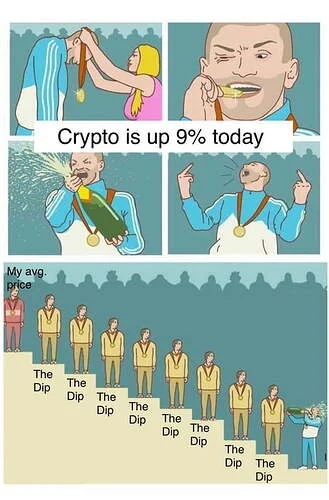
The visual language leans heavily on existing meme templates repurposed for crypto pain. Pink Wojak (the crying, distressed Wojak variant) became the unofficial mascot of crypto winter. The "This is Fine" dog sits in a burning room labeled with various coin tickers. Clown makeup memes show the stages of buying each dip as the market keeps falling. The humor swings between genuine coping and outright mockery of "diamond hands" culture.

The meme genre's roots trace back to Bitcoin's earliest boom-bust cycles. Bitcoin first hit $29.58 in June 2011 after a Gawker article about Silk Road drew mainstream attention, then crashed to $2.14 by November1. The 2013 boom pushed Bitcoin to $1,127.45 before it gradually sank to $172.15 by January 20151. Each crash produced gallows humor on forums like BitcoinTalk and r/Bitcoin, but the term "crypto winter" and the associated meme explosion didn't fully arrive until the 2017-2018 cycle.

Bitcoin peaked at $19,783.06 on December 17, 20171. By late November 2018, it had fallen below $4,000, an 80% decline1. This was the crash that minted "crypto winter" as both industry jargon and meme shorthand. Twitter and Reddit crypto communities flooded timelines with memes processing the slow, agonizing decline from euphoria to despair.

Origin & Background

Platform
Twitter, Reddit (r/CryptoCurrency, r/Bitcoin)
Creator
Unknown
Date
2018

The meme genre's roots trace back to Bitcoin's earliest boom-bust cycles. Bitcoin first hit $29.58 in June 2011 after a Gawker article about Silk Road drew mainstream attention, then crashed to $2.14 by November1. The 2013 boom pushed Bitcoin to $1,127.45 before it gradually sank to $172.15 by January 20151. Each crash produced gallows humor on forums like BitcoinTalk and r/Bitcoin, but the term "crypto winter" and the associated meme explosion didn't fully arrive until the 2017-2018 cycle.

Bitcoin peaked at $19,783.06 on December 17, 20171. By late November 2018, it had fallen below $4,000, an 80% decline1. This was the crash that minted "crypto winter" as both industry jargon and meme shorthand. Twitter and Reddit crypto communities flooded timelines with memes processing the slow, agonizing decline from euphoria to despair.

How It Spread

The 2018 crash unfolded in stages, each generating its own wave of memes. South Korea's rumored trading ban in January 2018 triggered a 12% single-day drop1. The Coincheck hack that month, which saw $530 million in NEM stolen, fueled memes about exchange security1. When Facebook, Google, and Twitter banned crypto advertising in late March 2018, the memes shifted to gallows humor about institutional rejection1.

By mid-2018, the ICO bubble was collapsing. Ella Zhang of Binance Labs publicly stated she hoped to "see the bubble burst" and promised to "fight scams and shit coins"1. Screenshots of her quote circulated widely as a reaction image, often paired with captions about the state of altcoin portfolios.

The meme genre reached a second, larger peak during the 2022 crash. Bitcoin had hit $67,566.83 in November 20211, fueled by institutional adoption and retail FOMO. The collapse of TerraUSD and Luna in May 2022 triggered a market-wide selloff. The Three Arrows Capital bankruptcy, Celsius freezing withdrawals, and the FTX implosion in November 2022 each produced waves of memes1. Sam Bankman-Fried's fall became particularly meme-heavy, with his public image shifting from "crypto savior" to the face of an $8 billion customer fund shortfall1.

Reddit's r/CryptoCurrency and crypto Twitter were the primary distribution channels, though TikTok picked up the format during the 2022 cycle with short-form video memes set to sad music over portfolio screenshots.

Platforms

RedditTwitterReddit

Timeline

2023-01-15

First appears

2023-06-01

Goes viral

2024-01-01

Continues in use

2025-01-01

Crypto Winter Meme is still actively used and shared across platforms

View on Google Trends

How to Use This Meme

Crypto winter memes typically follow one of these patterns:

The Denial Escalation: Use a multi-panel or escalation format (clown makeup, expanding brain, or increasingly distressed Wojak) to show someone buying the dip at each new low, insisting "this time it's the bottom."

The Portfolio Check: Show a reaction image (usually Pink Wojak, "This is Fine" dog, or a crying character) paired with a screenshot or description of a declining portfolio value.

The Diamond Hands Cope: Take any meme template and apply it to the tension between selling at a loss and holding through the pain. "HODL" and "diamond hands" language often appears in the captions.

The Historical Cycle: Reference Bitcoin's previous crashes and recoveries to either reassure holders ("We've been here before") or mock them ("He bought at the top again").

The format is flexible. Any reaction meme, object labeling template, or video format works as long as the punchline involves crypto losing value and someone coping with it.

Create Your Own

Cultural Impact

The 2018 crash drew comparisons to the dot-com bubble, with the cryptocurrency collapse exceeding the dot-com bust's 78% decline1. This comparison itself became meme material, with side-by-side charts and "we are here" arrow memes overlaying crypto charts onto historical bubble patterns.

Major financial regulators referenced the same market conditions that fueled the memes. The UK Financial Conduct Authority warned investors in January 2021 to be "prepared to lose all their money" in crypto1. The People's Bank of China reiterated that digital currencies could not be used for payments in May 20211. These official warnings frequently appeared in memes, either as vindication for crypto skeptics or as the butt of jokes when prices temporarily recovered.

Elon Musk's involvement added fuel. His announcement that Tesla would suspend Bitcoin payments over environmental concerns in May 2021 contributed to a 30% single-day Bitcoin drop1. Meme formats already built around Musk (the "Elon Pump" and "Elon Dump" reaction templates) merged with crypto winter formats during this period.

The FTX collapse in 2022 saw major news outlets covering both the financial fallout and the meme response. Sam Bankman-Fried was charged by the SEC with defrauding investors of $1.8 billion1, and the mugshot-to-meme pipeline moved fast.

Fun Facts

The 2018 crypto crash wiped out 80% of total market value, making it proportionally worse than the dot-com bubble's 78% collapse1.

The Coincheck hack in January 2018 resulted in the largest theft-related loss in crypto history at the time: $530 million in NEM tokens1.

Dogecoin, originally created as a joke cryptocurrency, rose 20,000% in value during 2021 before dropping 93%, creating its own micro-genre of crypto winter memes1.

Bitcoin has gone through at least five major boom-bust cycles since 2011, meaning crypto winter memes have a reliable recurring trigger roughly every 2-4 years1.

Derivatives & Variations

Pink Wojak / Crypto Wojak:

The distressed, pink-tinted Wojak variant became so associated with crypto losses that it's sometimes called "Crypto Wojak" on its own[1].

"Buy the Dip" Clown Meme:

Multi-step clown makeup application tracking someone buying at each successive lower price, derived from the broader clown meme format[1].

"We Are Here" Chart Meme:

An annotated bubble chart with an arrow pointing to where the poster believes the market sits in the cycle, used both sincerely and satirically[1].

Bogdanoff "Dump It" Edits:

The Bogdanoff twins phone call meme ("He bought? Dump it") overlapped heavily with crypto winter content during both the 2018 and 2022 crashes[1].

Frequently Asked Questions

References (1)

  1. 1