Dr Ally Louks Olfactory Ethics The Politics Of Smell In Modern And Contemporary Prose Phd Study
Published April 7, 2026
Also known as: Olfactory Ethics PhD · Politics of Smell PhD · PhDone tweet
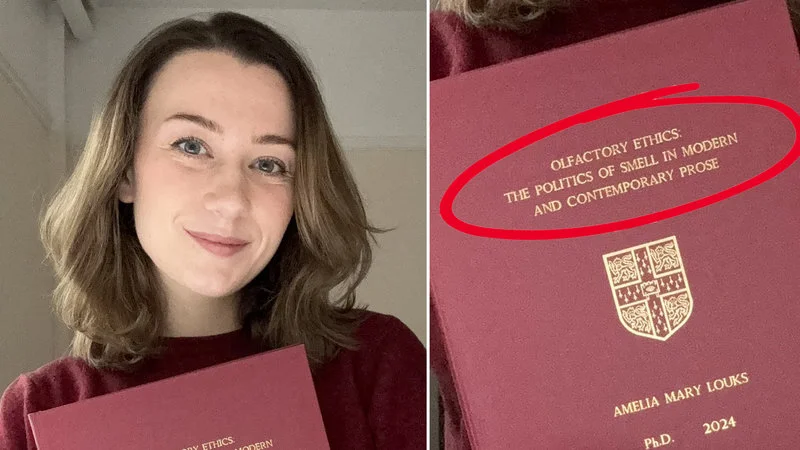
In late November 2024, Cambridge PhD graduate Dr. Ally Louks posted a celebratory tweet about completing her doctoral thesis, "Olfactory Ethics: The Politics of Smell in Modern and Contemporary Prose," and inadvertently sparked one of the year's biggest online culture wars. The post pulled in over 42 million views as right-wing commentators mocked the thesis as peak "woke" academia, while defenders fired back with accusations of misogyny and anti-intellectualism4. The whole thing became a flashpoint for debates about the value of humanities research, online harassment of women, and the state of discourse on Elon Musk's X.
Overview
The meme centers on a single tweet by Dr. Ally Louks (@DrAllyLouks) showing her holding a hardcover copy of her completed PhD thesis from Cambridge University. The thesis title, "Olfactory Ethics: The Politics of Smell in Modern and Contemporary Prose," became the focal point. Critics zeroed in on the title as an example of absurd or "useless" academic research, while supporters pointed out the actual substance of the work and the sexist nature of much of the backlash2. The debate played out across quote retweets, screenshots, and counter-threads over roughly five days, making it a prime example of how academic work gets flattened into a punchline on social media.
Gallery
Origin & Background
How It Spread
How to Use This Meme
This wasn't a meme template in the traditional sense. People typically engaged with it in a few ways:
- Quote retweeting the original post with hot takes, either mocking the thesis title or defending academic freedom - Screenshotting particularly extreme replies (especially misogynistic ones) to dunk on the attackers - Zooming in on the thesis title for comedic or outraged effect - Using it as a jumping-off point for broader arguments about anti-intellectualism, sexism in online spaces, or the value of humanities PhDs
The format often followed a pattern: see academic achievement → react with either "this is what's wrong with education" or "the reaction to this is what's wrong with society."
Cultural Impact
Fun Facts
Louks passed her viva (the oral defense of a PhD thesis in the UK system) with no corrections, which is relatively rare and indicates the thesis was accepted without revisions4.
The thesis is publicly available through the Apollo repository at the University of Cambridge, with a DOI of 10.17863/CAM.1132393.
Among the literary works analyzed in the thesis are *Lolita* by Nabokov, *Perfume* by Süskind, and *A Series of Unfortunate Events* by Lemony Snicket1.
Louks' Ologies podcast appearance covered topics ranging from the vomeronasal organ's role in human attraction to why motel rooms smell the way they do1.
Some defenders noted the irony that the meme "I Know It Smells Crazy In There" was itself a case study in exactly the kind of smell-based social dynamics Louks was writing about4.
Frequently Asked Questions
References (4)
- 1
- 2
- 3
- 4