Facebook Timeline Covers
Published March 24, 2026
Also known as: Facebook Cover Photos · Timeline Cover Photos · Facebook Cover Art · Timeline Banners
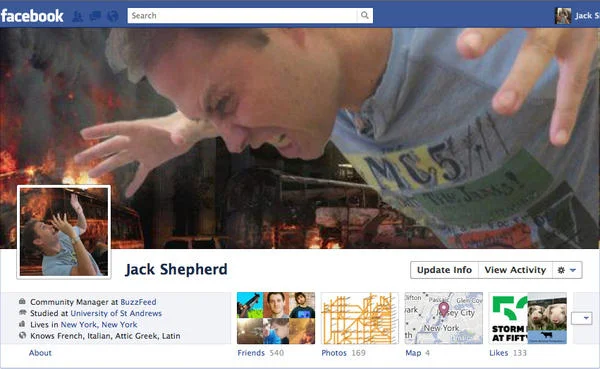
Facebook Timeline Covers were the creative profile banner images users designed after Facebook launched its Timeline redesign in late 2011. With cover photos requiring an unusual 851 x 315 pixel format, users turned profile customization into an art form, producing optical illusions, pop culture tributes, and clever interactions between their cover photo and profile picture. The trend peaked in early 2012 and defined a brief but intense era of Facebook-based visual creativity.
Overview
When Facebook rolled out Timeline in late 2011, every user's profile got a massive new visual element: the cover photo. This banner-style image sat at the top of your profile at 851 x 315 pixels, with your square profile picture overlapping in the lower left corner7. The unusual dimensions and the profile picture cutout made it a natural canvas for creative experimentation.
The trend split into several distinct styles. Some users designed seamless images that blended their cover photo with their profile picture, creating illusions where cartoon characters appeared to interact with or hold the profile image4. Others went for elaborate collages, pop culture references, or joke setups that only worked because of the specific layout5. Businesses and brands treated the space as prime visual real estate, crafting professional banner images while navigating Facebook's rules about what cover photos could contain7.
Unlike most memes that spread as shared content, Facebook Timeline Covers were personal. You didn't repost someone else's cover. You made your own or picked one from the thousands of templates that dedicated websites cranked out. The trend turned every Facebook profile into a potential creative showcase.
Gallery
Origin & Background
How It Spread
How to Use This Meme
Making a creative Facebook Timeline cover typically involved these steps:
Start with the dimensions. The cover photo required an image exactly 851 x 315 pixels7. Getting this wrong meant Facebook would crop or stretch your image.
Account for the profile picture cutout. Your square profile picture overlapped the cover photo in the lower left corner. The best designs used this overlap intentionally, creating interactions between the two images4.
Choose a style. Common approaches included seamless blends between cover and profile picture, pop culture scenes framed around the cutout, minimalist photography composed for the wide format, and joke setups that used the profile picture as a punchline5.
Use a template. Design-focused sites offered free PSD files with the exact dimensions and profile picture overlay marked out, so you could design your cover with pixel-perfect accuracy5.
Mind the rules. Facebook's guidelines for Pages banned contact information, calls to action, and pricing from cover photos7. Personal profiles had more freedom, but the best covers relied on images rather than text.
Cultural Impact
Fun Facts
Facebook's official guidelines specifically banned putting phone numbers, email addresses, or "Like our page" text on business cover photos, leading to a constant cat-and-mouse game between marketers and Facebook's moderation team7.
The cover photo's 851 x 315 pixel dimensions didn't match any standard image size, forcing even professional designers to create custom compositions7.
Some of the most viral cover designs were optical illusions that made it look like the user was reaching out of or interacting with their own profile picture4.
TwistedSifter's January 2012 roundup of creative covers was so popular that it encouraged readers to submit their own designs in the comments, creating a community showcase5.
Bored Panda noted that many website headers happened to be close to the right dimensions, giving web designers a head start on the trend1.
Frequently Asked Questions
References (8)
- 1
- 2
- 3
- 4List of Facebook featuresencyclopedia
- 5
- 6
- 7
- 8