Good News Everyone!
Published October 27, 2026
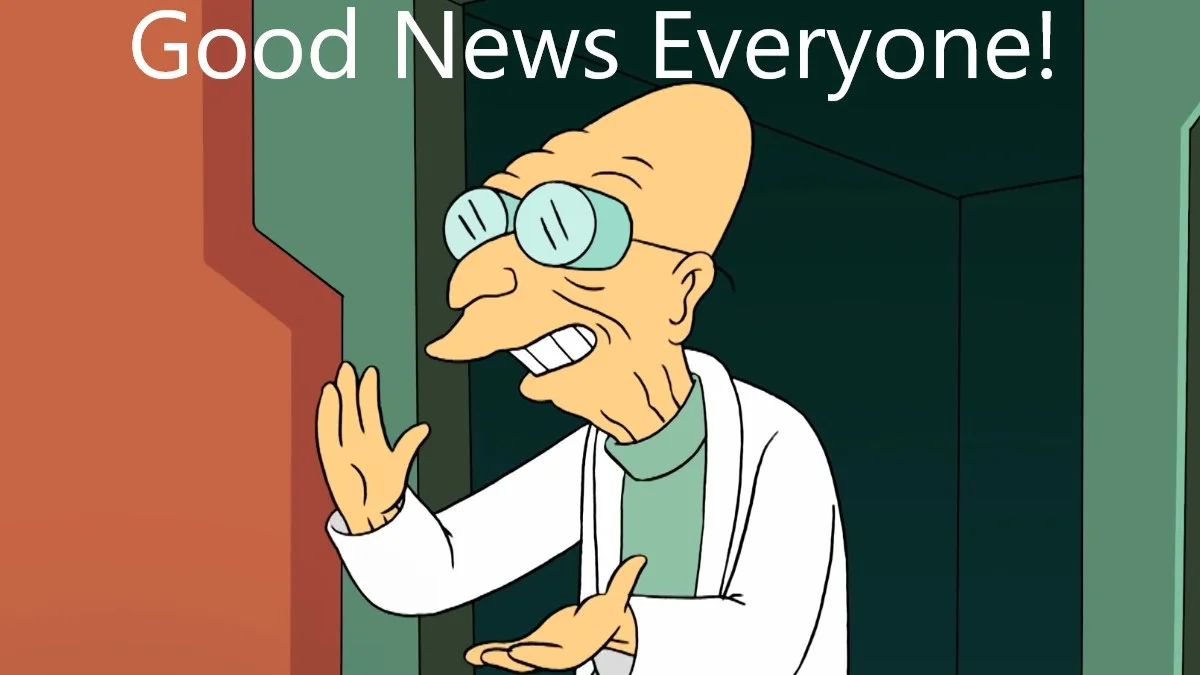
"Good News, Everyone!" is Professor Hubert J. Farnsworth's standard greeting on Futurama, almost always said right before announcing a horrifically dangerous Planet Express mission. Internet users turned the line into image macros and demotivational posters starting around 2010, often inverting the setup to deliver sarcastic bad news. By August 2011, MemeGenerator hosted a dedicated template that later carried over 16,000 user posts.
Overview
Posts typically show a still of Professor Farnsworth with his eyes wide behind thick glasses and one bony finger raised, with top text reading "Good News Everyone!" and a bottom caption that either sincerely reports a small win or ironically introduces a catastrophe3. The humor relies on viewer recall of the show, since Farnsworth almost always follows the phrase with a nightmare delivery assignment.
Users deploy the format in two modes: unironic small victories like "I finished the laundry," or sarcastic setups where the good news is actually a disaster4. Impact font with a black outline became the standard caption style across the 2010s, and the Farnsworth image stayed the default visual on MemeGenerator's template page1.
Gallery
Origin & Background
How It Spread
Timeline
1999-05-04
Futurama episode "My Three Suns" airs, with Professor Farnsworth saying "Good News, Everyone!" before the crew's first delivery mission.
2010-06-02
One of the earliest documented meme uses appears on 4chan in a Read This In My Voice thread.
2011-08-08
MemeGenerator adds a dedicated Good News Everyone template, which later generates over 16,000 posts.
2019-05-19
Imgur user Kingrablo posts a Slaps Roof of Car crossover referencing the catchphrase, gathering over 101,000 views.
How to Use This Meme
Creators typically place the Farnsworth announcement screenshot above a bottom caption that reveals either a genuine small victory or an ironic disaster, following the setup, then letdown structure1. The common convention involves Impact font with a black outline and a deadpan delivery, so the reader hears the Professor's quavering voice when reading the caption.