Horse_Ebooks

2010Novelty Twitter account / spam botdead

Also known as: @Horse_ebooks · Horse ebooks · Horsey Books

Horse_Ebooks is a 2010–2013 Twitter novelty account that posted garbled, accidentally poetic ebook snippets, initially mistaken for spam before being revealed as curated performance art by a BuzzFeed employee.

Horse_ebooks was a Twitter account that started as a genuine spam operation promoting equine-themed ebooks and accidentally became one of the most beloved accounts on the platform. Active from 2010 to 2013, its garbled, context-free text snippets scraped from ebooks struck followers as accidentally poetic, turning a Russian spammer's affiliate marketing scheme into a cultural touchstone of early-2010s internet. The account's mystique collapsed in September 2013 when it was revealed that a BuzzFeed employee had secretly been running it as a performance art piece since 2011.

TL;DR

Horse_ebooks was a Twitter account that started as a genuine spam operation promoting equine-themed ebooks and accidentally became one of the most beloved accounts on the platform.

Overview

Horse_ebooks was a Twitter account (@Horse_ebooks) designed to sell cheap ebooks about horses through the ClickBank affiliate marketing network1. Instead of the typical spam approach of mass-following users and sending unsolicited replies, the account simply tweeted fragments of text pulled from its ebook catalog, interspersed with promotional links6. These fragments, stripped of context and often truncated mid-thought, read like the ramblings of an unhinged oracle.

Tweets like "Everything happens so much," "Unfortunately, as you probably already know, people," and "I Will Make Certain You Never Buy Knives Again" earned hundreds of retweets and favorites from a devoted fanbase that treated the garbled output as found poetry2. Webcomic artist KC Green described it as "completely absurd snippets that almost read like a horse is trying to use a computer"2. Title Magazine published an academic-style analysis framing the account's output through Walter Benjamin's translation theory, arguing the algorithm achieved "pure language" by stripping text of its original context10.

The Horse-Ebooks.com domain was registered on November 26, 2009, and the Twitter handle @Horse_ebooks was created on August 5, 20105. Both belonged to Alexei Kouznetsov, a Russian web developer who ran an ebook affiliate marketing network through the e-Library system3. Kouznetsov owned roughly 170 similar domains, each with its own Twitter account: @companyebooks, @action_ebooks, @mystery_ebooks, @DogsEbooks, @School_Ebooks, and @MuscleEbooks among them16.

The account operated by tweeting text snippets scraped from its ebook catalog, a technique meant to evade Twitter's spam detection systems2. Where other spam bots lasted days or weeks before getting banned, Horse_ebooks persisted for months because it never mass-followed users or sent unsolicited replies6. One of its earliest documented shared tweets appeared on February 6, 20115.

Adrian Chen of Gawker tracked down the man behind the account in early 2012. The name "Alexei Kouznetsov" on the domain registration led to a Moscow address at 11 Lenina Street3. Chen found the Cyrillic version of the name (Алексей Кузнецов) and located a Facebook profile, a VKontakte account, and a portfolio website that used a stylized version of the @Horse_ebooks avatar as its logo5. A client of Kouznetsov's described him to Chen as "a genuinely nice guy, humble [and] a gentle spirit"3.

Origin & Background

Platform
Twitter (spam account), Something Awful (viral discovery)
Key People
Alexei Kouznetsov, Jacob Bakkila, Thomas Bender
Date
2010

The Horse-Ebooks.com domain was registered on November 26, 2009, and the Twitter handle @Horse_ebooks was created on August 5, 2010. Both belonged to Alexei Kouznetsov, a Russian web developer who ran an ebook affiliate marketing network through the e-Library system. Kouznetsov owned roughly 170 similar domains, each with its own Twitter account: @companyebooks, @action_ebooks, @mystery_ebooks, @DogsEbooks, @School_Ebooks, and @MuscleEbooks among them.

The account operated by tweeting text snippets scraped from its ebook catalog, a technique meant to evade Twitter's spam detection systems. Where other spam bots lasted days or weeks before getting banned, Horse_ebooks persisted for months because it never mass-followed users or sent unsolicited replies. One of its earliest documented shared tweets appeared on February 6, 2011.

Adrian Chen of Gawker tracked down the man behind the account in early 2012. The name "Alexei Kouznetsov" on the domain registration led to a Moscow address at 11 Lenina Street. Chen found the Cyrillic version of the name (Алексей Кузнецов) and located a Facebook profile, a VKontakte account, and a portfolio website that used a stylized version of the @Horse_ebooks avatar as its logo. A client of Kouznetsov's described him to Chen as "a genuinely nice guy, humble [and] a gentle spirit".

How It Spread

Something Awful brought @Horse_ebooks to wider attention on April 12, 2011, when Johnny "DocEvil" Titanium featured it in the site's "Twitter Tuesday" column. He introduced the account as "a Twitter bot designed and automated by apparently some Russian guy to sell worthless, horrible ebooks about horses". The feature also highlighted tweets from other accounts in Kouznetsov's network, though most of those were eventually suspended.

A Facebook fan page appeared the same month and accumulated nearly 10,000 likes by October 2012. The first fan blog, horse_ebooks fanfics, launched on September 6, 2011, publishing short fiction stories based on the account's tweets. One entry featured a horse delivering a spoken-word performance at a Parisian beatnik bar: "When the Bottom Falls Out Of your Chair, You don t want to brag but you, 100 times a day, might actually".

On September 14, 2011, followers noticed something shift. The account's tweets, previously posted "via Horse ebooks" (the custom client), began appearing "via web". The tweets got weirder faster. As Splitsider's John Herrman noted, "The kinds of Tweets that used to take weeks to show up, the perfect truncations, the ominous declarations, were now coming fast and hard". Debate raged among fans about whether the algorithm had been tweaked or if someone had hacked the account. Hardcore followers argued the account had lost its purity.

UGO Entertainment named Horse_ebooks the best Twitter account of 2011. Coverage followed from the Daily Dot in November 2011, BuzzFeed, and Title Magazine, which published a critical analysis of why people enjoyed retweeting the nonsense snippets. In December 2011, graphic designer Burton Durand from Lafayette, Louisiana began reinterpreting the tweets as comics on his Horse_eComics Tumblr. Some of his strips were featured on the New York Times Bits blog and BuzzFeed.

Herrman's definitive profile on Splitsider, published January 9, 2012, declared it "might be the best Twitter account that has ever existed". A Lorem Ipsum generator using Horse_ebooks text launched in May 2012. By October 2012, the account had made over 16,000 tweets and amassed more than 120,000 followers. That same month, Atlanta artist Tim Lampe launched Horse e-Posters, a Tumblr transforming the tweets into vintage-inspired art prints. Lampe said he'd been following the account for two years and started sketching its tweets to amuse his coworkers before taking the project seriously.

How to Use This Meme

Horse_ebooks wasn't a meme template in the traditional sense. There's no blank to fill in, no image to caption. Instead, it spawned several creative traditions:

Quoting and retweeting: The most common form of engagement was simply sharing the tweets with no added commentary, letting the absurdity speak for itself. Followers treated standout tweets like "Everything happens so much" as mantras.

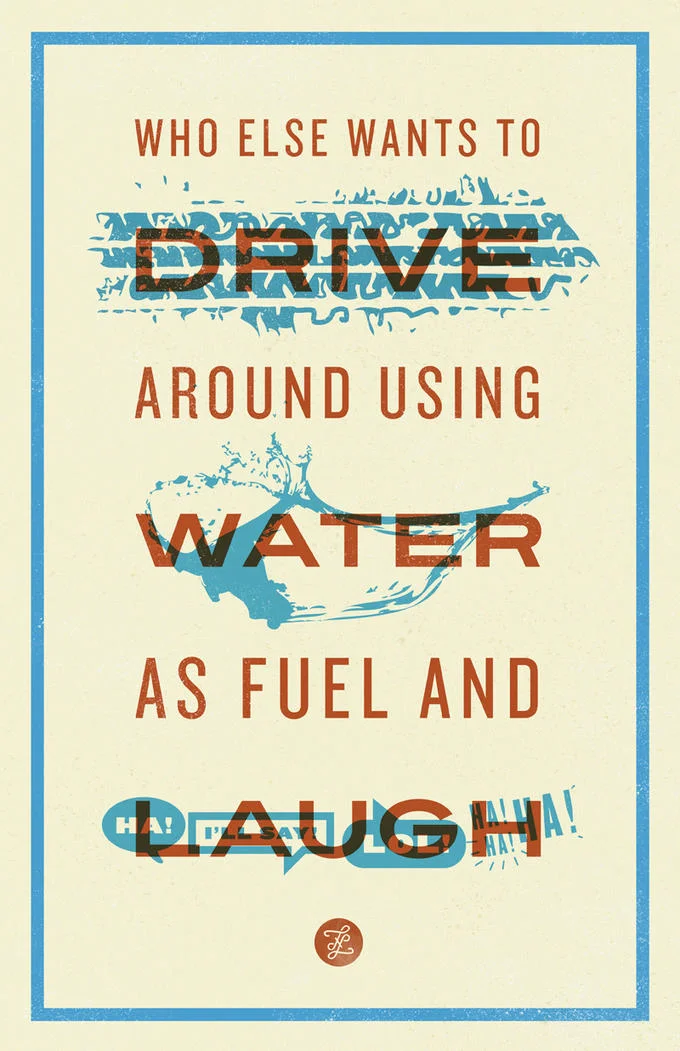
Fan art and reinterpretation: Artists like Burton Durand turned tweets into comic strips, while Tim Lampe created poster-style art pieces inspired by vintage book covers. The approach typically involved selecting a particularly evocative tweet and rendering it in a high-art or narrative context that played up the contrast between the mundane source material and the accidental profundity.

Fan fiction: The horse_ebooks fanfics Tumblr published stories featuring a literal horse character who spoke exclusively in Horse_ebooks tweets, placing the character in scenarios from beatnik poetry readings to spy thrillers.

Cultural Impact

Horse_ebooks arrived at a specific moment in Twitter culture when the platform's character limit and chronological timeline rewarded brevity and surprise. The account became a poster child for "weird Twitter," the loosely defined community of users who prized absurdist humor over polished jokes.

Time.com named it one of the best Twitter feeds of 2012. The account was invited (by proxy) to ROFLCON, the premier internet culture conference, in January 2012. Its tweets were analyzed through frameworks ranging from Dada to Walter Benjamin's translation theory. The Tangential published an essay arguing that Horse_ebooks represented a new form of internet poetry, part of an "alt lit" movement that treated social media output as creative writing.

The September 2013 reveal became a watershed moment for discussions about authenticity online. The collective disappointment when fans learned a human was behind the curtain raised questions about what exactly people had been enjoying: the randomness itself, or the idea of randomness. The Atlantic called the full arc, from spam to ad to art project to self-promotion, a case study in how internet phenomena resist clean categorization.

Full History

The Horse_ebooks phenomenon occupies a unique niche in internet history: a spam bot that people loved not in spite of its brokenness but because of it. The account's rise, secret takeover, and eventual unmasking played out over three distinct acts.

Act I: The Accidental Poet (2010-2011)

When Kouznetsov set up the account in August 2010, it was one node in a sprawling affiliate marketing operation. The Twitter accounts in his network promoted ebooks through ClickBank, a middleman marketplace for digital products that Herrman described as full of universally terrible offerings. Horse_ebooks tweeted roughly seven times a day, mixing promotional links with text fragments scraped from horse care guides, betting systems, and grooming manuals.

The account's charm came from how its algorithm mangled source text. Sometimes it produced poetic truncations ("Being"), sometimes existential non sequiturs ("Is the dance floor calling? No"), and sometimes accidentally threatening declarations ("I will make certain you never buy knives again"). Unlike algorithmically generated content designed to sound human, Horse_ebooks' output was clearly mechanical, and that transparency made it endearing rather than creepy.

A browser plug-in that converted any website's text into Horse_ebooks-style snippets became a craze among fans. The account's followers developed an elaborate fandom culture. As Chen noted, a characteristic superfan boast was: "I unfollowed Horse_ebooks, because my friends retweet all its tweets anyway".

Act II: The Secret Handoff (2011-2013)

What nobody knew at the time was that on September 24, 2011, ten days after the mysterious "via web" switch, the account had been acquired by Jacob Bakkila. Bakkila, a 29-year-old creative director at BuzzFeed, had reached out to Kouznetsov to buy the account, and Kouznetsov agreed. For the next two years, Bakkila manually composed every tweet, performing what he called "a conceptual but performative" art piece.

"The goal was not to appropriate the account but to become the account," Bakkila told the New York Times. He mimicked spam behavior, occasionally tweeting ClickBank links to maintain the illusion. To generate the non sequiturs, he searched for articles on weight loss, bodybuilding, and self-help, then extracted fragments he could tweet at random intervals. He and his collaborator Thomas Bender also gamed Google's autocomplete to drive traffic to a separate project, the Pronunciation Book YouTube channel.

During this period, the account's growth accelerated. The February 2012 Gawker investigation by Chen identified Kouznetsov as the owner without realizing the account had already changed hands. The investigation became its own small internet event when Chen offered a $50 bounty for someone to visit Kouznetsov's listed Moscow address, angering fans who felt the mystery shouldn't be solved. By September 2013, the follower count had surpassed 200,000.

Dazed Digital, writing just before the reveal, captured the account at peak mystique: "with almost 200,000 followers and millions of retweets, is it so very #meaningful?". The magazine catalogued recurring characters in the tweets, including a shady figure named "Dalton" who appeared to be embroiled in an international criminal conspiracy across multiple posts.

Act III: The Reveal and the Fallout (September 24, 2013)

On September 24, 2013, @Horse_ebooks tweeted a link to a Pronunciation Book YouTube video promoting a choose-your-own-adventure art project called "Bear Stearns Bravo," an interactive video series about the 2007 subprime mortgage crisis. The same day, Susan Orlean broke the story in The New Yorker that Bakkila was behind both Horse_ebooks and, with Bender, the Pronunciation Book.

The reaction was swift and grieving. Author Hari Kunzru tweeted "Internet devastated". Comedian Peter Serafinowicz called it "like finding out about Santa Claus". The Independent described Twitter as "devastated" at the revelation that the beloved bot was human all along. The Daily Beast called it "a dark day on the Internet".

At the FitzRoy Gallery on the Lower East Side of Manhattan, Bakkila and Bender performed a live art installation, answering phone calls and reading Horse_ebooks tweets to callers. New Yorker writer Susan Orlean was spotted at the gallery, answering phones herself.

The backlash centered on a sense of betrayal. Fans had projected meaning onto what they believed was random algorithmic output. Learning that a human had curated the tweets felt like a fundamental violation. The Atlantic framed the account as "the most successful piece of cyber fiction," noting that Bakkila's acquisition timeline raised questions about whether the project was always art or simply opportunistic self-promotion. Reports surfaced that Bakkila and Bender had nearly landed a $40,000 deal to tie the Pronunciation Book countdown to a viral marketing campaign before the company pulled out two weeks prior.

Bakkila and Bender were part of Synydyne, an artist collective formed in 2006 whose projects included This is My Milwaukee. In a 2015 interview, Bakkila explained their philosophy: "Most of what Synydyne has created thus far is either designed to spread as quickly as possible, or to be as difficult as possible to access".

After the reveal, Bakkila stopped tweeting. The account went permanently silent.

Fun Facts

Kouznetsov's listed address, 11 Lenina Street in Moscow, was shared across multiple ebook domain registrations. Chen offered a $50 bounty for someone to visit in person.

The account's most retweeted post, "Everything happens so much," accrued 6,640 retweets and 4,335 favorites according to one analysis.

A browser plug-in was created that converted any website's text into Horse_ebooks-style fragments.

John Herrman of Splitsider, who wrote the definitive profile calling Horse_ebooks possibly "the best Twitter account that has ever existed," was himself a BuzzFeed employee, same as the account's secret operator Bakkila.

The account was part of a network of nearly 200 similar ebook spam accounts, but none of the others (like @mystery_ebooks or @HomeEbooks) attracted anywhere near the same following.

Derivatives & Variations

Horse_eComics:

A Tumblr by Burton Durand featuring comic strips built around Horse_ebooks tweets, some of which were featured on the New York Times Bits blog[5][17].

Horse e-Posters:

Tim Lampe's Tumblr project turning tweets into vintage-inspired art prints, launched October 2012[13].

horse_ebooks fanfics:

A Tumblr publishing fan fiction stories starring a horse character who speaks in @Horse_ebooks quotes, launched September 6, 2011[16].

Horse_ebooks Lorem Ipsum generator:

A web tool launched May 2012 that used the account's tweets as placeholder text[5].

KC Green comic remix:

When webcomic artist KC Green posted a comic about a horse flying into space, friend @tortoiseontour replaced the text with Horse_ebooks quotes, creating an instant Twitter hit[2].

Bear Stearns Bravo:

An interactive video art project about the 2007 financial crisis, created by Bakkila and Bender as the culmination of the Horse_ebooks and Pronunciation Book projects[4].

T-shirts and merchandise:

Unofficial Horse_ebooks merchandise including shirts with the account's avatar and popular tweets[6].

Frequently Asked Questions

Horse_Ebooks

2010Novelty Twitter account / spam botdead

Also known as: @Horse_ebooks · Horse ebooks · Horsey Books

Horse_Ebooks is a 2010–2013 Twitter novelty account that posted garbled, accidentally poetic ebook snippets, initially mistaken for spam before being revealed as curated performance art by a BuzzFeed employee.

Horse_ebooks was a Twitter account that started as a genuine spam operation promoting equine-themed ebooks and accidentally became one of the most beloved accounts on the platform. Active from 2010 to 2013, its garbled, context-free text snippets scraped from ebooks struck followers as accidentally poetic, turning a Russian spammer's affiliate marketing scheme into a cultural touchstone of early-2010s internet. The account's mystique collapsed in September 2013 when it was revealed that a BuzzFeed employee had secretly been running it as a performance art piece since 2011.

TL;DR

Horse_ebooks was a Twitter account that started as a genuine spam operation promoting equine-themed ebooks and accidentally became one of the most beloved accounts on the platform.

Overview

Horse_ebooks was a Twitter account (@Horse_ebooks) designed to sell cheap ebooks about horses through the ClickBank affiliate marketing network. Instead of the typical spam approach of mass-following users and sending unsolicited replies, the account simply tweeted fragments of text pulled from its ebook catalog, interspersed with promotional links. These fragments, stripped of context and often truncated mid-thought, read like the ramblings of an unhinged oracle.

Tweets like "Everything happens so much," "Unfortunately, as you probably already know, people," and "I Will Make Certain You Never Buy Knives Again" earned hundreds of retweets and favorites from a devoted fanbase that treated the garbled output as found poetry. Webcomic artist KC Green described it as "completely absurd snippets that almost read like a horse is trying to use a computer". Title Magazine published an academic-style analysis framing the account's output through Walter Benjamin's translation theory, arguing the algorithm achieved "pure language" by stripping text of its original context.

The Horse-Ebooks.com domain was registered on November 26, 2009, and the Twitter handle @Horse_ebooks was created on August 5, 2010. Both belonged to Alexei Kouznetsov, a Russian web developer who ran an ebook affiliate marketing network through the e-Library system. Kouznetsov owned roughly 170 similar domains, each with its own Twitter account: @companyebooks, @action_ebooks, @mystery_ebooks, @DogsEbooks, @School_Ebooks, and @MuscleEbooks among them.

The account operated by tweeting text snippets scraped from its ebook catalog, a technique meant to evade Twitter's spam detection systems. Where other spam bots lasted days or weeks before getting banned, Horse_ebooks persisted for months because it never mass-followed users or sent unsolicited replies. One of its earliest documented shared tweets appeared on February 6, 2011.

Adrian Chen of Gawker tracked down the man behind the account in early 2012. The name "Alexei Kouznetsov" on the domain registration led to a Moscow address at 11 Lenina Street. Chen found the Cyrillic version of the name (Алексей Кузнецов) and located a Facebook profile, a VKontakte account, and a portfolio website that used a stylized version of the @Horse_ebooks avatar as its logo. A client of Kouznetsov's described him to Chen as "a genuinely nice guy, humble [and] a gentle spirit".

Origin & Background

Platform
Twitter (spam account), Something Awful (viral discovery)
Key People
Alexei Kouznetsov, Jacob Bakkila, Thomas Bender
Date
2010

The Horse-Ebooks.com domain was registered on November 26, 2009, and the Twitter handle @Horse_ebooks was created on August 5, 2010. Both belonged to Alexei Kouznetsov, a Russian web developer who ran an ebook affiliate marketing network through the e-Library system. Kouznetsov owned roughly 170 similar domains, each with its own Twitter account: @companyebooks, @action_ebooks, @mystery_ebooks, @DogsEbooks, @School_Ebooks, and @MuscleEbooks among them.

The account operated by tweeting text snippets scraped from its ebook catalog, a technique meant to evade Twitter's spam detection systems. Where other spam bots lasted days or weeks before getting banned, Horse_ebooks persisted for months because it never mass-followed users or sent unsolicited replies. One of its earliest documented shared tweets appeared on February 6, 2011.

Adrian Chen of Gawker tracked down the man behind the account in early 2012. The name "Alexei Kouznetsov" on the domain registration led to a Moscow address at 11 Lenina Street. Chen found the Cyrillic version of the name (Алексей Кузнецов) and located a Facebook profile, a VKontakte account, and a portfolio website that used a stylized version of the @Horse_ebooks avatar as its logo. A client of Kouznetsov's described him to Chen as "a genuinely nice guy, humble [and] a gentle spirit".

How It Spread

Something Awful brought @Horse_ebooks to wider attention on April 12, 2011, when Johnny "DocEvil" Titanium featured it in the site's "Twitter Tuesday" column. He introduced the account as "a Twitter bot designed and automated by apparently some Russian guy to sell worthless, horrible ebooks about horses". The feature also highlighted tweets from other accounts in Kouznetsov's network, though most of those were eventually suspended.

A Facebook fan page appeared the same month and accumulated nearly 10,000 likes by October 2012. The first fan blog, horse_ebooks fanfics, launched on September 6, 2011, publishing short fiction stories based on the account's tweets. One entry featured a horse delivering a spoken-word performance at a Parisian beatnik bar: "When the Bottom Falls Out Of your Chair, You don t want to brag but you, 100 times a day, might actually".

On September 14, 2011, followers noticed something shift. The account's tweets, previously posted "via Horse ebooks" (the custom client), began appearing "via web". The tweets got weirder faster. As Splitsider's John Herrman noted, "The kinds of Tweets that used to take weeks to show up, the perfect truncations, the ominous declarations, were now coming fast and hard". Debate raged among fans about whether the algorithm had been tweaked or if someone had hacked the account. Hardcore followers argued the account had lost its purity.

UGO Entertainment named Horse_ebooks the best Twitter account of 2011. Coverage followed from the Daily Dot in November 2011, BuzzFeed, and Title Magazine, which published a critical analysis of why people enjoyed retweeting the nonsense snippets. In December 2011, graphic designer Burton Durand from Lafayette, Louisiana began reinterpreting the tweets as comics on his Horse_eComics Tumblr. Some of his strips were featured on the New York Times Bits blog and BuzzFeed.

Herrman's definitive profile on Splitsider, published January 9, 2012, declared it "might be the best Twitter account that has ever existed". A Lorem Ipsum generator using Horse_ebooks text launched in May 2012. By October 2012, the account had made over 16,000 tweets and amassed more than 120,000 followers. That same month, Atlanta artist Tim Lampe launched Horse e-Posters, a Tumblr transforming the tweets into vintage-inspired art prints. Lampe said he'd been following the account for two years and started sketching its tweets to amuse his coworkers before taking the project seriously.

How to Use This Meme

Horse_ebooks wasn't a meme template in the traditional sense. There's no blank to fill in, no image to caption. Instead, it spawned several creative traditions:

Quoting and retweeting: The most common form of engagement was simply sharing the tweets with no added commentary, letting the absurdity speak for itself. Followers treated standout tweets like "Everything happens so much" as mantras.

Fan art and reinterpretation: Artists like Burton Durand turned tweets into comic strips, while Tim Lampe created poster-style art pieces inspired by vintage book covers. The approach typically involved selecting a particularly evocative tweet and rendering it in a high-art or narrative context that played up the contrast between the mundane source material and the accidental profundity.

Fan fiction: The horse_ebooks fanfics Tumblr published stories featuring a literal horse character who spoke exclusively in Horse_ebooks tweets, placing the character in scenarios from beatnik poetry readings to spy thrillers.

Cultural Impact

Horse_ebooks arrived at a specific moment in Twitter culture when the platform's character limit and chronological timeline rewarded brevity and surprise. The account became a poster child for "weird Twitter," the loosely defined community of users who prized absurdist humor over polished jokes.

Time.com named it one of the best Twitter feeds of 2012. The account was invited (by proxy) to ROFLCON, the premier internet culture conference, in January 2012. Its tweets were analyzed through frameworks ranging from Dada to Walter Benjamin's translation theory. The Tangential published an essay arguing that Horse_ebooks represented a new form of internet poetry, part of an "alt lit" movement that treated social media output as creative writing.

The September 2013 reveal became a watershed moment for discussions about authenticity online. The collective disappointment when fans learned a human was behind the curtain raised questions about what exactly people had been enjoying: the randomness itself, or the idea of randomness. The Atlantic called the full arc, from spam to ad to art project to self-promotion, a case study in how internet phenomena resist clean categorization.

Full History

The Horse_ebooks phenomenon occupies a unique niche in internet history: a spam bot that people loved not in spite of its brokenness but because of it. The account's rise, secret takeover, and eventual unmasking played out over three distinct acts.

Act I: The Accidental Poet (2010-2011)

When Kouznetsov set up the account in August 2010, it was one node in a sprawling affiliate marketing operation. The Twitter accounts in his network promoted ebooks through ClickBank, a middleman marketplace for digital products that Herrman described as full of universally terrible offerings. Horse_ebooks tweeted roughly seven times a day, mixing promotional links with text fragments scraped from horse care guides, betting systems, and grooming manuals.

The account's charm came from how its algorithm mangled source text. Sometimes it produced poetic truncations ("Being"), sometimes existential non sequiturs ("Is the dance floor calling? No"), and sometimes accidentally threatening declarations ("I will make certain you never buy knives again"). Unlike algorithmically generated content designed to sound human, Horse_ebooks' output was clearly mechanical, and that transparency made it endearing rather than creepy.

A browser plug-in that converted any website's text into Horse_ebooks-style snippets became a craze among fans. The account's followers developed an elaborate fandom culture. As Chen noted, a characteristic superfan boast was: "I unfollowed Horse_ebooks, because my friends retweet all its tweets anyway".

Act II: The Secret Handoff (2011-2013)

What nobody knew at the time was that on September 24, 2011, ten days after the mysterious "via web" switch, the account had been acquired by Jacob Bakkila. Bakkila, a 29-year-old creative director at BuzzFeed, had reached out to Kouznetsov to buy the account, and Kouznetsov agreed. For the next two years, Bakkila manually composed every tweet, performing what he called "a conceptual but performative" art piece.

"The goal was not to appropriate the account but to become the account," Bakkila told the New York Times. He mimicked spam behavior, occasionally tweeting ClickBank links to maintain the illusion. To generate the non sequiturs, he searched for articles on weight loss, bodybuilding, and self-help, then extracted fragments he could tweet at random intervals. He and his collaborator Thomas Bender also gamed Google's autocomplete to drive traffic to a separate project, the Pronunciation Book YouTube channel.

During this period, the account's growth accelerated. The February 2012 Gawker investigation by Chen identified Kouznetsov as the owner without realizing the account had already changed hands. The investigation became its own small internet event when Chen offered a $50 bounty for someone to visit Kouznetsov's listed Moscow address, angering fans who felt the mystery shouldn't be solved. By September 2013, the follower count had surpassed 200,000.

Dazed Digital, writing just before the reveal, captured the account at peak mystique: "with almost 200,000 followers and millions of retweets, is it so very #meaningful?". The magazine catalogued recurring characters in the tweets, including a shady figure named "Dalton" who appeared to be embroiled in an international criminal conspiracy across multiple posts.

Act III: The Reveal and the Fallout (September 24, 2013)

On September 24, 2013, @Horse_ebooks tweeted a link to a Pronunciation Book YouTube video promoting a choose-your-own-adventure art project called "Bear Stearns Bravo," an interactive video series about the 2007 subprime mortgage crisis. The same day, Susan Orlean broke the story in The New Yorker that Bakkila was behind both Horse_ebooks and, with Bender, the Pronunciation Book.

The reaction was swift and grieving. Author Hari Kunzru tweeted "Internet devastated". Comedian Peter Serafinowicz called it "like finding out about Santa Claus". The Independent described Twitter as "devastated" at the revelation that the beloved bot was human all along. The Daily Beast called it "a dark day on the Internet".

At the FitzRoy Gallery on the Lower East Side of Manhattan, Bakkila and Bender performed a live art installation, answering phone calls and reading Horse_ebooks tweets to callers. New Yorker writer Susan Orlean was spotted at the gallery, answering phones herself.

The backlash centered on a sense of betrayal. Fans had projected meaning onto what they believed was random algorithmic output. Learning that a human had curated the tweets felt like a fundamental violation. The Atlantic framed the account as "the most successful piece of cyber fiction," noting that Bakkila's acquisition timeline raised questions about whether the project was always art or simply opportunistic self-promotion. Reports surfaced that Bakkila and Bender had nearly landed a $40,000 deal to tie the Pronunciation Book countdown to a viral marketing campaign before the company pulled out two weeks prior.

Bakkila and Bender were part of Synydyne, an artist collective formed in 2006 whose projects included This is My Milwaukee. In a 2015 interview, Bakkila explained their philosophy: "Most of what Synydyne has created thus far is either designed to spread as quickly as possible, or to be as difficult as possible to access".

After the reveal, Bakkila stopped tweeting. The account went permanently silent.

Fun Facts

Kouznetsov's listed address, 11 Lenina Street in Moscow, was shared across multiple ebook domain registrations. Chen offered a $50 bounty for someone to visit in person.

The account's most retweeted post, "Everything happens so much," accrued 6,640 retweets and 4,335 favorites according to one analysis.

A browser plug-in was created that converted any website's text into Horse_ebooks-style fragments.

John Herrman of Splitsider, who wrote the definitive profile calling Horse_ebooks possibly "the best Twitter account that has ever existed," was himself a BuzzFeed employee, same as the account's secret operator Bakkila.

The account was part of a network of nearly 200 similar ebook spam accounts, but none of the others (like @mystery_ebooks or @HomeEbooks) attracted anywhere near the same following.

Derivatives & Variations

Horse_eComics:

A Tumblr by Burton Durand featuring comic strips built around Horse_ebooks tweets, some of which were featured on the New York Times Bits blog[5][17].

Horse e-Posters:

Tim Lampe's Tumblr project turning tweets into vintage-inspired art prints, launched October 2012[13].

horse_ebooks fanfics:

A Tumblr publishing fan fiction stories starring a horse character who speaks in @Horse_ebooks quotes, launched September 6, 2011[16].

Horse_ebooks Lorem Ipsum generator:

A web tool launched May 2012 that used the account's tweets as placeholder text[5].

KC Green comic remix:

When webcomic artist KC Green posted a comic about a horse flying into space, friend @tortoiseontour replaced the text with Horse_ebooks quotes, creating an instant Twitter hit[2].

Bear Stearns Bravo:

An interactive video art project about the 2007 financial crisis, created by Bakkila and Bender as the culmination of the Horse_ebooks and Pronunciation Book projects[4].

T-shirts and merchandise:

Unofficial Horse_ebooks merchandise including shirts with the account's avatar and popular tweets[6].

Frequently Asked Questions