Metadata Privacy
Published March 10, 2026 · Updated March 23, 2026
Also known as: EXIF data memes · photo metadata memes · data privacy memes
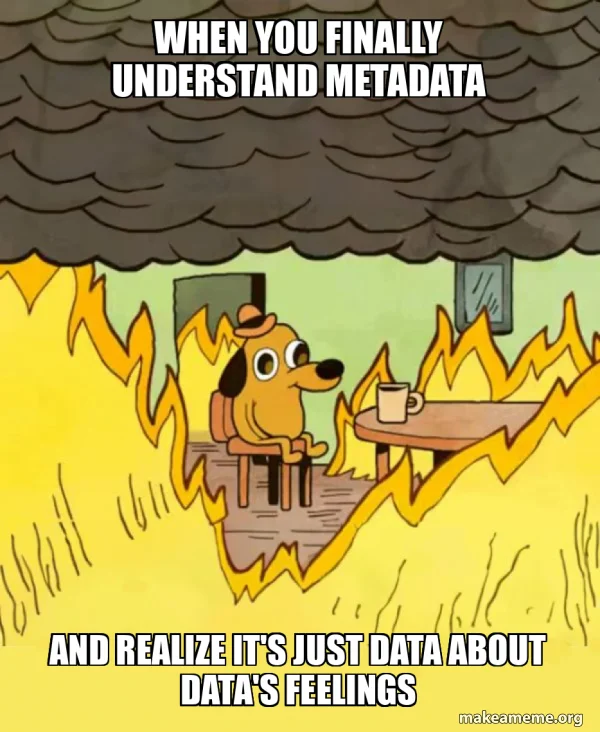
Metadata privacy memes joke about the hidden information embedded in digital files, particularly photos, that can expose a person's location, device, and habits without their knowledge. These memes picked up steam in the mid-2010s as public awareness of data collection practices grew alongside high-profile privacy scandals. The format typically contrasts users' casual sharing behavior with the alarming volume of personal data silently attached to every upload.
Overview
Metadata privacy memes center on the gap between what people think they're sharing online and what they're actually sharing. Every digital photo contains EXIF data: GPS coordinates, timestamps, camera model, and sometimes even the owner's name. Screenshots can reveal battery percentage, carrier, notification counts, and time of day. These memes highlight that gap, usually with a punchline about how a seemingly innocent post broadcasts a person's exact location, sleep schedule, or device.
The format ranges from image macros ("Me: posts a sunset photo / My metadata: here are this person's exact coordinates") to educational infographics dressed up as memes, to reaction images showing shock at the amount of data a single file contains.
Gallery
Origin & Background
How It Spread
Platforms
Timeline
2023-01-15
First appears
2024-01-01
Metadata Privacy started spreading across social media platforms
2025-01-01
Metadata Privacy is still actively used and shared across platforms
How to Use This Meme
The typical metadata privacy meme follows a contrast structure:
Panel/statement one: A user does something seemingly harmless (posts a photo, shares a screenshot, accepts terms of service)
Panel/statement two: The metadata or platform reveals an absurd amount of personal information
Cultural Impact
Fun Facts
EXIF data in photos can include not just GPS coordinates but also the exact camera model, lens settings, and even the software used to edit the image, meaning a single photo file can contain dozens of data points about its creator.
The term "metadata" literally means "data about data," and privacy researchers estimate that metadata alone, without any content, can reveal up to 95% of a person's daily routine.
Some social media platforms strip EXIF data on upload (like Twitter and Facebook), but many image hosting services and messaging apps do not, creating an uneven patchwork of protection that feeds the meme's core joke.
The memes spiked notably after 2013, a year when both the Snowden leaks and multiple Pew Research studies brought digital surveillance into mainstream conversation1.
Derivatives & Variations
Cookie consent banner memes:
Jokes about the flood of GDPR-mandated pop-ups asking users to "manage preferences" while companies already track everything[1]
Screenshot fail compilations:
Collections of screenshots where users accidentally revealed personal information through visible metadata, notifications, or browser tabs[1]
"FBI agent watching me" memes:
A related format where users joke about a personal FBI agent monitoring their internet activity through their device's data, which draws on the same surveillance anxiety
Smart device eavesdropping memes:
Jokes about Alexa, Siri, or smart TVs collecting ambient conversation data, extending the metadata concept to audio surveillance[1]
Frequently Asked Questions
References (1)
- 1Privacy concerns with social networking servicesencyclopedia