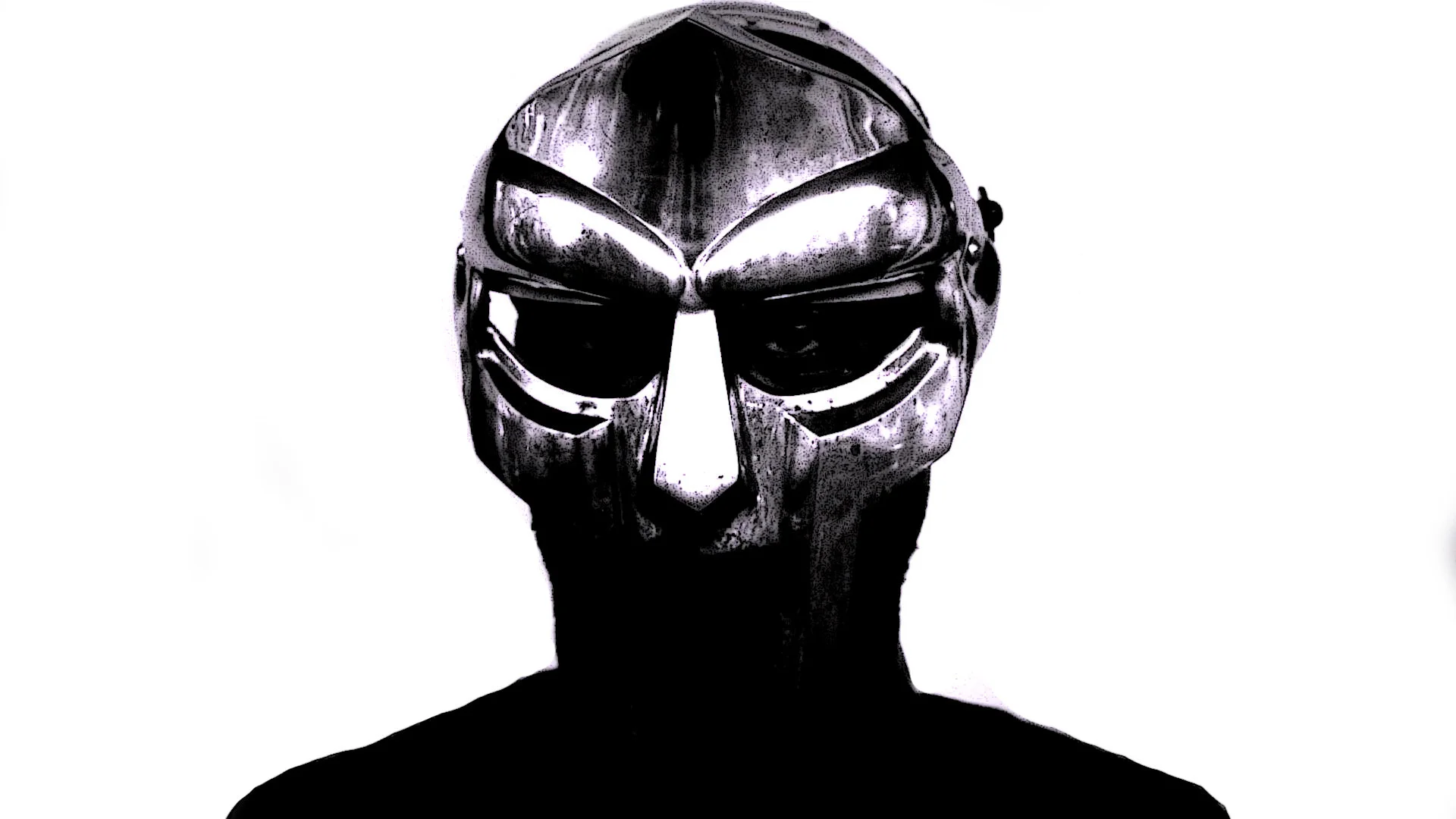
MF DOOM

1999musicianclassic

Published September 6, 2026

MF DOOM, born Daniel Dumile, was the metal-masked rapper whose supervillain persona turned him into one of underground hip-hop's most cited figures. After his group KMD collapsed in 1993, he returned in 1999 with Operation: Doomsday, and by 2004's Madvillainy he'd earned the tag 'your favorite rapper's favorite rapper.'

Overview

The MF DOOM character is built around a metal helmet modeled on a prop from Ridley Scott's Gladiator, which Dumile wore in every public appearance to hide his face3. He rapped through the mask in dense internal rhyme schemes about a cartoon super villain, pulling costume and posture directly from the Marvel Comics figure Doctor Doom2. The mask itself became the visual shorthand fans still tattoo, cross-stitch and paste onto every corner of the internet4.

Beyond the DOOM name, Dumile cycled through alter egos including King Geedorah on Take Me to Your Leader and Viktor Vaughn on the Vaudeville Villain records, each written with its own voice and mythology4. Collaborative projects like DANGERDOOM with Danger Mouse and DOOMSTARKS with Ghostface Killah stacked more masks on top of the character, and he was known to send costumed impostors on stage in his place at booked shows6.

Origin & Background

Platform
Studio release (Operation: Doomsday)
Creator
Daniel Dumile
Date
1999

Dumile was born in London on July 13, 1971 and raised on Long Island, first surfacing on record as Zev Love X in the trio KMD, short for 'Kausing Much Damage'1. Their 1993 second album Black Bastards was shelved over its cover art and lyrics, and the group was dropped by Elektra the same year1. Weeks later Dumile's younger brother Dingilizwe, DJ Subroc in the group, was killed by a car, and Dumile disappeared from the scene entirely8.

He resurfaced in 1999 with Operation: Doomsday, a self-produced record built on soul loops and Fantastic Four cartoon samples that the underground press treated as an instant classic2.

How It Spread

Through the early 2000s DOOM released records under new aliases at a pace few peers matched, including King Geedorah's Take Me to Your Leader in 2003 and Viktor Vaughn's Vaudeville Villain the same year4. The 2004 collaboration with producer Madlib, Madvillainy, pushed him into wider critical view, with reviewers including Anthony Fantano calling it one of the most celebrated abstract rap records ever made4.

The impostor DOOM shows became their own running controversy: promoters said the substitutions were 'intentional' as part of the villain gimmick, but paying crowds in Chicago and London booed the stand-ins through the late 2000s6. His son Malachi Ezekiel Dumile died on December 18, 2017 at age 14, and Dumile largely stayed offline afterward5.

On December 31, 2020 his wife Jasmine confirmed on the official Instagram account that Dumile had died on October 31, 2020 at age 49, with no cause of death given7. Tributes from Tyler, the Creator, Thom Yorke and Flying Lotus filled feeds through the new year, and the /r/MFDOOM subreddit swelled with fan posts pointing new listeners to the Operation: Doomsday music video4.

Frequently Asked Questions