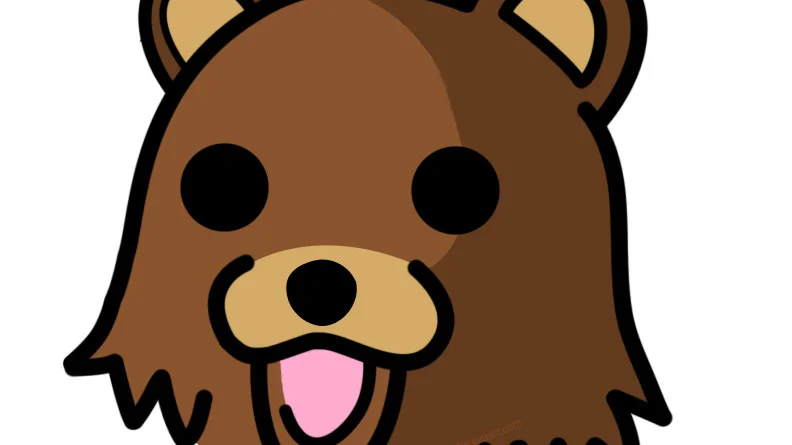
Pedobear

2003reaction imageclassic

Published September 21, 2026

Pedobear started as innocent Japanese ASCII art of a cartoon bear called Kuma before 4chan users repurposed the character in the mid-2000s as a warning icon posted whenever someone shared child pornography. What began as an inside joke on /b/ grew into one of the most misunderstood 4chan mascots of the late 2000s, sparking real-world panics from police departments, newspapers, and even Nestle's marketing team.

Overview

Pedobear is a cute two-legged cartoon bear that 4chan users post as a sarcastic warning whenever a thread involves inappropriate content about minors1. The joke works on a bait and switch: the character looks like a huggable children's mascot, then reveals itself as a stand-in for the creep in the corner of the internet7. Photoshopped composites are the core format, with the bear inserted into photos of young girls, cartoon scenes, or public settings where he obviously does not belong3.

Loading tweet...

The character usually appears with a signed stamp of approval reading 'Pedobear Approves', which spawned countless variations on image boards and eventually leaked into wider internet culture2. Because the visual is so innocuous, outsiders keep mistaking it for a genuine kids' character, which is exactly the setup 4chan users find funny about the whole thing4. The gag depends on the target audience already knowing what the bear signals, and the humor collapses the moment somebody uses it sincerely.

By the late 2000s Pedobear was one of the most recognizable exports of /b/, sitting alongside characters like the Guy Fawkes anon mask and Longcat as shorthand for the imageboard's whole sensibility1. Law enforcement agencies, journalists, and marketing departments repeatedly treated the bear as an earnest symbol of pedophilia rather than a piece of dark satire aimed at mocking it35.

Origin & Background

Platform
2channel (ASCII origin) / 4chan (viral repurposing)
Creator
ぶる ~ 3; anonymous 4chan users created the Pedobear persona
Date
2003

The character now called Pedobear started on the Japanese textboard 2channel as an ASCII art bear known as 'Kuma' (the Japanese word for bear), created by a user going by ぶる ~ 3 who helped launch an emoticon-only board on 2ch3. One of the earliest 2ch threads featuring the ASCII was posted on February 27th, 20033. On 2channel the character had no sexual meaning at all: users dropped the bear into 'fishing' threads to signal that the original poster was obviously trolling and that nobody was going to take the bait1.

When early 4chan traded users and content with 2ch, someone carried Kuma over to the English imageboard, where the bear got redrawn as a full cartoon and picked up an entirely new persona1. The pedophile association was already in place by February 2005, when Urban Dictionary published a definition describing 'pedo bear' as a character used on hentai 'lolikon' boards and 4chan9. Some of the earliest known 4chan threads with Pedobear photoshopped into pictures of young girls date back to February 10th and November 29th, 20063.

How It Spread

Pedobear stayed a mostly 4chan-internal joke through 2007 before dedicated fan infrastructure showed up: Pedobear.org launched on January 14th, 2008 with an image gallery and a merch shop, and the toy company DesuToys began selling an official Pedobear plush in early 20093. That same year the bear got its first mainstream stunt when 4chan users organized a vote-brigading campaign that pushed Pedobear to the number one spot in an online poll for Miley Cyrus's biggest fan, prompting repeated removals from the contest's admins8.

The real crossover moment arrived in February 2010, when a graffiti artist stenciled Pedobear onto billboards in Malta advertising Pope Benedict XVI's upcoming visit. The Times of Malta's coverage of the mystery bear pulled in over 300,000 readers in two months, most of whom had no idea what they were actually looking at3. A California police department separately issued a public warning treating the bear as an actual pedophile mascot, and in March 2011 the Florida computer supplier CP Distributor accidentally printed Pedobear in a coupon book ad, apparently because a freelance designer googled 'CP' and picked whatever came up6. On December 31st, 2011 a fan in a Pedobear costume with Joe Paterno cleats made it onto the JumboTron at the TicketCity Bowl in Dallas, a stunt organized by a Texas Longhorns message board aimed at Penn State fans7.

The most-covered corporate mishap came on July 19th, 2012, when Nestle Australia posted a photo of a person in a brown bear suit playing drums with two Kit Kat bars to launch its Instagram presence. The Sydney Morning Herald picked up the resemblance almost immediately, Nestle pulled the image and told reporters it had never heard of Pedobear, and outlets including Mashable and HuffPost ran follow-ups treating the incident as a case study in social media brand risk4510.

How to Use This Meme

The classic format is a photo composite: take a picture involving children or young-looking anime characters, insert a drawn Pedobear somewhere in the frame with a wide grin, and post it as a reaction in a thread that got weird1. A common convention is the 'Pedobear Approves' stamp, a smaller cutout of the bear giving a thumbs-up or holding a sign, dropped into replies whenever a thread's tone crossed a line2. Outside imageboards, people typically use a bare Pedobear reaction image as shorthand to call out somebody being creepy about a minor, similar to how other communities use side-eye reactions.

Frequently Asked Questions