Trump Derangement Syndrome Tds

2015Political catchphrase / pejorative labelactive

Also known as: TDS

Trump Derangement Syndrome (TDS) is a 2015 political pejorative introduced by writer Esther Goldberg, based on Charles Krauthammer's 2003 'Bush Derangement Syndrome.

Trump Derangement Syndrome, or TDS, is a mock psychiatric diagnosis used as a political pejorative in American discourse since 2015. Adapted from columnist Charles Krauthammer's 2003 coinage of "Bush Derangement Syndrome," the term was first applied to critics of Donald Trump by writer Esther Goldberg in The American Spectator1. Originally aimed at establishment Republicans who opposed Trump's candidacy, TDS quickly spread across the political spectrum and became one of the most recognizable political catchphrases of the Trump era, with both supporters and opponents eventually deploying it against each other8.

TL;DR

Trump Derangement Syndrome, or TDS, is a mock psychiatric diagnosis used as a political pejorative in American discourse since 2015.

Overview

Trump Derangement Syndrome is a tongue-in-cheek label framed as a fake mental illness. It describes what its users consider an irrational, disproportionate emotional reaction to Donald Trump, his policies, or his presidency2. The "diagnosis" borrows the language of clinical psychology, describing "symptoms" like hysteria, loss of proportion, and inability to distinguish policy disagreements from personal pathology6.

What makes TDS unusual among political memes is its dual deployment. Trump supporters use it to dismiss critics as unhinged and unable to think clearly5. But Trump's opponents have flipped the term, applying it to supporters they view as blindly devoted and incapable of acknowledging Trump's flaws8. This tug-of-war over the term's meaning is baked into its identity and visible across Urban Dictionary entries, social media threads, and cable news arguments.

The concept traces back to December 5, 2003, when psychiatrist and political commentator Charles Krauthammer published a column coining "Bush Derangement Syndrome." Krauthammer defined it as "the acute onset of paranoia in otherwise normal people in reaction to the policies, the presidency, nay, the very existence of George W. Bush"4. He was writing partly as satire, responding to conspiracy theories about President George W. Bush that were circulating among mainstream political figures, including Howard Dean's speculation that Bush had advance warning of the 9/11 attacks4.

Twelve years later, on August 17, 2015, writer Esther Goldberg published an article in The American Spectator titled "Trump Derangement Syndrome"1. Goldberg argued that establishment Republicans like George Will were suffering from an irrational aversion to Trump during the 2016 Republican primary. She mocked Will's pearl-clutching over Trump's "vulgarity" and his suggestion that Trump supporters were more plausible as "Archie Bunker Democrats" than Republicans1. The article's target was the Republican establishment, not the political left. Goldberg noted that Will had displayed similar disdain toward Ronald Reagan decades earlier, calling his supporters "kamikaze conservatives" and suggesting the party needed to be "cleansed" of them1.

Origin & Background

Platform
The American Spectator (op-ed)
Key People
Charles Krauthammer, Esther Goldberg
Date
2015

The concept traces back to December 5, 2003, when psychiatrist and political commentator Charles Krauthammer published a column coining "Bush Derangement Syndrome." Krauthammer defined it as "the acute onset of paranoia in otherwise normal people in reaction to the policies, the presidency, nay, the very existence of George W. Bush". He was writing partly as satire, responding to conspiracy theories about President George W. Bush that were circulating among mainstream political figures, including Howard Dean's speculation that Bush had advance warning of the 9/11 attacks.

Twelve years later, on August 17, 2015, writer Esther Goldberg published an article in The American Spectator titled "Trump Derangement Syndrome". Goldberg argued that establishment Republicans like George Will were suffering from an irrational aversion to Trump during the 2016 Republican primary. She mocked Will's pearl-clutching over Trump's "vulgarity" and his suggestion that Trump supporters were more plausible as "Archie Bunker Democrats" than Republicans. The article's target was the Republican establishment, not the political left. Goldberg noted that Will had displayed similar disdain toward Ronald Reagan decades earlier, calling his supporters "kamikaze conservatives" and suggesting the party needed to be "cleansed" of them.

How It Spread

The term picked up speed quickly after Goldberg's article. On October 1, 2015, the Washington Examiner published an op-ed by Stephen Meister that defined TDS as "a hate-induced epidemic sweeping the nation's journalists". By March 18, 2016, the phrase had entered slang dictionaries when Urban Dictionary user CLWT submitted an entry defining it as "a mental dysfunction causing those detractors with hateful thoughts and feelings about Donald Trump to go unhinged".

After Trump won the 2016 election, TDS usage exploded. On December 27, 2016, Justin Raimondo published a high-profile op-ed in the Los Angeles Times titled "Do you suffer from Trump Derangement Syndrome?" that laid out TDS as a staged disease progressing from "loss of proportion" to "constant hysteria" to fantasies of political violence. The piece went viral and drew sharp criticism. On January 8, 2017, Salon published a direct rebuttal arguing that TDS was a "cudgel used to silence his critics" and that the real derangement belonged to voters who elected "a plutocrat authoritarian reality TV star con man".

On April 16, 2017, CNN's Fareed Zakaria delivered a monologue about Trump Derangement Syndrome. The Rebel Media YouTube channel also uploaded a video accusing Daily Show host Trevor Noah of having TDS. The phrase was becoming a go-to weapon in cable news battles.

The term hit peak mainstream visibility on July 19, 2018, when Fox News host Jeanine Pirro appeared on The View and accused Whoopi Goldberg of having Trump Derangement Syndrome. The accusation triggered a shouting match between the two that went viral across social media. Twitter users from both left and right seized on the incident to accuse the opposing side of suffering from TDS.

How to Use This Meme

TDS is typically deployed in one of two ways depending on the user's political alignment.

As a pro-Trump dismissal: When someone expresses intense criticism of Trump, a supporter might respond with "Sounds like you have TDS" or simply "TDS." The implication is that the criticism is emotionally driven rather than factual. It works as a conversation-ender, reframing the critic as irrational rather than engaging with their argument.

As an anti-Trump counter: Opponents flipped the script, using TDS to describe Trump supporters who excuse or defend any action Trump takes, no matter how controversial. In this usage, "TDS" means blind devotion rather than blind hatred.

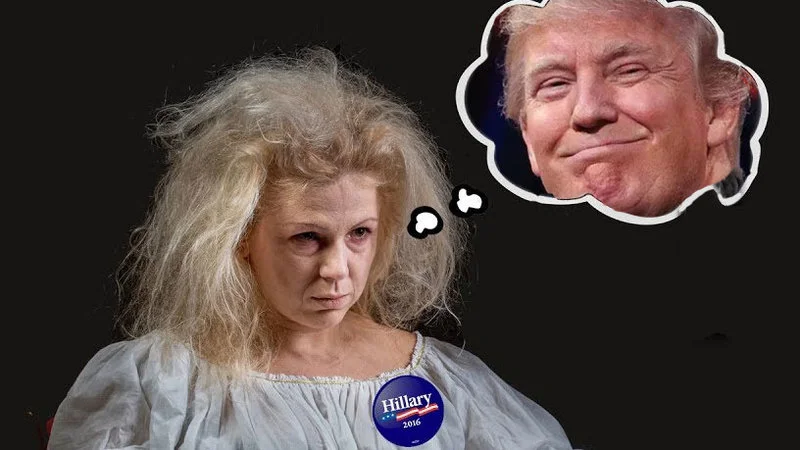
The format also appears in meme images, usually paired with stock photos of people looking deranged or with fake pharmaceutical ads for "TDS treatment." On Twitter and Reddit, it commonly shows up as a one-word reply or hashtag (#TDS) attached to viral political clips.

Cultural Impact

TDS crossed from internet slang into mainstream political vocabulary faster than most meme phrases. CNN, Fox News, the Los Angeles Times, and the Washington Post all published segments or op-eds using the term by 2017. The View's Goldberg-Pirro confrontation in 2018 put TDS on daytime television and generated days of cable news coverage.

The Minnesota legislation in March 2025 marked a new chapter, with elected officials attempting to codify a meme into actual state law. While the bill was widely understood as a political stunt, it drew national media attention and forced the phrase back into headlines.

Trump himself and his allies used TDS regularly. Former Trump attorney Alina Habba argued in May 2024 that jurors in Trump's hush money trial should have been sequestered to avoid "coming down with TDS and forgetting all sense of reality". Trump dismissed accusations from former chief of staff John Kelly in October 2024 as "a story out of pure Trump Derangement Syndrome".

The phrase also influenced how political disagreements played out in personal life. The Doc Emet analysis describes TDS as a driver of "the cutting off of friendships and efforts to shame or cancel dissenters," noting that it "both exemplifies and exacerbates the cultural maladies that drive our deeply divided public discourse".

Full History

While TDS started as an intra-Republican insult aimed at Never Trump conservatives, its meaning shifted rapidly once Trump took office. The phrase became a standard dismissal deployed against anyone expressing alarm about the Trump presidency, from journalists to Hollywood celebrities to Democratic politicians.

The Doc Emet Productions analysis identifies three distinct "iterations" of TDS as it developed from 2016 onward. The first is the core narrative that Trump is equivalent to Adolf Hitler, a comparison that appeared in outlets from the New York Times to CNN to MSNBC. Prominent figures pushing this comparison included Joe Biden, Kamala Harris, Hillary Clinton, Tim Walz, and Nancy Pelosi. The second iteration involved what critics called "lawfare," the use of legal proceedings against Trump. The third played out in personal relationships and workplaces, where friendships fractured and people faced social consequences for supporting or opposing Trump.

The rhetoric around TDS also took darker turns. Celebrities made statements about violence against Trump that TDS critics cited as proof of the syndrome's severity. Comedian George Lopez posted a cartoon depicting a decapitated Trump in February 2016. Comedy Central host Larry Wilmore joked about smothering Trump with a pillow. Madonna told a crowd at the 2017 Women's March that she'd "thought an awful lot about blowing up the White House". For TDS proponents, these incidents were evidence that anti-Trump sentiment had crossed from political disagreement into genuine pathology.

The counter-narrative was equally forceful. Salon's Chauncey DeVega argued in January 2017 that the entire TDS framework was an exercise in projection. He pointed out that Republicans had spent eight years creating conspiracy theories about Barack Obama, including the Birther movement that Trump himself championed. DeVega wrote that Trump's critics were responding rationally to a candidate who had "promised to undermine basic tenets of American democracy" and "encouraged violence against his political foes".

By the mid-2020s, both sides had effectively co-opted TDS for their own purposes. Urban Dictionary entries from this period show the split clearly: some definitions describe TDS as irrational hatred of Trump, while others define it as the blind devotion of Trump supporters who "abandon rationality and denounce criticism as fake news". One popular definition frames TDS as "a made up condition, conceived as a derisive label by the alt-right," noting that "like many of their other little online crusades, this has backfired".

The term received fresh attention in March 2025 when five Minnesota Republican state senators introduced legislation to officially classify TDS as a recognized mental illness under state law. The bill defined TDS as "the acute onset of paranoia in otherwise normal persons that is in reaction to the policies and presidencies of President Donald J. Trump," borrowing directly from Krauthammer's original BDS formulation. The bill listed symptoms including "verbal expressions of intense hostility" and "overt acts of aggression and violence against anyone supporting President Donald J. Trump". The Minnesota Democratic-Farmer-Labor Party dismissed the legislation, calling it proof that "Minnesota Republicans have lost every statewide election in recent memory" because they "double down on an agenda that caters to their party's most extreme right-wing activists". The bill had virtually no chance of passing given Democratic majorities in the legislature and Governor Tim Walz's opposition.

Around the same time, Elon Musk brought TDS back into the news cycle during a Fox News interview with Sean Hannity. Musk said he used to be "adored by the left" before TDS took hold, and compared the condition to rabies. He described a birthday dinner in Los Angeles where mentioning Trump's name triggered an extreme reaction: "It was like they got shot with a dart in the jugular that contained, like, methamphetamine and rabies".

Fun Facts

Krauthammer's original "Bush Derangement Syndrome" column was published about eight months after the start of the Iraq War and was written partly as satire, though by 2025 the TDS adaptation had outgrown any satirical framing.

The American Spectator article that coined TDS was actually defending Trump against Republican critics like George Will, not against Democrats. Goldberg compared Will's distaste for Trump to his earlier dismissal of Ronald Reagan.

Esther Goldberg's article includes an extended riff about George Will imagining Trump "in an Iowa living room, with a macaroon in one hand and cup of hot chocolate balanced on a knee," mocking what she saw as Will's elitist litmus test for acceptable Republican candidates.

Elon Musk described the experience of mentioning Trump at a Los Angeles dinner party as equivalent to people being "shot with a dart in the jugular that contained methamphetamine and rabies".

Urban Dictionary hosts competing definitions of TDS written from opposing political perspectives, making it one of the few slang terms with completely contradictory primary definitions on the platform.

Frequently Asked Questions

TrumpDerangementSyndromeTds

2015Political catchphrase / pejorative labelactive

Also known as: TDS

Trump Derangement Syndrome (TDS) is a 2015 political pejorative introduced by writer Esther Goldberg, based on Charles Krauthammer's 2003 'Bush Derangement Syndrome.

Trump Derangement Syndrome, or TDS, is a mock psychiatric diagnosis used as a political pejorative in American discourse since 2015. Adapted from columnist Charles Krauthammer's 2003 coinage of "Bush Derangement Syndrome," the term was first applied to critics of Donald Trump by writer Esther Goldberg in The American Spectator. Originally aimed at establishment Republicans who opposed Trump's candidacy, TDS quickly spread across the political spectrum and became one of the most recognizable political catchphrases of the Trump era, with both supporters and opponents eventually deploying it against each other.

TL;DR

Trump Derangement Syndrome, or TDS, is a mock psychiatric diagnosis used as a political pejorative in American discourse since 2015.

Overview

Trump Derangement Syndrome is a tongue-in-cheek label framed as a fake mental illness. It describes what its users consider an irrational, disproportionate emotional reaction to Donald Trump, his policies, or his presidency. The "diagnosis" borrows the language of clinical psychology, describing "symptoms" like hysteria, loss of proportion, and inability to distinguish policy disagreements from personal pathology.

What makes TDS unusual among political memes is its dual deployment. Trump supporters use it to dismiss critics as unhinged and unable to think clearly. But Trump's opponents have flipped the term, applying it to supporters they view as blindly devoted and incapable of acknowledging Trump's flaws. This tug-of-war over the term's meaning is baked into its identity and visible across Urban Dictionary entries, social media threads, and cable news arguments.

The concept traces back to December 5, 2003, when psychiatrist and political commentator Charles Krauthammer published a column coining "Bush Derangement Syndrome." Krauthammer defined it as "the acute onset of paranoia in otherwise normal people in reaction to the policies, the presidency, nay, the very existence of George W. Bush". He was writing partly as satire, responding to conspiracy theories about President George W. Bush that were circulating among mainstream political figures, including Howard Dean's speculation that Bush had advance warning of the 9/11 attacks.

Twelve years later, on August 17, 2015, writer Esther Goldberg published an article in The American Spectator titled "Trump Derangement Syndrome". Goldberg argued that establishment Republicans like George Will were suffering from an irrational aversion to Trump during the 2016 Republican primary. She mocked Will's pearl-clutching over Trump's "vulgarity" and his suggestion that Trump supporters were more plausible as "Archie Bunker Democrats" than Republicans. The article's target was the Republican establishment, not the political left. Goldberg noted that Will had displayed similar disdain toward Ronald Reagan decades earlier, calling his supporters "kamikaze conservatives" and suggesting the party needed to be "cleansed" of them.

Origin & Background

Platform
The American Spectator (op-ed)
Key People
Charles Krauthammer, Esther Goldberg
Date
2015

The concept traces back to December 5, 2003, when psychiatrist and political commentator Charles Krauthammer published a column coining "Bush Derangement Syndrome." Krauthammer defined it as "the acute onset of paranoia in otherwise normal people in reaction to the policies, the presidency, nay, the very existence of George W. Bush". He was writing partly as satire, responding to conspiracy theories about President George W. Bush that were circulating among mainstream political figures, including Howard Dean's speculation that Bush had advance warning of the 9/11 attacks.

Twelve years later, on August 17, 2015, writer Esther Goldberg published an article in The American Spectator titled "Trump Derangement Syndrome". Goldberg argued that establishment Republicans like George Will were suffering from an irrational aversion to Trump during the 2016 Republican primary. She mocked Will's pearl-clutching over Trump's "vulgarity" and his suggestion that Trump supporters were more plausible as "Archie Bunker Democrats" than Republicans. The article's target was the Republican establishment, not the political left. Goldberg noted that Will had displayed similar disdain toward Ronald Reagan decades earlier, calling his supporters "kamikaze conservatives" and suggesting the party needed to be "cleansed" of them.

How It Spread

The term picked up speed quickly after Goldberg's article. On October 1, 2015, the Washington Examiner published an op-ed by Stephen Meister that defined TDS as "a hate-induced epidemic sweeping the nation's journalists". By March 18, 2016, the phrase had entered slang dictionaries when Urban Dictionary user CLWT submitted an entry defining it as "a mental dysfunction causing those detractors with hateful thoughts and feelings about Donald Trump to go unhinged".

After Trump won the 2016 election, TDS usage exploded. On December 27, 2016, Justin Raimondo published a high-profile op-ed in the Los Angeles Times titled "Do you suffer from Trump Derangement Syndrome?" that laid out TDS as a staged disease progressing from "loss of proportion" to "constant hysteria" to fantasies of political violence. The piece went viral and drew sharp criticism. On January 8, 2017, Salon published a direct rebuttal arguing that TDS was a "cudgel used to silence his critics" and that the real derangement belonged to voters who elected "a plutocrat authoritarian reality TV star con man".

On April 16, 2017, CNN's Fareed Zakaria delivered a monologue about Trump Derangement Syndrome. The Rebel Media YouTube channel also uploaded a video accusing Daily Show host Trevor Noah of having TDS. The phrase was becoming a go-to weapon in cable news battles.

The term hit peak mainstream visibility on July 19, 2018, when Fox News host Jeanine Pirro appeared on The View and accused Whoopi Goldberg of having Trump Derangement Syndrome. The accusation triggered a shouting match between the two that went viral across social media. Twitter users from both left and right seized on the incident to accuse the opposing side of suffering from TDS.

How to Use This Meme

TDS is typically deployed in one of two ways depending on the user's political alignment.

As a pro-Trump dismissal: When someone expresses intense criticism of Trump, a supporter might respond with "Sounds like you have TDS" or simply "TDS." The implication is that the criticism is emotionally driven rather than factual. It works as a conversation-ender, reframing the critic as irrational rather than engaging with their argument.

As an anti-Trump counter: Opponents flipped the script, using TDS to describe Trump supporters who excuse or defend any action Trump takes, no matter how controversial. In this usage, "TDS" means blind devotion rather than blind hatred.

The format also appears in meme images, usually paired with stock photos of people looking deranged or with fake pharmaceutical ads for "TDS treatment." On Twitter and Reddit, it commonly shows up as a one-word reply or hashtag (#TDS) attached to viral political clips.

Cultural Impact

TDS crossed from internet slang into mainstream political vocabulary faster than most meme phrases. CNN, Fox News, the Los Angeles Times, and the Washington Post all published segments or op-eds using the term by 2017. The View's Goldberg-Pirro confrontation in 2018 put TDS on daytime television and generated days of cable news coverage.

The Minnesota legislation in March 2025 marked a new chapter, with elected officials attempting to codify a meme into actual state law. While the bill was widely understood as a political stunt, it drew national media attention and forced the phrase back into headlines.

Trump himself and his allies used TDS regularly. Former Trump attorney Alina Habba argued in May 2024 that jurors in Trump's hush money trial should have been sequestered to avoid "coming down with TDS and forgetting all sense of reality". Trump dismissed accusations from former chief of staff John Kelly in October 2024 as "a story out of pure Trump Derangement Syndrome".

The phrase also influenced how political disagreements played out in personal life. The Doc Emet analysis describes TDS as a driver of "the cutting off of friendships and efforts to shame or cancel dissenters," noting that it "both exemplifies and exacerbates the cultural maladies that drive our deeply divided public discourse".

Full History

While TDS started as an intra-Republican insult aimed at Never Trump conservatives, its meaning shifted rapidly once Trump took office. The phrase became a standard dismissal deployed against anyone expressing alarm about the Trump presidency, from journalists to Hollywood celebrities to Democratic politicians.

The Doc Emet Productions analysis identifies three distinct "iterations" of TDS as it developed from 2016 onward. The first is the core narrative that Trump is equivalent to Adolf Hitler, a comparison that appeared in outlets from the New York Times to CNN to MSNBC. Prominent figures pushing this comparison included Joe Biden, Kamala Harris, Hillary Clinton, Tim Walz, and Nancy Pelosi. The second iteration involved what critics called "lawfare," the use of legal proceedings against Trump. The third played out in personal relationships and workplaces, where friendships fractured and people faced social consequences for supporting or opposing Trump.

The rhetoric around TDS also took darker turns. Celebrities made statements about violence against Trump that TDS critics cited as proof of the syndrome's severity. Comedian George Lopez posted a cartoon depicting a decapitated Trump in February 2016. Comedy Central host Larry Wilmore joked about smothering Trump with a pillow. Madonna told a crowd at the 2017 Women's March that she'd "thought an awful lot about blowing up the White House". For TDS proponents, these incidents were evidence that anti-Trump sentiment had crossed from political disagreement into genuine pathology.

The counter-narrative was equally forceful. Salon's Chauncey DeVega argued in January 2017 that the entire TDS framework was an exercise in projection. He pointed out that Republicans had spent eight years creating conspiracy theories about Barack Obama, including the Birther movement that Trump himself championed. DeVega wrote that Trump's critics were responding rationally to a candidate who had "promised to undermine basic tenets of American democracy" and "encouraged violence against his political foes".

By the mid-2020s, both sides had effectively co-opted TDS for their own purposes. Urban Dictionary entries from this period show the split clearly: some definitions describe TDS as irrational hatred of Trump, while others define it as the blind devotion of Trump supporters who "abandon rationality and denounce criticism as fake news". One popular definition frames TDS as "a made up condition, conceived as a derisive label by the alt-right," noting that "like many of their other little online crusades, this has backfired".

The term received fresh attention in March 2025 when five Minnesota Republican state senators introduced legislation to officially classify TDS as a recognized mental illness under state law. The bill defined TDS as "the acute onset of paranoia in otherwise normal persons that is in reaction to the policies and presidencies of President Donald J. Trump," borrowing directly from Krauthammer's original BDS formulation. The bill listed symptoms including "verbal expressions of intense hostility" and "overt acts of aggression and violence against anyone supporting President Donald J. Trump". The Minnesota Democratic-Farmer-Labor Party dismissed the legislation, calling it proof that "Minnesota Republicans have lost every statewide election in recent memory" because they "double down on an agenda that caters to their party's most extreme right-wing activists". The bill had virtually no chance of passing given Democratic majorities in the legislature and Governor Tim Walz's opposition.

Around the same time, Elon Musk brought TDS back into the news cycle during a Fox News interview with Sean Hannity. Musk said he used to be "adored by the left" before TDS took hold, and compared the condition to rabies. He described a birthday dinner in Los Angeles where mentioning Trump's name triggered an extreme reaction: "It was like they got shot with a dart in the jugular that contained, like, methamphetamine and rabies".

Fun Facts

Krauthammer's original "Bush Derangement Syndrome" column was published about eight months after the start of the Iraq War and was written partly as satire, though by 2025 the TDS adaptation had outgrown any satirical framing.

The American Spectator article that coined TDS was actually defending Trump against Republican critics like George Will, not against Democrats. Goldberg compared Will's distaste for Trump to his earlier dismissal of Ronald Reagan.

Esther Goldberg's article includes an extended riff about George Will imagining Trump "in an Iowa living room, with a macaroon in one hand and cup of hot chocolate balanced on a knee," mocking what she saw as Will's elitist litmus test for acceptable Republican candidates.

Elon Musk described the experience of mentioning Trump at a Los Angeles dinner party as equivalent to people being "shot with a dart in the jugular that contained methamphetamine and rabies".

Urban Dictionary hosts competing definitions of TDS written from opposing political perspectives, making it one of the few slang terms with completely contradictory primary definitions on the platform.

Frequently Asked Questions