Quiet Quitting
Published March 10, 2026
Also known as: Bare minimum work · Setting work boundaries
The act of doing the bare minimum at your job to maintain work-life balance, the opposite of hustle culture. Gained major traction in 2022 on social media as young workers pushed back against overtime expectations.
Overview
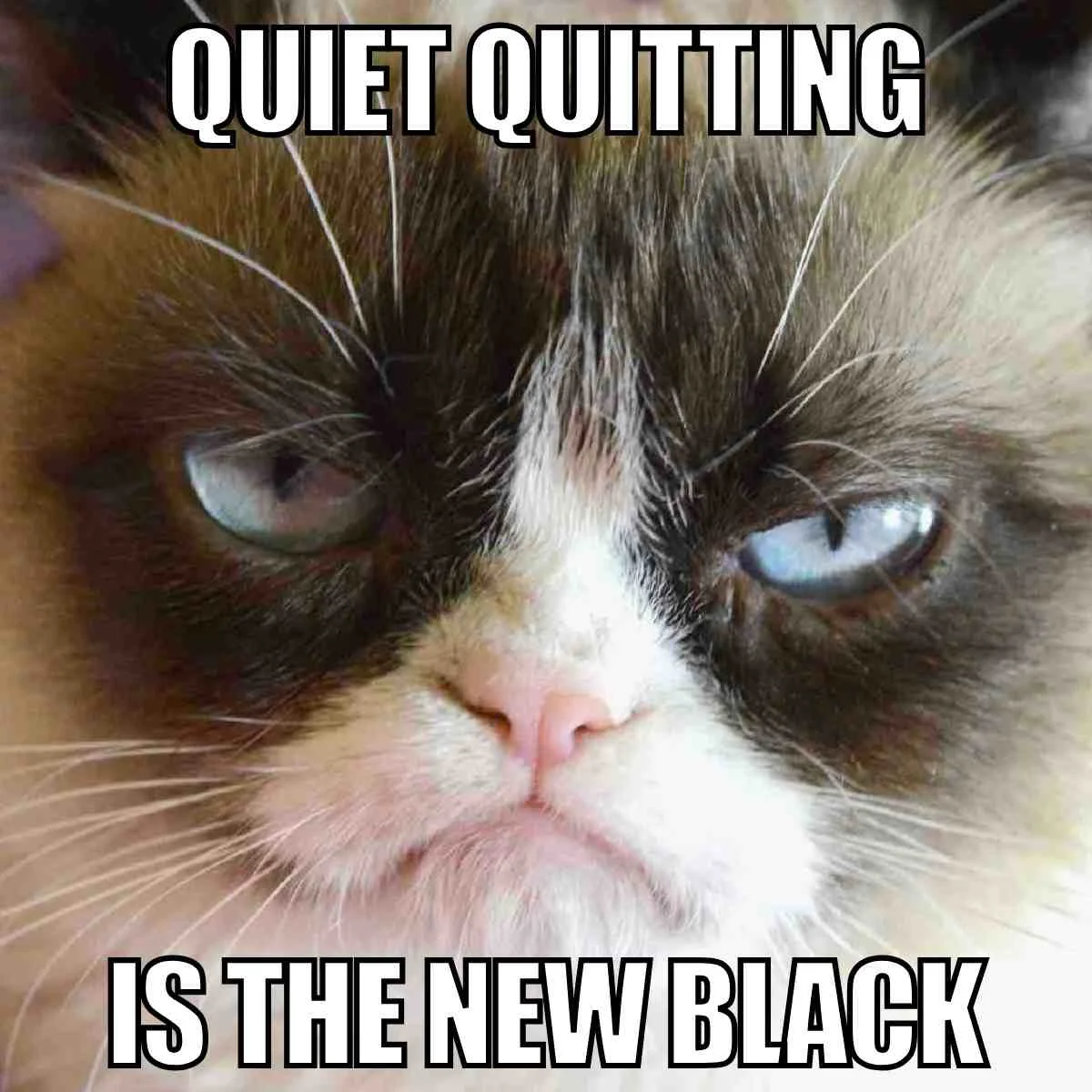
Quiet quitting represents a generational shift in how workers view their jobs. Rather than the old hustle culture mentality that glorified overwork and burnout, quiet quitting is about doing your job well within the hours you're paid for and not sacrificing your life for a corporation. It's not actually quitting, it's setting boundaries. The meme captures frustration with companies that expect unlimited free labor and celebrates workers who say no to unpaid overtime, after hours emails, and constant availability. It resonates because it addresses real workplace issues.
The 2022 labor market was wild. Companies were desperate for workers due to the pandemic reshuffling of the job market. Meanwhile, workers had gained leverage and were rethinking their priorities. Social media became the space where workers, especially younger ones, shared their experiences and strategies for maintaining boundaries. The quiet quitting meme emerged as a way to talk about this shift in the cultural conversation about work.
Origin & Background
The term exploded during the Great Resignation era when workers were questioning corporate expectations and burnout culture. TikTok and Twitter users began sharing their strategies for doing their jobs without sacrificing personal time.
How It Spread
Platforms
Cultural Impact
Quiet quitting changed the conversation about work culture. It gave a name to something workers had been doing for years but weren't talking about openly. The meme helped validate the idea that you don't owe your employer your entire life, which is a refreshing take in a culture that has long romanticized overwork.