Side Part Vs Middle Part Debate
Published August 11, 2026
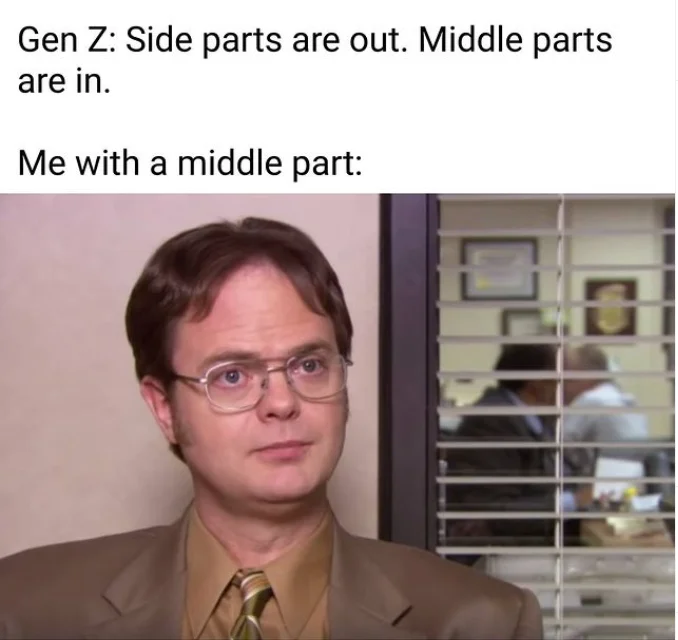
The Side Part Vs Middle Part Debate is a TikTok argument that broke through in early 2021, with Gen Z users calling side-parted hair a giveaway that someone is an out-of-touch millennial while middle parts belonged to the young. The fight sat next to related generational callouts about skinny jeans and the crying-laughing emoji.
Overview
The Side Part Vs Middle Part Debate is a TikTok argument playing out mostly under the hashtags #sidepart and #middlepart, where Gen Z users insist side-parted hair marks someone as an out-of-touch millennial while middle parts belong to the young1. The bit sits alongside other generational callouts on the app, including scorn for skinny jeans, capitalized text, and the crying-laughing emoji3. Together those cues form a checklist TikTok teens used to sort strangers into age brackets by aesthetic choice alone2.
Most videos in the debate are visual side-by-sides. A user films the same face styled first with a side part, then flips to a middle part, with the middle part framed as obviously more flattering1. Some clips crossed millions of views on their way to mainstream press coverage by early 20212. Middle parts got tied to bigger Gen Z looks like curtain bangs, while side parts brought to mind mid-2000s scene kids and Disney Channel teens4.
For millennials watching from outside TikTok, the fight came as a shock because side parts had been the default in the 2000s and 2010s during the Lauren Conrad beach-goddess era, and middle parts had been culturally dead since the 1990s1. Vox rolled the callout into a wider portrait of stereotypical millennials that also included the crying-laughing emoji, saying 'doggo,' and being weirdly attached to Harry Potter2.
Gallery
Origin & Background
How It Spread
How to Use This Meme
The classic version uses @missladygleep's original audio. A creator films themselves with a side part, then flips to a middle part, and typically lets the middle part win by pretending to be startled by how much better it looks1. Text overlays often call millennials out by name, or use dismissive phrases scoring the comparison against the side part1. Millennial-facing versions flip the template again: someone shows themselves refusing to change, or trying a middle part and hating it, or comparing themselves to figures like Rick from Degrassi or Jared Leto after the switch2. Bustle's editor-swap format is another common variant, running a multi-day trial and reporting back on whether the switch is worth keeping4.
Frequently Asked Questions
References (5)
- 1
- 2
- 3
- 4
- 5