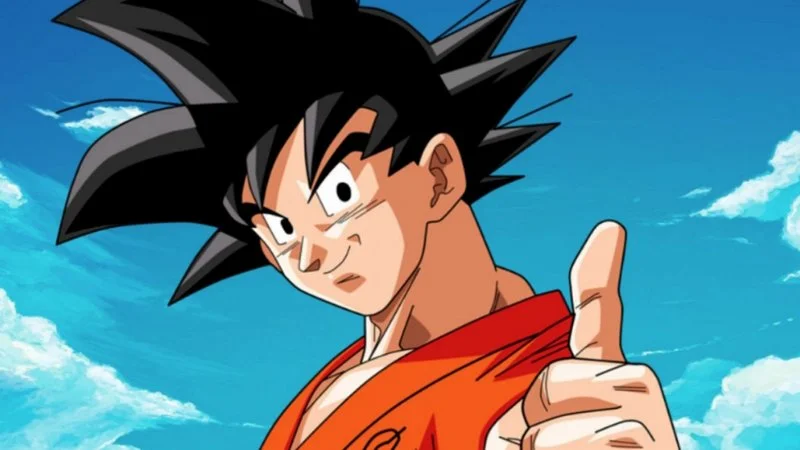
Son Goku

1984character meme / catchphrase / debate formatclassic

Also known as: Goku · Kakarot · Son Gokū

Son Goku is the spiky-haired protagonist of Akira Toriyama's 1984 Dragon Ball manga, whose absurd power levels and iconic "It's Over 9000" catchphrase spawned decades of meme formats and powerscaling debates.

Son Goku, the spiky-haired protagonist of Akira Toriyama's Dragon Ball franchise, is one of the most memed characters in anime history. Since his manga debut in 1984, Goku's over-the-top power levels, signature attacks, and endless transformations have spawned dozens of meme formats, from "It's Over 9000" to decades of "Goku vs. Superman" wars. His status as the archetypal shonen hero makes him both a beloved icon and a prime target for jokes about powerscaling obsession.

TL;DR

Son Goku, the spiky-haired protagonist of Akira Toriyama's Dragon Ball franchise, is one of the most memed characters in anime history.

Overview

Son Goku is the central character of the Dragon Ball manga and anime series, created by Akira Toriyama and first published in Weekly Shōnen Jump on November 29, 19845. As a Saiyan warrior raised on Earth, Goku spends the series fighting increasingly powerful enemies while training to get stronger. His signature moves include the Kamehameha energy blast, the Power Pole staff, and various Super Saiyan transformations that change his hair color and power output.

Online, Goku is a meme factory. His power levels, transformations, battles, and simple-minded personality have all been mined for jokes, debates, reaction images, and copypasta. The most famous Dragon Ball meme, "It's Over 9000," became one of the internet's earliest viral catchphrases6. But the meme ecosystem around Goku is vast: powerscaling arguments, transformation parodies, reaction faces, and an entire genre of "Goku solos your favorite character" shitposting that simultaneously mocks and celebrates Dragon Ball fan culture4.

Toriyama conceived Dragon Ball after finishing his previous series Dr. Slump. In interviews, he credited Jackie Chan's "Drunken Master" as a primary influence, saying he'd watched it "dozens of times"2. His editor Torishima suggested he try a kung-fu manga, leading to a one-shot called "Dragon Boy" that tested well with readers2.

For the serialized version, Toriyama turned to the 16th-century Chinese novel Journey to the West as his structural backbone1. Goku is directly based on Sun Wukong, the Monkey King. The parallels are obvious: a supernaturally strong monkey-like character with a tail, a magic extending staff (the Power Pole), and a flying cloud (the Flying Nimbus)1. Even Goku's full name is the Japanese reading of "Sun Wukong"1.

The first chapter, "Bulma and Son Goku," introduced a wild boy living alone in the mountains who joins a girl named Bulma on a quest to find the seven Dragon Balls5. Other early characters mapped to Journey to the West figures too. Bulma parallels the monk Tang Sanzang, Oolong mirrors pig demon Zhu Bajie, and Yamcha echoes the sand demon Sha Wujing1.

As the series shifted into Dragon Ball Z, Toriyama drew from martial arts cinema for Goku's iconic Super Saiyan transformation. He based Goku's fierce stare after transforming on Bruce Lee's eyes, telling an interviewer for a Dragon Ball Z guidebook: "His eyes from right after he transforms for the first time and looks up at Freeza... I based those off of Bruce Lee"3. Toriyama added that Lee's glare was "paralyzing" and that once Goku gave that look, "as far as I was concerned the story arc was over"3.

Origin & Background

Platform
Weekly Shōnen Jump (character), internet forums / YouTube (meme formats)
Key People
Akira Toriyama, community-created meme formats
Date
1984 (character debut); memes spread from late 1990s onward

Toriyama conceived Dragon Ball after finishing his previous series Dr. Slump. In interviews, he credited Jackie Chan's "Drunken Master" as a primary influence, saying he'd watched it "dozens of times". His editor Torishima suggested he try a kung-fu manga, leading to a one-shot called "Dragon Boy" that tested well with readers.

For the serialized version, Toriyama turned to the 16th-century Chinese novel Journey to the West as his structural backbone. Goku is directly based on Sun Wukong, the Monkey King. The parallels are obvious: a supernaturally strong monkey-like character with a tail, a magic extending staff (the Power Pole), and a flying cloud (the Flying Nimbus). Even Goku's full name is the Japanese reading of "Sun Wukong".

The first chapter, "Bulma and Son Goku," introduced a wild boy living alone in the mountains who joins a girl named Bulma on a quest to find the seven Dragon Balls. Other early characters mapped to Journey to the West figures too. Bulma parallels the monk Tang Sanzang, Oolong mirrors pig demon Zhu Bajie, and Yamcha echoes the sand demon Sha Wujing.

As the series shifted into Dragon Ball Z, Toriyama drew from martial arts cinema for Goku's iconic Super Saiyan transformation. He based Goku's fierce stare after transforming on Bruce Lee's eyes, telling an interviewer for a Dragon Ball Z guidebook: "His eyes from right after he transforms for the first time and looks up at Freeza... I based those off of Bruce Lee". Toriyama added that Lee's glare was "paralyzing" and that once Goku gave that look, "as far as I was concerned the story arc was over".

How It Spread

Dragon Ball aired in Japan starting in 1986 and gradually reached Western audiences through fan-translated bootlegs, imported manga, and eventually dubbed TV broadcasts in the late 1990s. As one of the first anime to gain a mass Western following, Dragon Ball introduced millions of viewers to Goku, and internet culture followed.

The earliest Goku memes grew out of the powerscaling community. Fans had been arguing about his strength since the 1990s, and "Goku vs. Superman" became the classic matchup. In 2002, Wizard magazine published a cover story framing the hypothetical fight as "East vs. West," with Goku winning. A popular webcomic expanded the rivalry in 2003. By 2009, YouTube videos depicting the fight pulled millions of views, though a video showing Superman winning earned a 75% dislike ratio and waves of angry comments.

"It's Over 9000" broke through as a standalone meme around 2006-2008. The line comes from Vegeta's shocked reaction to Goku's power level in the English dub, though the original Japanese number was 8,000. The phrase became shorthand for anything unexpectedly large. It got a boost when Anonymous tricked Oprah into saying "over 9000 penises" on live TV. World of Warcraft added an achievement called "It's Over Nine Thousand," and Pokemon X and Y referenced it through an NPC who tells the player their power level is "over 9,000 for sure".

By the 2010s, the dynamic around Goku memes flipped. With anime going mainstream, Dragon Ball fans were no longer underdogs defending a niche hobby. Instead, the perception of overbearing fans who inserted powerscaling debates into unrelated conversations became the joke itself. "Your Fave Could Beat Goku" accounts appeared on Twitter and Tumblr, letting users submit any character as a triumphant challenger. Characters popular with women, like Sailor Moon, or from modern hits like My Hero Academia and Jujutsu Kaisen, drew the most engagement and the most outraged Dragon Ball defenders falling for the bait.

How to Use This Meme

Goku memes come in several common formats:

Power level / "Over 9000": Apply the phrase to any situation involving an unexpectedly large number. Works for bills, notification counts, or anything absurdly high. The humor is in the overreaction.

Goku vs. [Character]: Pick any character from any media and argue they could beat Goku, or that Goku could beat them. The comedy comes from the absurdity of the matchup and the guaranteed overreaction from someone.

Transformation tier memes: Reference Goku's many Super Saiyan forms to describe escalating levels of intensity. Going Super Saiyan is casual annoyance, Super Saiyan 3 is serious, Ultra Instinct is peak. Often used as a reaction format.

Kamehameha: Recreate the hand position in photos or videos. Typically done ironically or as a callback to childhood playground behavior.

"Goku solos": Drop "Goku solos your verse" into any conversation about fictional characters to either bait powerscalers or mock the tendency to insert Goku into everything.

Cultural Impact

Goku's reach extends into music, professional sports, and official government recognition.

Hip-hop adopted Dragon Ball Z as a shared cultural touchstone. Artists from Chief Keef and Chance the Rapper to J. Cole and Childish Gambino referenced the franchise in their work. NBA players like DeMarcus Cousins, Joel Embiid, and Brook Lopez were public fans. This crossover kept Dragon Ball relevant in pop culture conversations well beyond the anime community.

The Japanese government's recognition of May 9th as Goku Day through the Japan Anniversary Association made Goku one of the few fictional characters with an officially registered holiday. Annual celebrations include exclusive merchandise, crane game figures, commemorative stickers, and events across Dragon Ball video games.

In a Goo Ranking poll of Japan's favorite characters across all media, Goku placed 6th. Multiple Western outlets including IGN and Screen Rant have ranked him among the greatest anime characters. Dragon Ball's influence on the shonen genre shaped how an entire generation of manga creators approached action storytelling.

Full History

Dragon Ball's playground culture in the 1990s and 2000s gave Goku memes a physical, real-world dimension that most internet humor lacked. If you were a kid during that era, you either replicated the Kamehameha hand motion yourself or watched someone else do it a million times. This participatory element, kids literally pretending to fire energy blasts at each other, created a generation-spanning shared experience that primed Goku for meme immortality.

The cultural crossover went well beyond internet forums. In hip-hop, Dragon Ball Z became a shared language among artists. Chief Keef, Chance the Rapper, J. Cole, and Childish Gambino all referenced the franchise publicly. Athletes like DeMarcus Cousins, Joel Embiid, Brook Lopez, and De'Aaron Fox were vocal fans, as was actor Michael B. Jordan. This organic adoption by celebrities outside the anime world helped keep Dragon Ball in the cultural conversation between major releases.

In Japan, Goku's official status was cemented on May 9, 2015, when the Japan Anniversary Association certified "Goku Day" as an annual celebration. The date works as a pun in the Sino-Japanese counting system: the fifth month (go) and ninth day (ku) combine to form "Goku". Toriyama had foreshadowed this in the original manga, where the villain King Piccolo declared May 9th "Piccolo Day," a joke likely intentional given the reading. Goku Day now features exclusive crane game figures, commemorative stickers, video game events in Dragon Ball Z Dokkan Battle and Dragon Ball FighterZ, and global social media campaigns.

The shift in how the internet treats Goku's strength is one of the more interesting arcs in meme history. In the 2000s, championing Goku felt like championing anime itself, since Superman and Western comics needed no defenders. By the 2010s, with anime widely accessible through Crunchyroll and Netflix, the script flipped. Polygon described the current moment as "post-Goku," arguing the medium no longer needs an all-powerful champion. The minority of fans who still take powerscaling debates too seriously tend to overlap with those gatekeeping anime's growing audience, which turned the joke about Goku's strength into a tool against elitism.

The "Grandma Goku" meme is a smaller but persistent format. In the Japanese version, Goku is voiced by Masako Nozawa, who was in her fifties when she started the role. For Western fans used to Sean Schemmel's deeper English performance, learning that adult Goku is voiced by an elderly woman creates genuine surprise that feeds recurring meme content.

A Goo Ranking poll of Japan's favorite characters across all media placed Goku at #6, behind Doraemon, Pikachu, Mario, Anpanman, and Hello Kitty, but above Godzilla, Gundam, and Sailor Moon. Western anime publications routinely place him at or near the top of their rankings. The franchise itself, with roughly 20 movies, 148 video games, and multiple sequel series including Dragon Ball GT and Dragon Ball Super, keeps producing new material for the meme ecosystem.

Fun Facts

Goku's name literally means "aware of emptiness" in Japanese, with "Go" meaning enlightenment and "Ku" meaning sky or void. His full name is the Japanese pronunciation of Sun Wukong, the Monkey King from Journey to the West.

The "Over 9000" line is a translation change. In the original Japanese, Vegeta says Goku's power level is over 8,000. The uncut English dub of Dragon Ball Z Kai restored the original number.

Toriyama said the Super Saiyan transformation scene was effectively the end of the Frieza arc for him: "Once Goku gave that look, as far as I was concerned the story arc was over".

Master Roshi's line "This isn't over yet. It'll continue for a bit longer" at the end of the 23rd World Tournament in the manga became ironic when the series ran for six more years with two anime sequels, multiple movies, and decades of merchandise.

Goku is voiced by Masako Nozawa in the Japanese version, who was in her fifties when she started voicing the character. This led to the fan nickname "Grandma Goku".

Derivatives & Variations

"It's Over 9000"

Vegeta's exclamation about Goku's power level became one of the internet's first viral catchphrases, applied to anything involving large numbers. Even World of Warcraft and Pokemon X and Y added references[6].

Goku vs. Superman

The original "who would win" debate, dating to at least a 2002 Wizard magazine feature, with YouTube videos and webcomics extending the argument for years[4].

"Your Fave Could Beat Goku"

Twitter and Tumblr accounts that accept character submissions and declare them victorious over Goku, deliberately baiting powerscalers into proving the joke's point[4].

Super Saiyan transformation edits

Videos and images showing characters or real people "going Super Saiyan" with golden hair and aura effects added. One of the oldest anime edit formats[6].

Yamcha's death pose

An image of Yamcha lying defeated in a crater, widely used to represent any embarrassing loss[6].

"Krillin dies"

A running joke about Krillin's frequent deaths being treated as a weekly event by other characters and the Eternal Dragons[6].

Kamehameha recreations

Photos and videos of people doing the signature hand gesture, a staple of playground culture and convention photo ops[6].

Piccolo Day / Goku Day memes

Annual May 9th celebrations referencing both King Piccolo's in-universe declaration and the official real-world holiday[7].

"Launch launching Krillin"

A scene from the original Dragon Ball where Launch throws Krillin in quick succession, which exploded as a meme in late 2024 and early 2025[6].

Frequently Asked Questions

SonGoku

1984character meme / catchphrase / debate formatclassic

Also known as: Goku · Kakarot · Son Gokū

Son Goku is the spiky-haired protagonist of Akira Toriyama's 1984 Dragon Ball manga, whose absurd power levels and iconic "It's Over 9000" catchphrase spawned decades of meme formats and powerscaling debates.

Son Goku, the spiky-haired protagonist of Akira Toriyama's Dragon Ball franchise, is one of the most memed characters in anime history. Since his manga debut in 1984, Goku's over-the-top power levels, signature attacks, and endless transformations have spawned dozens of meme formats, from "It's Over 9000" to decades of "Goku vs. Superman" wars. His status as the archetypal shonen hero makes him both a beloved icon and a prime target for jokes about powerscaling obsession.

TL;DR

Son Goku, the spiky-haired protagonist of Akira Toriyama's Dragon Ball franchise, is one of the most memed characters in anime history.

Overview

Son Goku is the central character of the Dragon Ball manga and anime series, created by Akira Toriyama and first published in Weekly Shōnen Jump on November 29, 1984. As a Saiyan warrior raised on Earth, Goku spends the series fighting increasingly powerful enemies while training to get stronger. His signature moves include the Kamehameha energy blast, the Power Pole staff, and various Super Saiyan transformations that change his hair color and power output.

Online, Goku is a meme factory. His power levels, transformations, battles, and simple-minded personality have all been mined for jokes, debates, reaction images, and copypasta. The most famous Dragon Ball meme, "It's Over 9000," became one of the internet's earliest viral catchphrases. But the meme ecosystem around Goku is vast: powerscaling arguments, transformation parodies, reaction faces, and an entire genre of "Goku solos your favorite character" shitposting that simultaneously mocks and celebrates Dragon Ball fan culture.

Toriyama conceived Dragon Ball after finishing his previous series Dr. Slump. In interviews, he credited Jackie Chan's "Drunken Master" as a primary influence, saying he'd watched it "dozens of times". His editor Torishima suggested he try a kung-fu manga, leading to a one-shot called "Dragon Boy" that tested well with readers.

For the serialized version, Toriyama turned to the 16th-century Chinese novel Journey to the West as his structural backbone. Goku is directly based on Sun Wukong, the Monkey King. The parallels are obvious: a supernaturally strong monkey-like character with a tail, a magic extending staff (the Power Pole), and a flying cloud (the Flying Nimbus). Even Goku's full name is the Japanese reading of "Sun Wukong".

The first chapter, "Bulma and Son Goku," introduced a wild boy living alone in the mountains who joins a girl named Bulma on a quest to find the seven Dragon Balls. Other early characters mapped to Journey to the West figures too. Bulma parallels the monk Tang Sanzang, Oolong mirrors pig demon Zhu Bajie, and Yamcha echoes the sand demon Sha Wujing.

As the series shifted into Dragon Ball Z, Toriyama drew from martial arts cinema for Goku's iconic Super Saiyan transformation. He based Goku's fierce stare after transforming on Bruce Lee's eyes, telling an interviewer for a Dragon Ball Z guidebook: "His eyes from right after he transforms for the first time and looks up at Freeza... I based those off of Bruce Lee". Toriyama added that Lee's glare was "paralyzing" and that once Goku gave that look, "as far as I was concerned the story arc was over".

Origin & Background

Platform
Weekly Shōnen Jump (character), internet forums / YouTube (meme formats)
Key People
Akira Toriyama, community-created meme formats
Date
1984 (character debut); memes spread from late 1990s onward

Toriyama conceived Dragon Ball after finishing his previous series Dr. Slump. In interviews, he credited Jackie Chan's "Drunken Master" as a primary influence, saying he'd watched it "dozens of times". His editor Torishima suggested he try a kung-fu manga, leading to a one-shot called "Dragon Boy" that tested well with readers.

For the serialized version, Toriyama turned to the 16th-century Chinese novel Journey to the West as his structural backbone. Goku is directly based on Sun Wukong, the Monkey King. The parallels are obvious: a supernaturally strong monkey-like character with a tail, a magic extending staff (the Power Pole), and a flying cloud (the Flying Nimbus). Even Goku's full name is the Japanese reading of "Sun Wukong".

The first chapter, "Bulma and Son Goku," introduced a wild boy living alone in the mountains who joins a girl named Bulma on a quest to find the seven Dragon Balls. Other early characters mapped to Journey to the West figures too. Bulma parallels the monk Tang Sanzang, Oolong mirrors pig demon Zhu Bajie, and Yamcha echoes the sand demon Sha Wujing.

As the series shifted into Dragon Ball Z, Toriyama drew from martial arts cinema for Goku's iconic Super Saiyan transformation. He based Goku's fierce stare after transforming on Bruce Lee's eyes, telling an interviewer for a Dragon Ball Z guidebook: "His eyes from right after he transforms for the first time and looks up at Freeza... I based those off of Bruce Lee". Toriyama added that Lee's glare was "paralyzing" and that once Goku gave that look, "as far as I was concerned the story arc was over".

How It Spread

Dragon Ball aired in Japan starting in 1986 and gradually reached Western audiences through fan-translated bootlegs, imported manga, and eventually dubbed TV broadcasts in the late 1990s. As one of the first anime to gain a mass Western following, Dragon Ball introduced millions of viewers to Goku, and internet culture followed.

The earliest Goku memes grew out of the powerscaling community. Fans had been arguing about his strength since the 1990s, and "Goku vs. Superman" became the classic matchup. In 2002, Wizard magazine published a cover story framing the hypothetical fight as "East vs. West," with Goku winning. A popular webcomic expanded the rivalry in 2003. By 2009, YouTube videos depicting the fight pulled millions of views, though a video showing Superman winning earned a 75% dislike ratio and waves of angry comments.

"It's Over 9000" broke through as a standalone meme around 2006-2008. The line comes from Vegeta's shocked reaction to Goku's power level in the English dub, though the original Japanese number was 8,000. The phrase became shorthand for anything unexpectedly large. It got a boost when Anonymous tricked Oprah into saying "over 9000 penises" on live TV. World of Warcraft added an achievement called "It's Over Nine Thousand," and Pokemon X and Y referenced it through an NPC who tells the player their power level is "over 9,000 for sure".

By the 2010s, the dynamic around Goku memes flipped. With anime going mainstream, Dragon Ball fans were no longer underdogs defending a niche hobby. Instead, the perception of overbearing fans who inserted powerscaling debates into unrelated conversations became the joke itself. "Your Fave Could Beat Goku" accounts appeared on Twitter and Tumblr, letting users submit any character as a triumphant challenger. Characters popular with women, like Sailor Moon, or from modern hits like My Hero Academia and Jujutsu Kaisen, drew the most engagement and the most outraged Dragon Ball defenders falling for the bait.

How to Use This Meme

Goku memes come in several common formats:

Power level / "Over 9000": Apply the phrase to any situation involving an unexpectedly large number. Works for bills, notification counts, or anything absurdly high. The humor is in the overreaction.

Goku vs. [Character]: Pick any character from any media and argue they could beat Goku, or that Goku could beat them. The comedy comes from the absurdity of the matchup and the guaranteed overreaction from someone.

Transformation tier memes: Reference Goku's many Super Saiyan forms to describe escalating levels of intensity. Going Super Saiyan is casual annoyance, Super Saiyan 3 is serious, Ultra Instinct is peak. Often used as a reaction format.

Kamehameha: Recreate the hand position in photos or videos. Typically done ironically or as a callback to childhood playground behavior.

"Goku solos": Drop "Goku solos your verse" into any conversation about fictional characters to either bait powerscalers or mock the tendency to insert Goku into everything.

Cultural Impact

Goku's reach extends into music, professional sports, and official government recognition.

Hip-hop adopted Dragon Ball Z as a shared cultural touchstone. Artists from Chief Keef and Chance the Rapper to J. Cole and Childish Gambino referenced the franchise in their work. NBA players like DeMarcus Cousins, Joel Embiid, and Brook Lopez were public fans. This crossover kept Dragon Ball relevant in pop culture conversations well beyond the anime community.

The Japanese government's recognition of May 9th as Goku Day through the Japan Anniversary Association made Goku one of the few fictional characters with an officially registered holiday. Annual celebrations include exclusive merchandise, crane game figures, commemorative stickers, and events across Dragon Ball video games.

In a Goo Ranking poll of Japan's favorite characters across all media, Goku placed 6th. Multiple Western outlets including IGN and Screen Rant have ranked him among the greatest anime characters. Dragon Ball's influence on the shonen genre shaped how an entire generation of manga creators approached action storytelling.

Full History

Dragon Ball's playground culture in the 1990s and 2000s gave Goku memes a physical, real-world dimension that most internet humor lacked. If you were a kid during that era, you either replicated the Kamehameha hand motion yourself or watched someone else do it a million times. This participatory element, kids literally pretending to fire energy blasts at each other, created a generation-spanning shared experience that primed Goku for meme immortality.

The cultural crossover went well beyond internet forums. In hip-hop, Dragon Ball Z became a shared language among artists. Chief Keef, Chance the Rapper, J. Cole, and Childish Gambino all referenced the franchise publicly. Athletes like DeMarcus Cousins, Joel Embiid, Brook Lopez, and De'Aaron Fox were vocal fans, as was actor Michael B. Jordan. This organic adoption by celebrities outside the anime world helped keep Dragon Ball in the cultural conversation between major releases.

In Japan, Goku's official status was cemented on May 9, 2015, when the Japan Anniversary Association certified "Goku Day" as an annual celebration. The date works as a pun in the Sino-Japanese counting system: the fifth month (go) and ninth day (ku) combine to form "Goku". Toriyama had foreshadowed this in the original manga, where the villain King Piccolo declared May 9th "Piccolo Day," a joke likely intentional given the reading. Goku Day now features exclusive crane game figures, commemorative stickers, video game events in Dragon Ball Z Dokkan Battle and Dragon Ball FighterZ, and global social media campaigns.

The shift in how the internet treats Goku's strength is one of the more interesting arcs in meme history. In the 2000s, championing Goku felt like championing anime itself, since Superman and Western comics needed no defenders. By the 2010s, with anime widely accessible through Crunchyroll and Netflix, the script flipped. Polygon described the current moment as "post-Goku," arguing the medium no longer needs an all-powerful champion. The minority of fans who still take powerscaling debates too seriously tend to overlap with those gatekeeping anime's growing audience, which turned the joke about Goku's strength into a tool against elitism.

The "Grandma Goku" meme is a smaller but persistent format. In the Japanese version, Goku is voiced by Masako Nozawa, who was in her fifties when she started the role. For Western fans used to Sean Schemmel's deeper English performance, learning that adult Goku is voiced by an elderly woman creates genuine surprise that feeds recurring meme content.

A Goo Ranking poll of Japan's favorite characters across all media placed Goku at #6, behind Doraemon, Pikachu, Mario, Anpanman, and Hello Kitty, but above Godzilla, Gundam, and Sailor Moon. Western anime publications routinely place him at or near the top of their rankings. The franchise itself, with roughly 20 movies, 148 video games, and multiple sequel series including Dragon Ball GT and Dragon Ball Super, keeps producing new material for the meme ecosystem.

Fun Facts

Goku's name literally means "aware of emptiness" in Japanese, with "Go" meaning enlightenment and "Ku" meaning sky or void. His full name is the Japanese pronunciation of Sun Wukong, the Monkey King from Journey to the West.

The "Over 9000" line is a translation change. In the original Japanese, Vegeta says Goku's power level is over 8,000. The uncut English dub of Dragon Ball Z Kai restored the original number.

Toriyama said the Super Saiyan transformation scene was effectively the end of the Frieza arc for him: "Once Goku gave that look, as far as I was concerned the story arc was over".

Master Roshi's line "This isn't over yet. It'll continue for a bit longer" at the end of the 23rd World Tournament in the manga became ironic when the series ran for six more years with two anime sequels, multiple movies, and decades of merchandise.

Goku is voiced by Masako Nozawa in the Japanese version, who was in her fifties when she started voicing the character. This led to the fan nickname "Grandma Goku".

Derivatives & Variations

"It's Over 9000"

Vegeta's exclamation about Goku's power level became one of the internet's first viral catchphrases, applied to anything involving large numbers. Even World of Warcraft and Pokemon X and Y added references[6].

Goku vs. Superman

The original "who would win" debate, dating to at least a 2002 Wizard magazine feature, with YouTube videos and webcomics extending the argument for years[4].

"Your Fave Could Beat Goku"

Twitter and Tumblr accounts that accept character submissions and declare them victorious over Goku, deliberately baiting powerscalers into proving the joke's point[4].

Super Saiyan transformation edits

Videos and images showing characters or real people "going Super Saiyan" with golden hair and aura effects added. One of the oldest anime edit formats[6].

Yamcha's death pose

An image of Yamcha lying defeated in a crater, widely used to represent any embarrassing loss[6].

"Krillin dies"

A running joke about Krillin's frequent deaths being treated as a weekly event by other characters and the Eternal Dragons[6].

Kamehameha recreations

Photos and videos of people doing the signature hand gesture, a staple of playground culture and convention photo ops[6].

Piccolo Day / Goku Day memes

Annual May 9th celebrations referencing both King Piccolo's in-universe declaration and the official real-world holiday[7].

"Launch launching Krillin"

A scene from the original Dragon Ball where Launch throws Krillin in quick succession, which exploded as a meme in late 2024 and early 2025[6].

Frequently Asked Questions