Tree Swing Cartoon Parodies
Published October 21, 2026
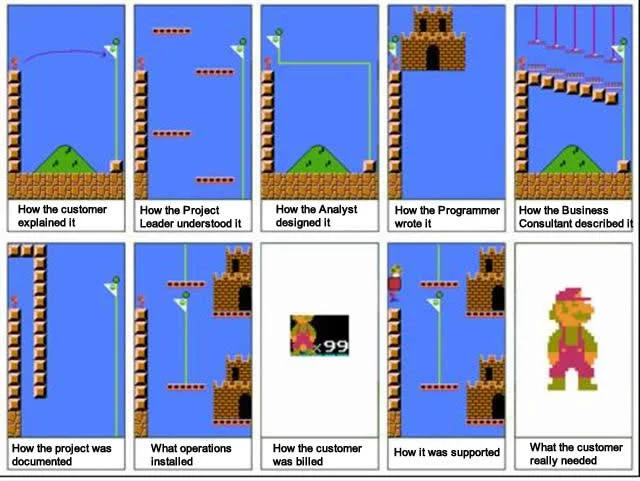
Tree Swing Cartoon Parodies is a multi-panel exploitable webcomic that pokes fun at how corporate teams mangle a simple project, with each panel showing a different department's bungled version of a backyard swing3. A blog post titled 'Typical Project Life' put the online version up on September 9, 20031. By September 2010, Japanese fans had turned the last panel's caption, 顧客が本当に必要だったもの (What The Customer Really Needed), into a standalone catchphrase on Nico Nico Pedia7.
Overview
Each parody uses the six to seven panel layout where the first image shows 'how the project leader described it,' moves through analyst, programmer, and sales representative versions, then closes on a humble tire-on-a-rope that was all the customer actually wanted4. Remixers substitute the swing for whatever industry they want to roast, from government software contracts to design agency briefs, with the deadpan captions left intact3. Humor comes from how each panel's drawing fails in a specific way: the engineering version is impossibly overbuilt, the installation version is upside down or in the wrong tree, and the documentation panel is often blank5.
Portability drives the format's long life. Blog posts about agile methodology, PowerPoint decks on requirements gathering, and university lectures on systems engineering borrow the layout to make a quick point about communication gaps5. Japanese remixers focused on the final 'customer' panel specifically, where the simple tire swing stands in for the much smaller feature that users actually asked for7.
Gallery
Origin & Background
How It Spread
Timeline
How to Use This Meme
Create a comic with six to seven panels, each showing a different team's version of the same product, from the initial brief through engineering, sales, and installation. The final panel usually shows the much simpler thing the customer actually asked for. The Project Cartoon website offers an interface for mixing and matching existing panels into a custom version4.
Frequently Asked Questions
References (7)
- 1
- 2
- 3
- 4
- 5
- 6
- 7