Home›Memes›Vagueposting

Contents

  • Overview
  • Gallery
  • Origin
  • How It Spread
  • How to Use
  • FAQ
  • References
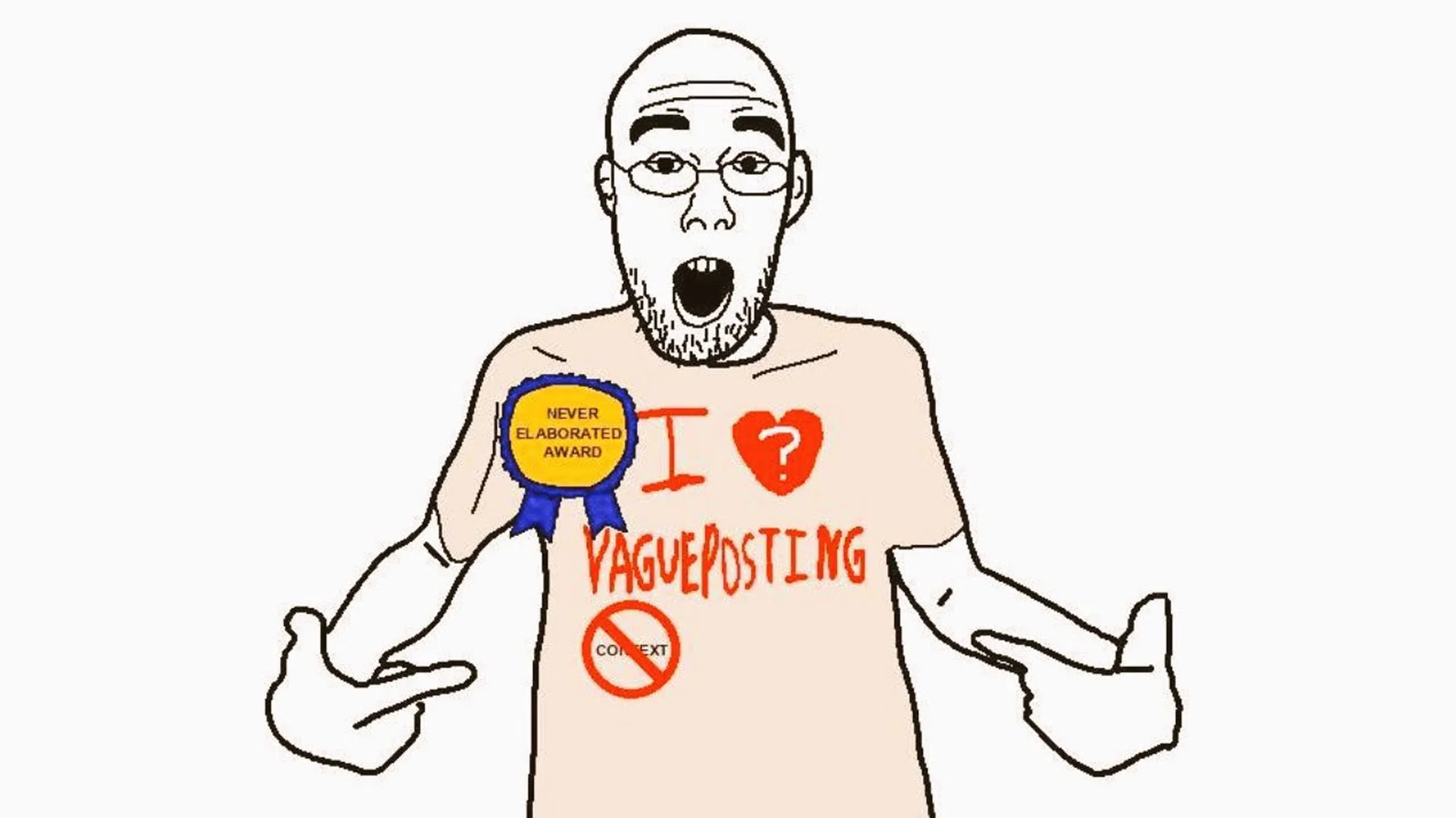
Bald man cartoon wearing 'I heart vagueposting' shirt with 'Never Elaborated Award' ribbon

Vagueposting

2009social media behavioractive

Published August 14, 2026

Vagueposting is a social media behavior where users post cryptic, context-free statements about events or people without naming them directly. Originating from the term "vaguebooking" in 2009, the practice became widely criticized as engagement bait and attention-seeking, particularly on Twitter/X, Tumblr, and Instagram.

social media culture memes slang memes internet slang origin memes behavior mocking memes twitter memes

Overview

Vagueposting refers to the practice of sharing cryptic social media posts that intentionally omit critical context. Users post reactions, complaints, or references to drama without naming the specific person, event, or situation involved2. The goal is often to bait followers into asking questions, generate engagement through confusion, or address someone indirectly without direct confrontation3.

TikTok

The behavior is closely related to subtweeting and IYKYK (If You Know, You Know) posts. Common examples include posting emotional statements like "I can't believe they actually did that" or vague criticisms that leave readers scrambling for context3. Critics view vagueposting as attention-seeking or a form of passive-aggressive communication, while practitioners sometimes use it to vent without starting direct conflict1.

Gallery

Origin & Background

Platform
Facebook
Date
2009

The concept first emerged under the name "vaguebooking" on Facebook. Urban Dictionary user elbandidomaximo defined the term on February 19, 2009, describing it as "an intentionally vague Facebook status update, that prompts friends to ask what's going on, or is possibly a cry for help"1. This definition accumulated over 12,300 likes over the years.

The term "vagueposting" itself appeared as the behavior spread beyond Facebook. X user @nohungryghosts posted the first known use of the hashtag #vagueposting on April 10, 20112. A formal Urban Dictionary definition for vagueposting was added on May 5, 2015 by user lightning_troubadour2.

How It Spread

Vagueposting gained mainstream attention on Twitter/X in the early 2020s. X user @giiacrossing applied the term to the Animal Crossing fandom on July 18, 2020, in what became the first viral tweet using the term, earning over 6,500 likes2. YouTuber Daniel Howell brought additional visibility on October 21st of that year when he quote-tweeted a NASA announcement with "NASA vagueposting 'about the moon' as if we don't all have enough to panic about right now," gaining roughly 49,000 likes2.

The term saw a major resurgence in late 2025. On November 30th, X user @LundaHunda posted a Soyjak meme featuring a character wearing an "I love vagueposting" shirt, earning over 2,600 likes2. The frustration with the trend peaked on December 15th when X user @FPSthetics tweeted "Why has this entire site turned to fucking vagueposting in the past month, like every viral tweet means nothing anymore because there's no context," gaining over 22,000 likes within hours2.

The practice became a recognized meta-joke, with users creating memes mocking vagueposters and ironic posts celebrating the behavior4.

How to Use This Meme

Vagueposting typically involves posting a strong emotional reaction or opinion while deliberately withholding the context needed to understand it. Common formats include posting something like "I can't believe what just happened" without elaboration, criticizing unnamed individuals ("some people really need to learn boundaries"), or reacting to drama without explaining it ("well THAT escalated quickly"). The practice often includes dramatic punctuation, vague pronouns like "they" or "someone," and emotional language designed to prompt curiosity.

Frequently Asked Questions

Vagueposting is the act of posting cryptic social media content that intentionally omits context, forcing readers to guess what or who is being referenced3.

The practice originated on Facebook under the name "vaguebooking," first defined on Urban Dictionary in February 20091. The term "vagueposting" emerged on Twitter by 20112.

It means posting about someone or something in a deliberately vague way, often to seek attention, avoid direct confrontation, or generate engagement without providing full context13.

Users vaguepost by sharing emotional or dramatic statements while withholding key details, such as posting "I can't believe they did that" without explaining who "they" are or what happened3.

Yes, vagueposting saw a major resurgence in late 2025, with viral tweets both criticizing and ironically celebrating the practice on X/Twitter2.

References (4)

  1. 1
    https://www.urbandictionary.com/define.php?term=Vaguebooking
  2. 2
    https://knowyourmeme.com/memes/vagueposting
  3. 3
    https://www.urbandictionary.com/define.php?term=Vagueposting
  4. 4
    https://www.tiktok.com/@idolwinking/video/7573955547821608199

Quick Info

Year
2009
Origin
Facebook
Type
social media behavior
Status
active

Tags

social mediaengagement baitTwitterTumblrinternet slangsubtweetingFacebook

More Social Media Culture Memes

  • Oversharing
  • Rare Usernames
  • Algorithm Complaint
  • Threads Launch
  • Selfie
  • Social Media Influencer
  • Spotify Wrapped Memes
  • 2011 United Kingdom Riots
  • Chronically Online
  • Viral Marketing
  • TikTok Ban
  • Concert Vlog Trends
View all Social Media Culture memes →
Browse MemesTopicsCreatorsTrendingPlayAboutLegalPrivacy

© 2026 meme.com