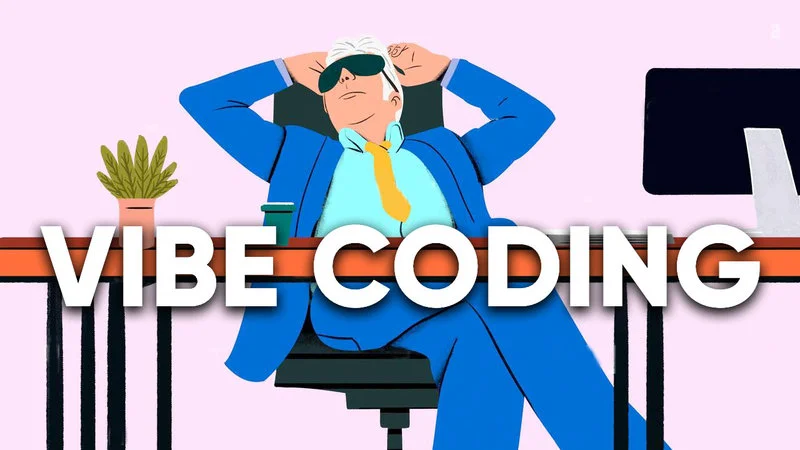
Vibe Coding
Published April 7, 2026
Vibe coding is a slang term coined by OpenAI co-founder Andrej Karpathy on February 2, 2025, describing a programming approach where developers use AI tools to generate code without reviewing what the AI writes1. The concept spread from a single X post into a major internet debate about the future of software development, spawning memes, counter-memes like "vibe debugging," and deep divisions between those who saw it as liberating and those who called it reckless2. Within weeks the term appeared in The New York Times, The Guardian, and Ars Technica, making it one of the fastest-moving tech memes of the 2020s1.
Overview
Vibe coding describes a workflow where a programmer talks to an AI coding assistant, accepts its output without reading the generated code, and iterates by pasting errors back into the AI until things work. The programmer acts more like a prompt-giver and bug-tester than a traditional coder. Karpathy framed the idea with a memorable directive: "Give in to the vibes, embrace exponentials, and forget that the code even exists"1.
The term quickly outgrew its original meaning. Some people use "vibe coding" to describe any AI-assisted programming, while others insist it specifically means building software with an LLM without reviewing the code it writes1. This rapid dilution of meaning drew comparisons to the word "agile," which similarly lost its precise definition as it spread through the industry2.
Gallery
Origin & Background
How It Spread
How to Use This Meme
Vibe coding isn't a meme template with a fixed visual format. It's typically used in three ways:
As a label for your workflow. Post a screenshot of your AI coding setup (Cursor, Copilot, Claude) with a caption like "just vibe coding rn" to signal you're letting the AI drive.
As the punchline to a joke. Pair it with reaction images when something goes wrong. Common formats include the Desert Dilemma meme ("Vibe coding is easy. Vibe debugging is the hard part") or any "what could go wrong" template4.
As a debate starter. Drop "vibe coding" into any developer community and watch the replies split between "this is the future" and "this is an insult to engineering"1.
Cultural Impact
Full History
Fun Facts
Birgitta Böckeler at Thoughtworks compared vibe coding's semantic diffusion to the word "agile," noting it lost its original meaning in under seven weeks, far faster than agile's multi-year drift2.
Karpathy's original post described using voice commands to code, meaning he was literally talking to his computer rather than typing4.
Urban Dictionary entries for vibe coding range from enthusiastic endorsement to calling practitioners people who "would suck on Tim Cook's dick 24/7 365"8.
Steve Yegge made over $290,000 from the $GAS memecoin tied to his vibe-coded Gas Town project before it collapsed7.
Rick Rubin, a music producer with no software engineering background, wrote one of the first books framed around vibe coding philosophy6.
Derivatives & Variations
Vibe debugging
— Counter-meme describing the painful process of fixing AI-generated code you never read. Popularized by @catalinmpit's March 2025 Desert Dilemma meme[4].
"The Way of Code"
— Rick Rubin's book blending Tao Te Ching philosophy with vibe coding principles, emerging directly from the meme's cultural moment[6].
Gas Town
— Steve Yegge's "100% vibe coded" orchestrator project that spawned a memecoin ($GAS) before collapsing in an apparent rugpull[7].
15 Rules of Vibe Coding
— @rileybrown_ai's viral thread attempting to formalize best practices for the approach, pulling 10,000+ likes[4].
Frequently Asked Questions
References (8)
- 1
- 2
- 3
- 4Vibe Coding - Know Your Memeencyclopedia
- 5Steve Yeggeencyclopedia
- 6Vibe Coding - Urban Dictionarydictionary
- 7
- 8