Home›Memes›Welcome To The Internet

Contents

  • Overview
  • Gallery
  • Origin
  • How It Spread
  • How to Use
  • Cultural Impact
  • Fun Facts
  • Derivatives
  • FAQ
  • References
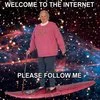
Welcome To The Internet — Low-resolution compressed version of cosmic surfer.

Welcome To The Internet

1998Catchphrase / image macroclassic

Published March 31, 2026

Also known as: I Will Be Your Guide

"Welcome to The Internet" is a catchphrase used both as a genuine greeting to newcomers navigating online spaces and as a sarcastic dismissal aimed at people unfamiliar with how internet culture works. The phrase traces back to a 1998 episode of *The Simpsons* and took on its mocking, gatekeeping tone through early 2000s forum culture before spreading as image macros, YTMND pages, and eventually a Bo Burnham comedy special song. It's one of the internet's oldest self-referential in-jokes, essentially a verbal eye-roll wrapped in a welcome mat.

internet meta memes catchphrase memes early internet memes sarcasm memes

Overview

"Welcome to The Internet" works in two modes. The first is a sincere, slightly ironic acknowledgment of how overwhelming and bizarre the web can be. The second, far more common usage is a dismissive retort fired at someone who gets shocked, offended, or overexcited by something that seasoned internet users consider old news3. Someone shares a years-old viral video with breathless enthusiasm? "Welcome to the internet." Someone complains about trolls in a comment section? Same response.

The phrase often appears as text on image macros, sometimes paired with "I will be your guide," usually featuring a character or person in an exaggeratedly welcoming pose1. It also appears as a standalone text reply in forums, Reddit threads, and social media comments6.

Gallery

Origin & Background

Platform
Fox (*The Simpsons*), deeplight.net blog (online spread), YTMND / forums (viral adoption)
Key People
David X. Cohen, redpaw
Date
1998 (earliest usage), 2000 (online spread)

The phrase first showed up in the February 15, 1998 episode of *The Simpsons* titled "Das Bus"5. In the episode's B-plot, Homer Simpson tries to run an internet company out of his house despite knowing nothing about the web. When a customer arrives, Homer greets him with "Welcome to the Internet, my friend, how can I help you?"3. The episode was written by David X. Cohen and directed by Pete Michels5.

Two years later, the phrase took on a completely different tone. In January 2000, a blogger going by the handle "redpaw" published a lengthy screed on deeplight.net titled "Welcome to the Internet"2. The post was aimed squarely at newcomers who didn't understand internet norms. It introduced the idea of the internet as a "meritocracy" where offline status meant nothing, and laid out 19 rules for online behavior. The tone was aggressive and elitist: "We're going to offend, insult, abuse, and belittle the living hell out of you"2. That same year, the post was widely reposted across LiveJournal blogs, message boards, and Usenet groups3.

How It Spread

The phrase moved through platforms in waves over the next decade. In May 2004, the first "Welcome to the Internet" YTMND page went live, giving the catchphrase its first major multimedia treatment3.

A March 2005 blog post on Websnark reinforced the phrase's association with internet elitism, this time in the context of privacy debates on LiveJournal3. On June 11, 2006, the single-serving site WelcomeToInternet.org launched, featuring a Flash animation where the word "INTERNET!" grew larger on screen with video game-style victory fanfare3. That same month, a thread on the Relic News forum showed the phrase being used in its dismissive form. A user complained about behavior on a human cloning message board, and multiple replies simply told them "welcome to the internet"3.

On September 15, 2007, the phrase got its first Urban Dictionary entry6. By February 2008, image macros using the catchphrase started appearing on eBaum's World and 4chan boards including /a/ (Anime and Manga) and /jp/ (Otaku Culture)3.

The Facebook era brought wider reach. A fan page titled "Welcome to the Internet" launched in May 2011, posting image macros and humor content. By August 2013, it had over 2.1 million likes3. In October 2011, the phrase was used as the title of the opening keynote at the ROFLCon Summit in Portland, Oregon, a conference dedicated to internet culture3.

By 2013, "Welcome to the Internet" image macros could be found across Meme Generator, Tumblr, Cheezburger, FunnyJunk, and Reddit3. The phrase had settled into its permanent role as the internet's go-to condescending greeting.

How to Use This Meme

The catchphrase works in a few common contexts:

As a sarcastic dismissal: When someone shares old content like it's breaking news, or expresses shock at standard internet behavior (trolling, spam, weird content), reply with "Welcome to the internet." It signals that whatever they just encountered is completely normal online6.

As an image macro: Pair the text "Welcome to the Internet" with an image of someone in an exaggerated welcoming pose. The optional second line "I will be your guide" adds a layer of mock hospitality1. The funnier the contrast between the guide figure and the chaos of the internet, the better the macro works.

As genuine commentary: Less commonly, the phrase is used straight, acknowledging the overwhelming or bizarre nature of being online. This sincere usage often shows up when someone describes their first encounter with internet culture3.

The key to the phrase is tonal flexibility. The exact same words can be warm, withering, or wearily resigned depending on context.

Cultural Impact

The phrase's cultural footprint extends well beyond forums and image macros. In 2021, comedian Bo Burnham included a song titled "Welcome to the Internet" on his Netflix special *Inside*4. The song catalogues the internet's absurd range of content in rapid-fire lyrics: "Would you like to see the news or any famous women's feet? / There's no need to panic, this isn't a test"4. Burnham's version captured the same anxious, overwhelming energy that the phrase always carried, but set to music and performed with manic intensity. The song became one of the most discussed tracks from the special.

The catchphrase also holds a unique place in the history of internet self-awareness. Redpaw's 2000 blog post2 reads as an early manifesto for what would later be called "netiquette" discourse. Its rules about not forwarding chain emails, not replying to spam, and not threatening lawsuits over parody content predicted arguments that would repeat across every new platform for the next two decades.

The ROFLCon Summit's use of the phrase as a keynote title in 2011 marked a moment where internet culture was being formally studied and celebrated, with this particular catchphrase serving as shorthand for the entire experience of going online3.

Fun Facts

Redpaw's 2000 blog post included the advice: "If you're on AOL, don't worry about anything I've said here. You're already a fucking laughing stock, and there's no hope for you"2.

The *Simpsons* episode where the phrase originated, "Das Bus," is primarily a *Lord of the Flies* parody. The internet B-plot ends with Bill Gates destroying Homer's office5.

Redpaw's post predicted modern doxxing culture back in 2000: "Don't be surprised when your name, address, and home phone number get thrown back in your smug face"2.

The phrase sat dormant for six years between its *Simpsons* debut in 1998 and its first YTMND appearance in 20043.

"Das Bus" was written by David X. Cohen, who later co-created *Futurama*5.

Derivatives & Variations

"I will be your guide" image macros:

A sub-format featuring characters in elaborate costumes or absurd welcoming poses, offering to "guide" the viewer through internet chaos[1].

Bo Burnham's "Welcome to the Internet" (2021):

A full song from *Inside* that catalogues the internet's contradictions at breakneck speed. Became a meme format itself, with lyrics quoted and set to other videos[4].

WelcomeToInternet.org (2006):

A single-serving Flash site that played fanfare music before shouting "INTERNET!" over a growing text animation[3].

Welcome to the Internet Facebook page (2011):

A dedicated humor page that posted image macros and other internet comedy, reaching 2.1 million likes by 2013[3].

Frequently Asked Questions

It's a catchphrase used either to genuinely greet someone to online culture or, more often, to sarcastically mock people who are unfamiliar with how the internet works3.

The phrase was first spoken by Homer Simpson in the February 15, 1998 *Simpsons* episode "Das Bus"5. It took on its sarcastic, gatekeeping meaning through a January 2000 blog post by a user called redpaw2.

When used sarcastically, it means "this is completely normal online and you should have known that." When used sincerely, it acknowledges the overwhelming, chaotic nature of the web6.

Reply with the phrase when someone shares old content as if it's new, or when they express shock at standard internet behavior. It can also be used as an image macro with a welcoming figure3.

The phrase is a classic internet catchphrase with roots going back to 1998. It saw renewed attention through Bo Burnham's 2021 song of the same name4, and the sarcastic usage still appears regularly in comment sections and forums.

References (7)

  1. 1
    Welcome to the Internet Meme – Your Guide to Online Chaosarticle
  2. 2
    deeplight.net | Articles | redpaw | Welcome to the Internetarticle
  3. 3
    Welcome to The Internet - Know Your Memeencyclopedia
  4. 4
    List of Internet phenomenaencyclopedia
  5. 5
    Welcome to The Internet - Urban Dictionarydictionary
  6. 6
    Das Busencyclopedia
  7. 7
    Urban Dictionary: welcome to the internetdictionary

Quick Info

Year
1998
Origin
Fox (*The Simpsons*), deeplight.net blog (online spread), YTMND / forums (viral adoption)
Type
Catchphrase / image macro
Status
classic
Key People
David X. CohenSimpsons episode writerredpawinfluential 2000 blog post author
Popularity
Niche0/100Viral

More Internet Meta & Self-Referential Memes

  • Four Stages Of Simulation
  • Meme Elitism
  • Memes
  • Internet Is Leaking
  • Anti Memes
  • Behind The Meme
  • Family Guy Effect
  • Nice MayMay Man
  • The Internet
  • Milhouse
  • Homework Avoidance
  • Final Boss Of The Internet
View all Internet Meta & Self-Referential memes →
Browse MemesTopicsCreatorsTrendingPlayAboutLegalPrivacy

© 2026 meme.com