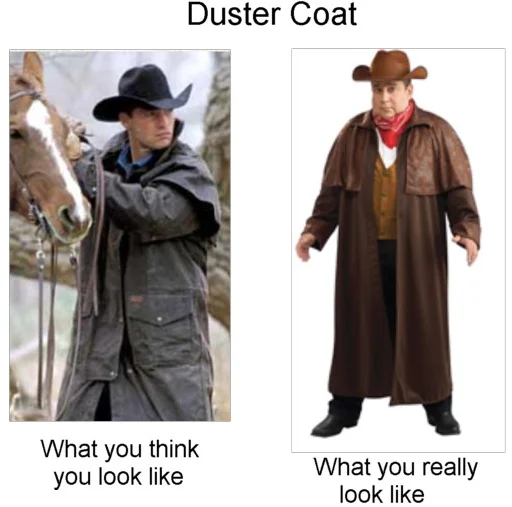
What You Think You Look Like vs. What You Actually Look Like
Published November 18, 2026
A two-panel image macro contrasting a flattering self-image with an unflattering reality, first posted on FARK in July 2008. By 2011, Redditor obvnotlupus had turned the gag into an r/pics front-page hit with a mirror-flipped self-portrait, and Buzzfeed was packaging roundups of it the next year.
Overview
Each post stacks or arranges two photos side by side under labels like "what you think you look like" and "what you actually look like." The top panel aims at a self-idealized version of a specific act, dancing, posing, flirting, drinking, while the bottom panel swaps in an embarrassing candid of the same activity3. Common subjects include duck-face selfies, men's suits, mustaches and hair blowing in the wind4.
The gag works because both halves commit to the same scenario; the humor comes from the gap between the glamour-shot framing and the real photo's harsh lighting or awkward angle. Posts range from staged bedroom self-portraits to party photos set against magazine-style imagery1. The template also inspired a parallel genre of advertising-vs-reality posts about fast food packaging, where bloggers photographed burgers and tacos next to their ad counterparts9.
Gallery
Origin & Background
On July 20, 2008, FARK user Control_this posted in a thread about Illinois casinos, pairing a photo of a young woman at a slot machine with one of an older woman smoking at a gambling machine4. The satirical magazine Judge had published a nearly identical two-panel comic in 1921, well before any internet version, which later got cited as a pre-internet precedent for the format4.
How It Spread
Timeline
How to Use This Meme
Pick a specific act, dancing, selfie-taking, wearing a suit, and find or stage two photos of that act. Caption the flattering one "what you think you look like" or "what I think I look like," then caption the clearly unflattering one "what you actually look like." Common conventions include using a celebrity shot for the idealized panel and a candid of the poster for the reality panel, or horizontally flipping the same selfie to show how mirrors distort self-perception2.
Frequently Asked Questions
References (9)
- 1
- 2
- 3
- 4
- 5
- 6
- 7
- 8
- 9