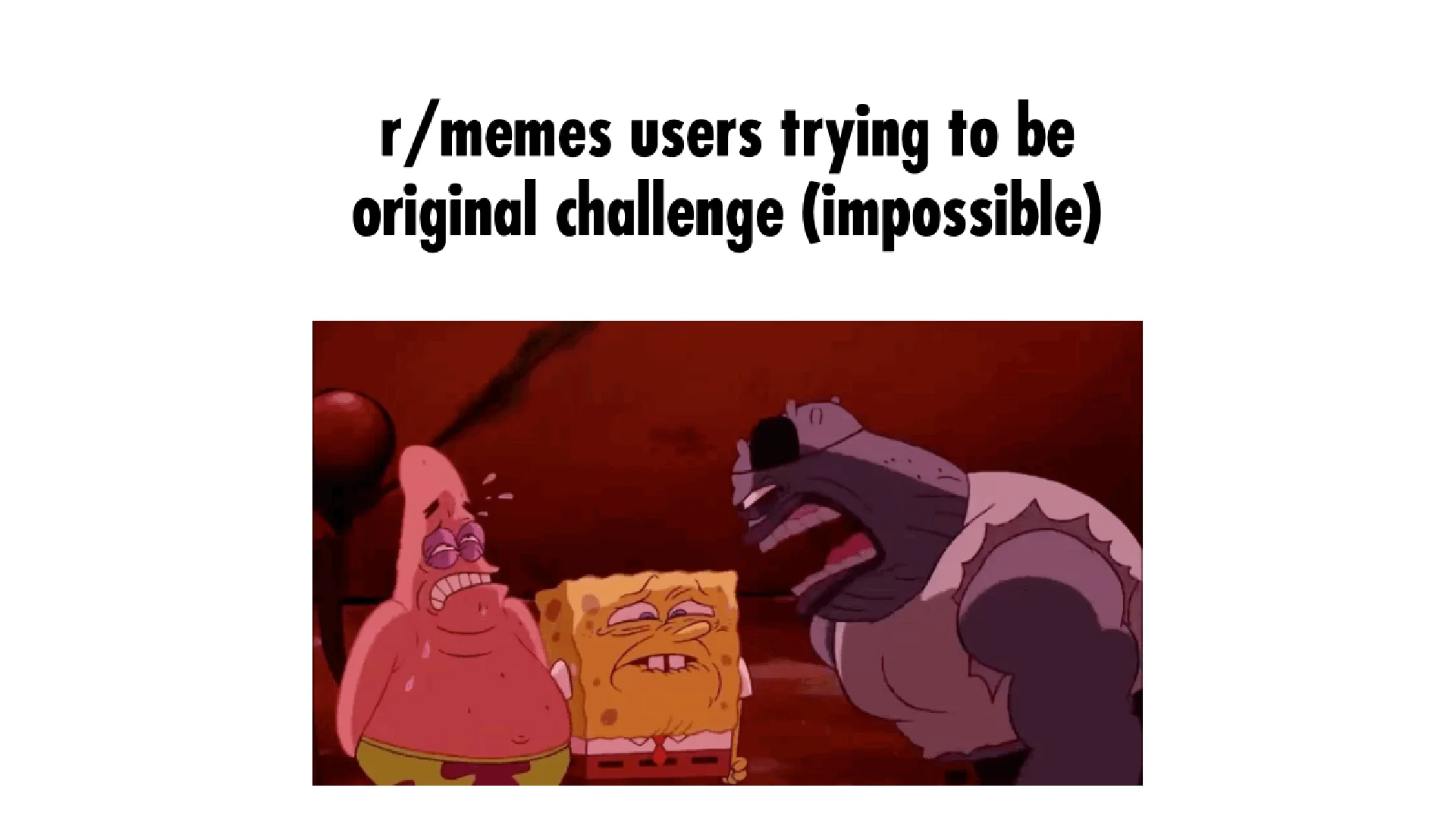
X Challenge (Impossible)
Published October 18, 2026
YouTube clickbait titles from the late 2000s stacked words like 'impossible' onto 'Try Not To Laugh' challenges to bait clicks, and in 2009 ExsertTortoise1 posted the earliest known upload using both 'challenge' and 'impossible' together. Twitter users repurposed the construction in June 2021 to call out habitual bad behavior from public figures, with @TheRightCant mocking Ben Shapiro's joke writing. By March 2022, Instagram page @foreverwilin brought the catchphrase to the platform with a screenshot post that gathered over 100,000 likes.
Overview
A typical 'X challenge (impossible)' post names an action the target supposedly cannot do, written like a reality-show challenge destined to fail3. The joke lands through dry sarcasm: calling something 'impossible' is really saying the target has such a bad track record that improvement cannot happen5. Common targets include politicians, podcasters, and media figures with repetitive habits or talking points.
Posters often attach a screenshot or image of the target alongside the caption, mimicking the title-card style of clickbait YouTube thumbnails4. The parenthetical '(impossible)' is the key piece: without it the sentence reads like a straight suggestion, but adding the bracketed difficulty tag flips it into mockery. Users fill in whatever grievance fits, so the format works equally well for political jabs and lighter personal roasts.
Gallery
Origin & Background
How It Spread
Timeline
How to Use This Meme
A typical post names a person or group as the target, states an action they would need to do, and tacks on 'challenge (impossible)' at the end. Common conventions include screenshots of the target, direct address, or quoting a repetitive talking point. The joke works best when the 'challenge' names something the target does predictably, so saying it is impossible to stop reads as dry sarcasm4.
Frequently Asked Questions
References (8)
- 1
- 2
- 3
- 4
- 5
- 6
- 7
- 8