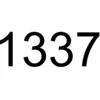
1337 Speak
Published April 6, 2026
Also known as: Leet · Leetspeak · Eleet · Hacker Speech · l33t
1337 speak (also called leetspeak or simply leet) is a system of modified spelling that replaces standard letters with numbers, symbols, and other characters to create an alternative written language. It originated on Bulletin Board Systems in the 1980s as a marker of "elite" user status1. What started as insider shorthand for hackers and crackers spread into mainstream internet culture, gaming communities, and eventually pop culture, making "1337" one of the most recognized number sequences on the internet3.
Overview
1337 speak works by swapping standard alphabet letters with visually similar numbers, ASCII characters, or symbol combinations. The letter "A" becomes "4," "E" becomes "3," "T" becomes "7," and "O" becomes "0" (zero)1. More advanced forms chain multiple symbols together to approximate a single letter. "H" might become "|-|" and "N" could be written as "|/|"1.
The system exists on a spectrum. Casual leet might only swap a few letters ("h4x0r" for "hacker"), while hardcore variants use almost no recognizable letters at all, producing strings like "|_|/\/[)3|2574/\/[)" that only practiced readers can decode1. The flexibility is the whole point: if the reader can figure it out, it's valid3.
Origin & Background
How It Spread
How to Use This Meme
The basic approach is straightforward: replace letters with numbers or symbols that look similar.
Common substitutions include: - A = 4, B = |3, C = (, E = 3, G = 6, H = |-|, I = |, L = 1, O = 0, S = 5, T = 7
A simple sentence like "I am elite" becomes "| 4m 31i73" in casual leet, or something far more cryptic in advanced forms.
People typically use 1337 speak in a few ways: - Light leet for usernames and handles (swapping one or two characters when a name is taken) - Moderate leet for jokes and nostalgic internet humor ("pwn3d," "n00b," "h4x0r") - Full leet as a puzzle or flex, writing entire sentences in symbol-heavy code
The tone is usually playful or ironic. Writing in full leet outside of deliberate jokes reads as try-hard in most modern contexts3.
Cultural Impact
Fun Facts
Some words can be written entirely in digits: "360" spells "EGO," "4150" reads as "ALSO," and "137 17 83 137 17 60" hides the phrase "let it be, let it go"3.
Certain six-letter leet words produce valid hexadecimal color codes, making them displayable as actual colors. "614D05" (GLADOS) renders as a dark olive shade3.
The German dairy company Zott has a logo where "ZOTT" can be read as the leet number "2077"3.
Telegraph morse code operators used "u" for "you" and "cul" for "see you later" long before the internet existed, making some leet conventions over a century old1.
Derivatives & Variations
Algospeak
— a modern descendant where users substitute words to evade automated content moderation rather than human moderators. Examples include "unalive," "seggs," and "restarted"[3].
n00b / noob
— originally a leet term for "newbie" that broke out into general internet and gaming slang[2].
Pwned
— a typo-derived leet word meaning "owned" or dominated, which became standard gaming vocabulary[3].
l33t programming language
— a functional programming language built entirely around leet substitution conventions[3].
Leet passwords
— the practice of substituting letters with numbers in passwords (e.g., "P@55w0rd"), widely adopted before modern password security standards discouraged it[3].
Frequently Asked Questions
References (3)
- 1Leetencyclopedia
- 21337 speak - Urban Dictionarydictionary
- 31337 speak - Know Your Memeencyclopedia