Milkshake Duck

2016Internet slang / conceptclassic

Also known as: Milkshake Ducking · Milkshake Duck'd · Getting Milkshake Ducked

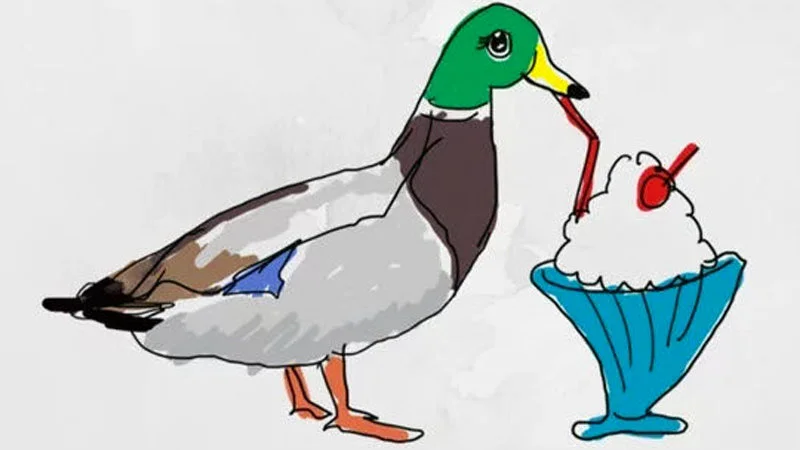
Milkshake Duck is a 2016 internet slang term coined by cartoonist Ben Ward for someone who gains sudden viral affection, only to be quickly exposed as problematic.

Milkshake Duck is an internet slang term for someone who briefly captures the internet's affection for something wholesome or charming, only to be swiftly exposed as having a problematic past or offensive views. Coined by Australian cartoonist Ben Ward (@pixelatedboat) in a June 2016 tweet, the term spread across social media and was named Macquarie Dictionary's Word of the Year for 20172. The concept neatly packages a recurring cycle of online culture: the rapid elevation and even faster destruction of accidental internet celebrities.

TL;DR

Milkshake Duck is an internet slang term for someone who briefly captures the internet's affection for something wholesome or charming, only to be swiftly exposed as having a problematic past or offensive views.

Overview

Milkshake Duck describes a specific, repeating pattern in online culture. A person (or sometimes a product or project) gains sudden positive attention on social media. The internet rallies around them. Then, sometimes within hours, someone digs up old posts, past behavior, or unsavory opinions, and the goodwill evaporates. The term works as both a noun ("He's a Milkshake Duck") and a verb ("She got Milkshake Ducked")7.

The original tweet framed it perfectly through a fictional scenario: a duck that drinks milkshakes delights everyone on the internet, and five seconds later, "we regret to inform you the duck is racist"1. That structure, the joyful discovery followed by the grim correction, became shorthand for a dynamic that plays out over and over across platforms.

On June 12, 2016, Ben Ward, an Australian cartoonist who posts absurdist humor under the handle @pixelatedboat, tweeted: "The whole internet loves Milkshake Duck, a lovely duck that drinks milkshakes! *5 seconds later* We regret to inform you the duck is racist"5. Ward later explained to the New York Times that the joke was inspired by the Chewbacca Mask Lady (Candace Payne), who went viral in May 2016 for laughing hysterically in a Chewbacca mask on Facebook Live, then faced a mild backlash after receiving over $400,000 in free gifts and sponsorships1. "I thought the tweet was a pretty good joke summing up a recent trend," Ward said. "But I didn't think, like, 'Yes! This will be a meme!'"1

Within one year, the tweet picked up over 22,700 likes and 9,600 retweets5.

Origin & Background

Platform
Twitter
Key People
Ben Ward
Date
2016

On June 12, 2016, Ben Ward, an Australian cartoonist who posts absurdist humor under the handle @pixelatedboat, tweeted: "The whole internet loves Milkshake Duck, a lovely duck that drinks milkshakes! *5 seconds later* We regret to inform you the duck is racist". Ward later explained to the New York Times that the joke was inspired by the Chewbacca Mask Lady (Candace Payne), who went viral in May 2016 for laughing hysterically in a Chewbacca mask on Facebook Live, then faced a mild backlash after receiving over $400,000 in free gifts and sponsorships. "I thought the tweet was a pretty good joke summing up a recent trend," Ward said. "But I didn't think, like, 'Yes! This will be a meme!'"

Within one year, the tweet picked up over 22,700 likes and 9,600 retweets.

How It Spread

The tweet simmered for months before breaking out. On January 9, 2017, Tumblr user Pleated Jeans included Ward's tweet in a listicle called "15 Twitter Jokes Everyone Should Read," giving it a wider audience.

The real explosion came on June 11, 2017, at E3 (the Electronic Entertainment Expo). The cyberpunk game *The Last Night* debuted with stunning pixel-art visuals during Microsoft's press conference. That same evening, Twitter users discovered that lead developer Tim Soret had posted tweets supportive of GamerGate in 2014. The whiplash was instant. Twitter user @Xythar shared a screenshot of the reaction with the caption "This is the fastest Milkshake Duck I've ever seen take place IRL," and Giant Bomb senior editor Alex Navarro tweeted, "we are now milkshake ducking at speeds heretofore unseen by man". Ward himself chimed in, thanking *The Last Night*'s developer for celebrating the tweet's one-year anniversary "in style". An Urban Dictionary entry for the term was created the same day.

Oxford Dictionaries noted in a June 2017 blog post that references to Milkshake Duck had spiked sharply, and that editors were monitoring the term. The New York Times ran a feature on June 27, 2017 titled "How a Joke Becomes a Meme," tracing the term's path from throwaway tweet to internet shorthand. The Observer published a roundup of notable Milkshake Duck cases that July.

On January 15, 2018, Australia's Macquarie Dictionary announced Milkshake Duck as its Committee's Choice Word of the Year for 2017, defining it as "a person who is initially viewed positively by the media but is then discovered to have something questionable about them which causes a sharp decline in their popularity". The dictionary's committee wrote: "Milkshake duck stood out as being a much-needed term to describe something we are seeing more and more of, not just on the internet but now across all types of media". The announcement was covered by the BBC, The Guardian, Mashable, The AV Club, and others. Ward responded to the honor with a two-word tweet: "I'm so sorry".

The term had previously lost out to "youthquake" for Oxford Dictionaries' 2017 Word of the Year.

How to Use This Meme

Milkshake Duck is used in a few ways:

As a noun: Call someone a Milkshake Duck when they've gone from internet darling to disgraced in record time. "That new viral chef? Total Milkshake Duck, they found his old tweets."

As a verb: "Getting Milkshake Ducked" or "being Milkshake Duck'd" describes the process of having your wholesome internet moment destroyed by your own past.

As a prediction: When someone goes unexpectedly viral for something positive, it's common to see comments like "How long until this person gets Milkshake Ducked?" or "Waiting for the Milkshake Duck moment."

The term works best when the fall from grace is fast, when someone who was unknown yesterday and beloved today is exposed by tomorrow. It typically doesn't apply to already-famous people who face slow, drawn-out scandals. The speed is the point.

Cultural Impact

Milkshake Duck crossed from internet jargon into mainstream recognition faster than most meme terminology. The New York Times profiled the term's rise in June 2017, and Oxford Dictionaries publicly tracked it as a term to watch. Macquarie Dictionary's decision to name it 2017 Word of the Year brought extensive media coverage across the BBC, The Guardian, Mashable, and The AV Club.

The AV Club's coverage noted the tension in the dictionary's decision, predicting that official recognition would strip the term of its edge: "Very soon, as with all words that become common, we can expect 'milkshake duck' to be reinterpreted to the point of meaninglessness, your parents using it to describe everything from broken toasters to bad weather forecasts".

The concept is closely linked to broader discussions about cancel culture and the speed of social media judgment. Vox connected Milkshake Duck to the Tumblr-born phrase "your fave is problematic," but drew a distinction: the "problematic fave" is someone already famous whose flaws are gradually revealed, while the Milkshake Duck is someone catapulted to fame and destroyed in practically the same breath.

The Macquarie Dictionary committee noted a cultural resonance specific to Australia: "There is a hint of tall poppy syndrome in there, which we always thought was a uniquely Australian trait, but has been amplified through the internet and become universalised".

Full History

The concept that Milkshake Duck names existed long before the term did. The internet's habit of building up random citizens into micro-celebrities, then tearing them down when their flaws surface, was already well-established by 2016. What Ward's tweet did was give the pattern a name, and a funny one at that.

The earliest high-profile case to be retroactively labeled a Milkshake Duck was Ken Bone, who captured America's attention during an October 2016 presidential debate with his red Izod sweater and polite demeanor. Corporate sponsorships rolled in. Amazon sold out of his sweater style. Then Bone hosted a Reddit AMA, and users dug through his comment history to find posts on erotic subreddits and an argument that the killing of Trayvon Martin was "justified". The goodwill cratered overnight.

The pattern accelerated through 2017. In September, three police officers from Gainesville, Florida went viral after posting a photo of themselves preparing for hurricane cleanup. Social media swooned over the "hot cops." Within days, Officer Michael Hamill was discovered to have posted antisemitic jokes on Facebook years earlier. He resigned in December 2017. That same summer, blogger Robbie Tripp and his wife Sarah became briefly famous for an Instagram post celebrating body positivity, but internet sleuths found racist and transphobic comments in their old social media posts.

The Keaton Jones case in December 2017 was one of the most dramatic examples. An 11-year-old boy's tearful video about being bullied at school went wildly viral, drawing celebrity support from figures like Rihanna and Chris Brown. Barely a day later, photos surfaced of Keaton's mother posing with a Confederate flag. The sympathy reversed sharply.

In 2018, journalist Quinn Norton was announced as The New York Times' new lead technology opinion writer. The newspaper withdrew the offer the same day after old tweets containing homophobic and racist slurs were surfaced, along with her friendship with a known white supremacist. That same year, NME declared rapper Doja Cat the Milkshake Duck of 2018 after her novelty single "Mooo!" went viral and tweets from 2015 using homophobic slurs were discovered.

The concept of the "reverse Milkshake Duck" emerged in October 2018. A mother tweeted a photo of her son under the #HimToo hashtag, framing him as afraid of solo dates due to false accusations. The son, Navy veteran Pieter Hanson, logged onto Twitter to correct the record, posting: "That was my Mom. Sometimes the people we love do things that hurt us without realizing it. Let's turn this around. I respect and #BelieveWomen". The Verge writer Devon Maloney called it "the internet's first-ever reverse milkshake-ducking". Vox's Aja Romano described it as "whatever the opposite of a Milkshake Duck is, when a viral moment starts out seeming awful but then becomes unexpectedly good".

Cartoonist Nathan W. Pyle was called a Milkshake Duck in early 2019 when, shortly after his webcomic *Strange Planet* went viral, a 2017 tweet expressing anti-abortion views was surfaced. Pyle responded that he and his wife held private beliefs tied to their Christian faith and were supporters of the Democratic Party.

The 2021 case of Jensen Karp brought Milkshake Duck back to the forefront. Karp, a Los Angeles comedian, went viral for tweeting about finding what appeared to be shrimp tails in his Cinnamon Toast Crunch cereal. As "shrimp guy" flooded social media, writer Melissa Stetten publicly identified Karp as an alleged abuser, with other women coming forward with similar accounts. Vox's coverage noted that "the broader public remained in the dark about the duck du jour's dark history," a hallmark of the Milkshake Duck cycle. That same year, lawyer Rod Ponton went viral as the "Zoom Cat Lawyer" for accidentally using a kitten filter during a court hearing. Within a day, reports emerged that he had "used federal agents to torment a former lover with drug raids and bogus charges".

Ward himself acknowledged the existential irony of his creation. "It's terrifying that I created a meme that will destroy me when I inevitably do a problematic tweet," he wrote. "Milkshake Duck is my sword of Damocles".

Fun Facts

Ward said the joke was partially inspired by the Chewbacca Mask Lady, who went from charming viral hit to mild backlash after receiving hundreds of thousands of dollars in gifts and sponsorships.

Milkshake Duck lost to "youthquake" for Oxford Dictionaries' 2017 Word of the Year, and "kwaussie" (a hybrid of Kiwi and Aussie) was chosen as the Australian National Dictionary Centre's word that same year.

When Macquarie Dictionary announced the award, Milkshake Duck beat out "framily" (a group of close non-relatives) and "endling" (the last surviving member of a species).

Some Australian news outlets questioned whether the term was actually well-known enough to be Word of the Year, but the Macquarie committee called it "an absolute winner".

Ward acknowledged the meta-irony of his creation, calling it his "sword of Damocles" since any problematic tweet of his own would make him a Milkshake Duck.

Derivatives & Variations

Reverse Milkshake Duck:

Coined in October 2018 for situations where a viral moment starts out looking bad but turns unexpectedly positive, as with Pieter Hanson's #HimToo reversal[6].

"Milkshake Ducked" as a verb:

The term became flexible enough to work as a verb form, describing the act of being exposed. Giant Bomb's Alex Navarro used "milkshake ducking" as early as June 2017[5].

Photoshop edits:

During *The Last Night* controversy at E3 2017, someone Photoshopped "Milkshake Duck" onto the game's promotional art[8].

Frequently Asked Questions

MilkshakeDuck

2016Internet slang / conceptclassic

Also known as: Milkshake Ducking · Milkshake Duck'd · Getting Milkshake Ducked

Milkshake Duck is a 2016 internet slang term coined by cartoonist Ben Ward for someone who gains sudden viral affection, only to be quickly exposed as problematic.

Milkshake Duck is an internet slang term for someone who briefly captures the internet's affection for something wholesome or charming, only to be swiftly exposed as having a problematic past or offensive views. Coined by Australian cartoonist Ben Ward (@pixelatedboat) in a June 2016 tweet, the term spread across social media and was named Macquarie Dictionary's Word of the Year for 2017. The concept neatly packages a recurring cycle of online culture: the rapid elevation and even faster destruction of accidental internet celebrities.

TL;DR

Milkshake Duck is an internet slang term for someone who briefly captures the internet's affection for something wholesome or charming, only to be swiftly exposed as having a problematic past or offensive views.

Overview

Milkshake Duck describes a specific, repeating pattern in online culture. A person (or sometimes a product or project) gains sudden positive attention on social media. The internet rallies around them. Then, sometimes within hours, someone digs up old posts, past behavior, or unsavory opinions, and the goodwill evaporates. The term works as both a noun ("He's a Milkshake Duck") and a verb ("She got Milkshake Ducked").

The original tweet framed it perfectly through a fictional scenario: a duck that drinks milkshakes delights everyone on the internet, and five seconds later, "we regret to inform you the duck is racist". That structure, the joyful discovery followed by the grim correction, became shorthand for a dynamic that plays out over and over across platforms.

On June 12, 2016, Ben Ward, an Australian cartoonist who posts absurdist humor under the handle @pixelatedboat, tweeted: "The whole internet loves Milkshake Duck, a lovely duck that drinks milkshakes! *5 seconds later* We regret to inform you the duck is racist". Ward later explained to the New York Times that the joke was inspired by the Chewbacca Mask Lady (Candace Payne), who went viral in May 2016 for laughing hysterically in a Chewbacca mask on Facebook Live, then faced a mild backlash after receiving over $400,000 in free gifts and sponsorships. "I thought the tweet was a pretty good joke summing up a recent trend," Ward said. "But I didn't think, like, 'Yes! This will be a meme!'"

Within one year, the tweet picked up over 22,700 likes and 9,600 retweets.

Origin & Background

Platform
Twitter
Key People
Ben Ward
Date
2016

On June 12, 2016, Ben Ward, an Australian cartoonist who posts absurdist humor under the handle @pixelatedboat, tweeted: "The whole internet loves Milkshake Duck, a lovely duck that drinks milkshakes! *5 seconds later* We regret to inform you the duck is racist". Ward later explained to the New York Times that the joke was inspired by the Chewbacca Mask Lady (Candace Payne), who went viral in May 2016 for laughing hysterically in a Chewbacca mask on Facebook Live, then faced a mild backlash after receiving over $400,000 in free gifts and sponsorships. "I thought the tweet was a pretty good joke summing up a recent trend," Ward said. "But I didn't think, like, 'Yes! This will be a meme!'"

Within one year, the tweet picked up over 22,700 likes and 9,600 retweets.

How It Spread

The tweet simmered for months before breaking out. On January 9, 2017, Tumblr user Pleated Jeans included Ward's tweet in a listicle called "15 Twitter Jokes Everyone Should Read," giving it a wider audience.

The real explosion came on June 11, 2017, at E3 (the Electronic Entertainment Expo). The cyberpunk game *The Last Night* debuted with stunning pixel-art visuals during Microsoft's press conference. That same evening, Twitter users discovered that lead developer Tim Soret had posted tweets supportive of GamerGate in 2014. The whiplash was instant. Twitter user @Xythar shared a screenshot of the reaction with the caption "This is the fastest Milkshake Duck I've ever seen take place IRL," and Giant Bomb senior editor Alex Navarro tweeted, "we are now milkshake ducking at speeds heretofore unseen by man". Ward himself chimed in, thanking *The Last Night*'s developer for celebrating the tweet's one-year anniversary "in style". An Urban Dictionary entry for the term was created the same day.

Oxford Dictionaries noted in a June 2017 blog post that references to Milkshake Duck had spiked sharply, and that editors were monitoring the term. The New York Times ran a feature on June 27, 2017 titled "How a Joke Becomes a Meme," tracing the term's path from throwaway tweet to internet shorthand. The Observer published a roundup of notable Milkshake Duck cases that July.

On January 15, 2018, Australia's Macquarie Dictionary announced Milkshake Duck as its Committee's Choice Word of the Year for 2017, defining it as "a person who is initially viewed positively by the media but is then discovered to have something questionable about them which causes a sharp decline in their popularity". The dictionary's committee wrote: "Milkshake duck stood out as being a much-needed term to describe something we are seeing more and more of, not just on the internet but now across all types of media". The announcement was covered by the BBC, The Guardian, Mashable, The AV Club, and others. Ward responded to the honor with a two-word tweet: "I'm so sorry".

The term had previously lost out to "youthquake" for Oxford Dictionaries' 2017 Word of the Year.

How to Use This Meme

Milkshake Duck is used in a few ways:

As a noun: Call someone a Milkshake Duck when they've gone from internet darling to disgraced in record time. "That new viral chef? Total Milkshake Duck, they found his old tweets."

As a verb: "Getting Milkshake Ducked" or "being Milkshake Duck'd" describes the process of having your wholesome internet moment destroyed by your own past.

As a prediction: When someone goes unexpectedly viral for something positive, it's common to see comments like "How long until this person gets Milkshake Ducked?" or "Waiting for the Milkshake Duck moment."

The term works best when the fall from grace is fast, when someone who was unknown yesterday and beloved today is exposed by tomorrow. It typically doesn't apply to already-famous people who face slow, drawn-out scandals. The speed is the point.

Cultural Impact

Milkshake Duck crossed from internet jargon into mainstream recognition faster than most meme terminology. The New York Times profiled the term's rise in June 2017, and Oxford Dictionaries publicly tracked it as a term to watch. Macquarie Dictionary's decision to name it 2017 Word of the Year brought extensive media coverage across the BBC, The Guardian, Mashable, and The AV Club.

The AV Club's coverage noted the tension in the dictionary's decision, predicting that official recognition would strip the term of its edge: "Very soon, as with all words that become common, we can expect 'milkshake duck' to be reinterpreted to the point of meaninglessness, your parents using it to describe everything from broken toasters to bad weather forecasts".

The concept is closely linked to broader discussions about cancel culture and the speed of social media judgment. Vox connected Milkshake Duck to the Tumblr-born phrase "your fave is problematic," but drew a distinction: the "problematic fave" is someone already famous whose flaws are gradually revealed, while the Milkshake Duck is someone catapulted to fame and destroyed in practically the same breath.

The Macquarie Dictionary committee noted a cultural resonance specific to Australia: "There is a hint of tall poppy syndrome in there, which we always thought was a uniquely Australian trait, but has been amplified through the internet and become universalised".

Full History

The concept that Milkshake Duck names existed long before the term did. The internet's habit of building up random citizens into micro-celebrities, then tearing them down when their flaws surface, was already well-established by 2016. What Ward's tweet did was give the pattern a name, and a funny one at that.

The earliest high-profile case to be retroactively labeled a Milkshake Duck was Ken Bone, who captured America's attention during an October 2016 presidential debate with his red Izod sweater and polite demeanor. Corporate sponsorships rolled in. Amazon sold out of his sweater style. Then Bone hosted a Reddit AMA, and users dug through his comment history to find posts on erotic subreddits and an argument that the killing of Trayvon Martin was "justified". The goodwill cratered overnight.

The pattern accelerated through 2017. In September, three police officers from Gainesville, Florida went viral after posting a photo of themselves preparing for hurricane cleanup. Social media swooned over the "hot cops." Within days, Officer Michael Hamill was discovered to have posted antisemitic jokes on Facebook years earlier. He resigned in December 2017. That same summer, blogger Robbie Tripp and his wife Sarah became briefly famous for an Instagram post celebrating body positivity, but internet sleuths found racist and transphobic comments in their old social media posts.

The Keaton Jones case in December 2017 was one of the most dramatic examples. An 11-year-old boy's tearful video about being bullied at school went wildly viral, drawing celebrity support from figures like Rihanna and Chris Brown. Barely a day later, photos surfaced of Keaton's mother posing with a Confederate flag. The sympathy reversed sharply.

In 2018, journalist Quinn Norton was announced as The New York Times' new lead technology opinion writer. The newspaper withdrew the offer the same day after old tweets containing homophobic and racist slurs were surfaced, along with her friendship with a known white supremacist. That same year, NME declared rapper Doja Cat the Milkshake Duck of 2018 after her novelty single "Mooo!" went viral and tweets from 2015 using homophobic slurs were discovered.

The concept of the "reverse Milkshake Duck" emerged in October 2018. A mother tweeted a photo of her son under the #HimToo hashtag, framing him as afraid of solo dates due to false accusations. The son, Navy veteran Pieter Hanson, logged onto Twitter to correct the record, posting: "That was my Mom. Sometimes the people we love do things that hurt us without realizing it. Let's turn this around. I respect and #BelieveWomen". The Verge writer Devon Maloney called it "the internet's first-ever reverse milkshake-ducking". Vox's Aja Romano described it as "whatever the opposite of a Milkshake Duck is, when a viral moment starts out seeming awful but then becomes unexpectedly good".

Cartoonist Nathan W. Pyle was called a Milkshake Duck in early 2019 when, shortly after his webcomic *Strange Planet* went viral, a 2017 tweet expressing anti-abortion views was surfaced. Pyle responded that he and his wife held private beliefs tied to their Christian faith and were supporters of the Democratic Party.

The 2021 case of Jensen Karp brought Milkshake Duck back to the forefront. Karp, a Los Angeles comedian, went viral for tweeting about finding what appeared to be shrimp tails in his Cinnamon Toast Crunch cereal. As "shrimp guy" flooded social media, writer Melissa Stetten publicly identified Karp as an alleged abuser, with other women coming forward with similar accounts. Vox's coverage noted that "the broader public remained in the dark about the duck du jour's dark history," a hallmark of the Milkshake Duck cycle. That same year, lawyer Rod Ponton went viral as the "Zoom Cat Lawyer" for accidentally using a kitten filter during a court hearing. Within a day, reports emerged that he had "used federal agents to torment a former lover with drug raids and bogus charges".

Ward himself acknowledged the existential irony of his creation. "It's terrifying that I created a meme that will destroy me when I inevitably do a problematic tweet," he wrote. "Milkshake Duck is my sword of Damocles".

Fun Facts

Ward said the joke was partially inspired by the Chewbacca Mask Lady, who went from charming viral hit to mild backlash after receiving hundreds of thousands of dollars in gifts and sponsorships.

Milkshake Duck lost to "youthquake" for Oxford Dictionaries' 2017 Word of the Year, and "kwaussie" (a hybrid of Kiwi and Aussie) was chosen as the Australian National Dictionary Centre's word that same year.

When Macquarie Dictionary announced the award, Milkshake Duck beat out "framily" (a group of close non-relatives) and "endling" (the last surviving member of a species).

Some Australian news outlets questioned whether the term was actually well-known enough to be Word of the Year, but the Macquarie committee called it "an absolute winner".

Ward acknowledged the meta-irony of his creation, calling it his "sword of Damocles" since any problematic tweet of his own would make him a Milkshake Duck.

Derivatives & Variations

Reverse Milkshake Duck:

Coined in October 2018 for situations where a viral moment starts out looking bad but turns unexpectedly positive, as with Pieter Hanson's #HimToo reversal[6].

"Milkshake Ducked" as a verb:

The term became flexible enough to work as a verb form, describing the act of being exposed. Giant Bomb's Alex Navarro used "milkshake ducking" as early as June 2017[5].

Photoshop edits:

During *The Last Night* controversy at E3 2017, someone Photoshopped "Milkshake Duck" onto the game's promotional art[8].

Frequently Asked Questions