ASMR Memes

2010Video parody / remix format / internet subcultureactive

Also known as: ASMR parodies · whisper memes

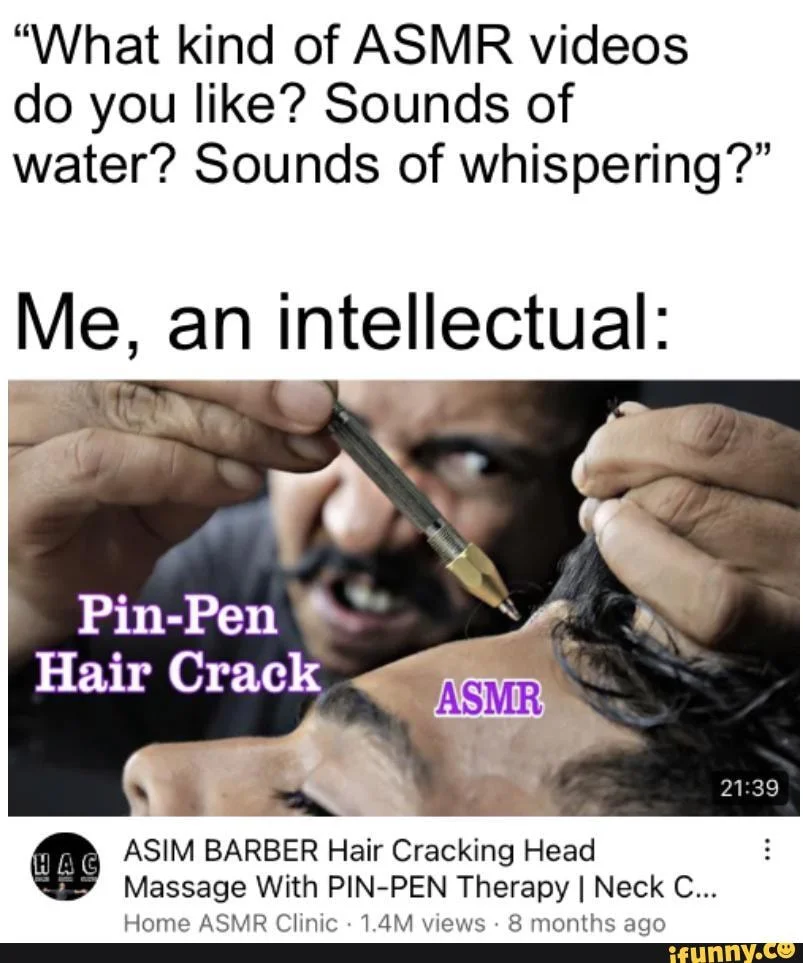
ASMR memes are a broad category of internet humor built around Autonomous Sensory Meridian Response, the tingling sensation triggered by soft sounds like whispering, tapping, and crinkling. What started as a niche YouTube community in the late 2000s became a goldmine for parody, satire, and remix culture, spawning formats like whispered reality TV redubs, "rude ASMR" roleplays, and luxury car tapping parodies. The meme side of ASMR blew up alongside the genre itself, with comedic takes often serving as the gateway that pulled new viewers into the sincere ASMR world.

Overview

ASMR stands for Autonomous Sensory Meridian Response, a term describing the pleasant tingling sensation some people feel in response to specific audio-visual triggers like whispering, tapping, scratching, and personal attention roleplays1. The internet's ASMR community grew into one of YouTube's largest niches, with billions of total views across thousands of channels2. That massive footprint made it a natural target for meme creators, who latched onto ASMR's inherent strangeness to outsiders and turned its tropes into comedy gold.

ASMR memes take many forms: parody videos that exaggerate the whispering and tapping to absurd extremes, whispered redubs of loud reality TV arguments, sassy "rude ASMR" roleplays that flip the genre's gentle tone, and side-by-side comparisons where creators mimic luxury ASMR videos using cheap objects. The humor usually comes from the contrast between ASMR's soft, intimate delivery and aggressively mundane or chaotic content.

The sensation itself predates the internet, but online discussion began on October 19, 2007, when a user named okaywhatever started a thread titled "Weird Sensation Feels Good" on the SteadyHealth forums3. In early 2009, a YouTuber called WhisperingLife created the first channel dedicated to intentional whisper videos2. The community lacked a unifying name until February 2010, when Jennifer Allen, a healthcare IT consultant from upstate New York, coined "Autonomous Sensory Meridian Response" and created a Facebook group for the community3. Allen specifically chose the word "meridian" to replace "orgasm" in earlier informal names like "Attention Induced Head Orgasm"3.

As ASMR channels grew throughout the early 2010s, parody content followed close behind. By 2014, comedy outlets were producing ASMR satire, including a CollegeHumor sketch where a soothing bank robbery roleplay escalated into a stabbing, complete with gentle paper-money crinkling5.

Origin & Background

Platform
YouTube (ASMR community), Twitter / TikTok (meme formats)
Key People
Jennifer Allen, WhisperingLife, various community creators
Date
2010 (term coined), ~2014 (meme parodies begin)

The sensation itself predates the internet, but online discussion began on October 19, 2007, when a user named okaywhatever started a thread titled "Weird Sensation Feels Good" on the SteadyHealth forums3. In early 2009, a YouTuber called WhisperingLife created the first channel dedicated to intentional whisper videos2. The community lacked a unifying name until February 2010, when Jennifer Allen, a healthcare IT consultant from upstate New York, coined "Autonomous Sensory Meridian Response" and created a Facebook group for the community3. Allen specifically chose the word "meridian" to replace "orgasm" in earlier informal names like "Attention Induced Head Orgasm"3.

As ASMR channels grew throughout the early 2010s, parody content followed close behind. By 2014, comedy outlets were producing ASMR satire, including a CollegeHumor sketch where a soothing bank robbery roleplay escalated into a stabbing, complete with gentle paper-money crinkling5.

How It Spread

ASMR memes spread across three distinct waves.

Wave 1: YouTube Parodies (2014-2018) Early ASMR parodies lived on YouTube, where comedy creators mocked the genre's intimate tone and unusual triggers. These videos introduced ASMR to audiences who had never encountered the sincere version, effectively serving as marketing for the real thing2.

Wave 2: Mainstream Crossover (2019) The year 2019 was ASMR's mainstream breakout. On February 3, Michelob Ultra aired a Super Bowl commercial starring Zoë Kravitz whispering into microphones and tapping a beer bottle, introducing millions of viewers to the concept. W Magazine launched a celebrity ASMR interview series featuring Cardi B, Margot Robbie, and others softly whispering into dual microphones. That same summer, the Reality TV Arguments: ASMR Edition format went viral on Twitter. The earliest known version appeared on May 25, 2019, when Redditor number1chiquitadave posted a whispered redub of a RuPaul's Drag Race scene. Within weeks, creators were whispering over iconic Real Housewives blowups, Jersey Shore fights, and Kim Kardashian rants.

Wave 3: TikTok and Rude ASMR (2020-present) TikTok supercharged ASMR memes by making short-form ASMR clips easy to produce and share. The "rude ASMR" subgenre took off when YouTuber Life with MaK (LifewithMak) became a global meme5. Clips of her giving stank face and whispering scathing insults into her microphone circulated everywhere, and people who discovered her through memes ended up watching her videos for genuine relaxation5. In July 2023, the Bentley Car ASMR format exploded when the Russian YouTube channel JETCAR uploaded a video of a woman tapping and whispering around a luxury Bentley. Parodies flooded in: Just Sul recreated the clip with a used Tata pickup truck, pulling 53 million views in one month, and U.S. Army Staff Sergeant Tyler Butterworth's Humvee version hit 24 million views.

Platforms

TikTokYouTubeInstagramTwitter

Timeline

2019

ASMR meme format emerges

2019-2021

Becomes popular parody format

2020-01-01

ASMR Memes started spreading across social media platforms

2021-present

Remains active with ongoing parodies and variations

2022-01-01

Brands and companies started using ASMR Memes in marketing

2024-01-01

ASMR Memes entered the broader pop culture conversation

2025-01-01

ASMR Memes is still actively used and shared across platforms

View on Google Trends

How to Use This Meme

ASMR memes typically follow one of several established formats:

The Parody Video: Film yourself performing exaggerated ASMR triggers on something unexpected. The more absurd the contrast between the soft delivery and the object, the better. Whisper "Humvee" while tapping a rusted-out military vehicle. Gently scratch a filing cabinet. The joke is always in the gap between luxury ASMR aesthetics and mundane reality.

The Whispered Redub: Take a loud, chaotic clip (reality TV fight, movie argument, political debate) and re-record all dialogue as soft ASMR whispers. The visual intensity paired with breathy, gentle audio creates the comedy.

Rude ASMR: Maintain the soft-spoken, mic-tapping ASMR format but deliver aggressively rude or sassy content. Insult the viewer while gently crinkling paper. The tone mismatch between hostility and ASMR calm is the entire bit.

The "ASMR but..." Format: Title a video "ASMR but [unexpected thing]" and apply ASMR conventions to non-ASMR activities. Examples include "ASMR but it's a courtroom trial" or "ASMR but I'm assembling IKEA furniture."

Create Your Own

Cultural Impact

The 2019 Michelob Ultra Super Bowl commercial starring Zoë Kravitz was a watershed moment. She whispered into dual microphones and tapped a beer bottle for 45 seconds during the fourth quarter of the biggest television event in America. The Washington Post, Thrillist, and Oprah Magazine all named it one of the 10 best Super Bowl commercials that year, and Michelob reported triple-digit sales volume growth following the ad.

W Magazine's celebrity ASMR series brought A-list names into the format, with Cardi B stroking a shag carpet and Margot Robbie tapping objects while whispering into microphones. Gibi ASMR, one of YouTube's top creators in the space, performed an ASMR read-through of Billie Eilish's album *When We All Fall Asleep, Where Do We Go?* for Polydor Records in 2019, which pulled over 3 million views4. She also starred in *Reese The Movie*, a feature-length branded ASMR project for Reese's Peanut Butter Cups4.

The i-D article on rude ASMR noted that the relationship between memes and sincere ASMR content had become circular: "Culture used to create memes; now memes create culture"5. Many viewers discovered genuine ASMR through parodies and memes, then became regular listeners.

Fun Facts

Jennifer Allen chose the word "meridian" specifically to replace "orgasm" in earlier community names like "AIHO" (Attention Induced Head Orgasm), wanting something more clinical-sounding3.

WhisperingLife, who created the first dedicated ASMR YouTube channel in early 2009, did so before the term "ASMR" even existed2.

Gibi ASMR co-founded the talent agency Human Media Group with MoistCr1TiKaL (Charles White), which by 2022 managed over 150 creators including 60 ASMR channels4.

The Humvee ASMR parody's funniest moment comes when Tyler Butterworth tries to open the glove compartment, pauses, and whispers "We don't have one".

ASMR was being discussed online as early as 2007, but it took three years before anyone gave the sensation a name3.

Derivatives & Variations

Parody ASMR videos

A variation of ASMR Memes

(2019)

Absurdist ASMR content

A variation of ASMR Memes

(2019)

Comedy ASMR variations

A variation of ASMR Memes

(2019)

Frequently Asked Questions