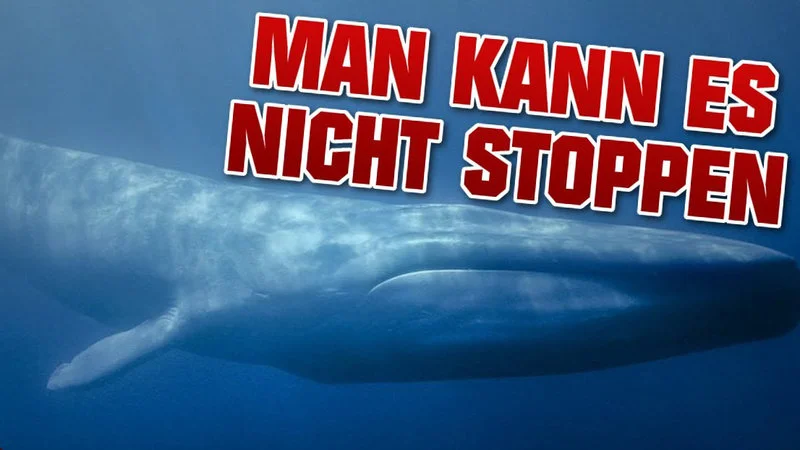
Blue Whale Challenge

2015Internet urban legend / moral panic / online challengedead

Also known as: Blue Whale Game · Blue Whale Suicide Game · Blue Whale Trend · Siniy Kit (Синий кит)

Blue Whale Challenge is a 2015 Russian internet urban legend about a supposed "suicide game" where anonymous moderators assign 50 escalating tasks over 50 days.

The Blue Whale Challenge is an internet urban legend about a supposed online "suicide game" in which anonymous administrators assign players 50 increasingly dangerous tasks over 50 days, with the final task being to take one's own life. The story originated from Russian social media groups on VKontakte in 2015-2016, went global through news coverage in 2017, and triggered widespread panic among parents and governments worldwide. Despite claims of over 130 linked teen deaths, no suicide has been definitively connected to the game, and closer investigation revealed the phenomenon was largely a moral panic amplified by sensationalized media reporting12.

> If you or someone you know is struggling with thoughts of self-harm or suicide, please reach out to the 988 Suicide & Crisis Lifeline by calling or texting 988 (US), or contact your local crisis service.

TL;DR

The Blue Whale Challenge is an internet urban legend about a supposed online "suicide game" in which anonymous administrators assign players 50 increasingly dangerous tasks over 50 days, with the final task being to take one's own life.

Overview

The Blue Whale Challenge describes a supposed 50-day "game" run through social media, where self-appointed "curators" assign daily tasks to teenage participants. Early tasks are relatively harmless: "Wake up at 4:20 AM," "Watch a scary film," or "Listen to music they send you." The tasks escalate over time to include self-harm, such as cutting specific symbols into skin, sitting on rooftop ledges, and sleep deprivation7. On the 50th day, the player is told to commit suicide to "win." Participants were allegedly required to send photographic proof of each completed task3.

The name "Blue Whale" has two competing origin theories. One links it to whale beaching, where whales strand themselves on land and die1. The other traces it to lyrics by Russian rock band Lumen, whose song features "a huge blue whale" that "can't break through the net"6. The whale imagery spread through VK groups as melancholic, surreal artwork, including a widely shared image of a whale flying over a city at night1.

What makes the Blue Whale Challenge unusual as an internet phenomenon is the gap between its reputation and verified reality. While the story spread worldwide as a deadly threat to teenagers, investigations by the BBC, Snopes, Radio Free Europe, and Russian media outlet Meduza all found that the game as described didn't appear to actually exist in any organized form12.

The Blue Whale Challenge traces back to the suicide of Russian teenager Renata Kambolina (also called Rina Palenkova) on November 23, 2015. The day before her death, she posted a selfie on VKontakte with the caption "nya.bye"16. Her death was discussed extensively in VK chat rooms where teenagers gathered to talk about depression, loneliness, and darker subject matter. In these groups, the line between fact and fiction blurred as users posted feverishly about Rina, sometimes even praising her death1.

Over the following weeks, more teen suicides occurred in Russia. On Christmas Day 2015, 12-year-old Angelina Davydova took her own life in Ryazan, followed shortly after by Diana Kuznetsova from the same city1. When parents examined their daughters' online accounts, they found both girls belonged to similar VK groups containing drawings of Rina Palenkova, posts about suicide, and references to blue whales1.

The story crystallized into its known form in May 2016 when journalist Galina Mursalieva published an article in the Russian investigative newspaper Novaya Gazeta2. She claimed that VK groups with names like "Ocean Whales" and "F57" hosted a game where "curators" set 50 tasks over 50 days, ending in suicide. The article estimated 130 children had killed themselves between November 2015 and April 2016 as participants16. This reporting was heavily criticized for lacking evidence. The 130 figure came from Sergey Pestov, the father of one victim, who compiled the number from Russian media reports of child suicides he believed were linked to online groups6. Meduza argued the causation was backwards: suicidal teenagers were drawn to these groups, not driven to suicide by them2.

Origin & Background

Platform
VKontakte (VK) groups in Russia, Novaya Gazeta (media amplification)
Key People
Philipp Budeikin, Galina Mursalieva
Date
2015-2016

The Blue Whale Challenge traces back to the suicide of Russian teenager Renata Kambolina (also called Rina Palenkova) on November 23, 2015. The day before her death, she posted a selfie on VKontakte with the caption "nya.bye". Her death was discussed extensively in VK chat rooms where teenagers gathered to talk about depression, loneliness, and darker subject matter. In these groups, the line between fact and fiction blurred as users posted feverishly about Rina, sometimes even praising her death.

Over the following weeks, more teen suicides occurred in Russia. On Christmas Day 2015, 12-year-old Angelina Davydova took her own life in Ryazan, followed shortly after by Diana Kuznetsova from the same city. When parents examined their daughters' online accounts, they found both girls belonged to similar VK groups containing drawings of Rina Palenkova, posts about suicide, and references to blue whales.

The story crystallized into its known form in May 2016 when journalist Galina Mursalieva published an article in the Russian investigative newspaper Novaya Gazeta. She claimed that VK groups with names like "Ocean Whales" and "F57" hosted a game where "curators" set 50 tasks over 50 days, ending in suicide. The article estimated 130 children had killed themselves between November 2015 and April 2016 as participants. This reporting was heavily criticized for lacking evidence. The 130 figure came from Sergey Pestov, the father of one victim, who compiled the number from Russian media reports of child suicides he believed were linked to online groups. Meduza argued the causation was backwards: suicidal teenagers were drawn to these groups, not driven to suicide by them.

How It Spread

The Novaya Gazeta article triggered alarm across Russia. The governor of Ulyanovsk compared the Blue Whale Challenge to ISIS on television. In November 2016, 21-year-old Philipp Budeikin was arrested and charged with inciting teenagers to suicide. Budeikin, an expelled psychology student and aspiring "witch house" music producer, claimed he had created the game in 2013 under the name "F57". He told Russian media outlet Saint-Petersburg.ru: "There are people, and then there is biodegradable waste. I was cleansing our society of such people". On May 10, 2017, he pleaded guilty to inciting at least 16 teenage girls to commit suicide and was sentenced to three years and four months in prison.

By early 2017, the story had spread far beyond Russia. Radio Free Europe reported in February 2017 that Blue Whale had become a "shadowy online phenomenon" across Russia, Kazakhstan, and Kyrgyzstan. Their correspondent created a fake VK profile posing as a 15-year-old girl and contacted multiple self-proclaimed curators. One wrote: "I am your personal whale. I will help you take the game all the way to the end. The last day is the end of the game. If you die, you win". However, the curator accounts were quickly blocked, and the correspondent found no evidence of an organized game.

In March 2017, English-language media picked up the story en masse. The Sun published multiple articles linking the game to 130 teen deaths. Reddit discussions erupted on r/morbidquestions and r/OutOfTheLoop, where many users expressed skepticism that the game was real. Snopes labeled the claim that Blue Whale caused over 130 deaths as "unproven".

The panic went global through mid-2017. In France, national police tweeted warnings: "Do not let yourself be influenced. No challenge is worth risking your life". Brazil's justice minister launched a federal investigation after reports from five states. India saw a surge of concern after multiple suspected cases, with Instagram adding content warnings when users searched Blue Whale-related hashtags. In the United States, the family of 15-year-old Isaiah Gonzalez in San Antonio, Texas, suspected his July 2017 death was linked to the game after finding self-harm photos on his phone. The Miami Police Department posted a warning video that received 488,000 views and 11,500 shares.

In June 2017, Moscow postman Ilya Sidorov, 26, was arrested for allegedly running a Blue Whale group that authorities connected to the death of a 13-year-old girl. Russian parliament proposed legislation criminalizing the creation of pro-suicide groups on social media.

How to Use This Meme

The Blue Whale Challenge is not a meme format that people "use" in the traditional sense. Unlike typical internet memes, it's not a template for humor or creative expression. The term typically appears in three contexts:

1

News and awareness sharing: People share warnings, debunking articles, or educational content about the phenomenon, often directed at parents or educators.

2

Moral panic discussion: Online communities reference Blue Whale as a case study in media-driven panic, comparing it to other overhyped internet threats.

3

Dark humor (rare and controversial): Some internet users reference the challenge in edgy jokes, which is widely considered to be in poor taste given the real teen suicides tangentially connected to the story.

Cultural Impact

The Blue Whale Challenge triggered legislative action in multiple countries. Russia's parliament proposed a bill criminalizing the creation of pro-suicide groups on social media, with potential sentences of up to four years. The game was reportedly banned in Egypt, Kenya, and Pakistan, though experts noted such bans were essentially unenforceable.

Police forces across the globe issued official warnings, including in Armenia, Brazil, France, India, New Zealand, and the United Kingdom. Essex Police in the UK informed schools, and one Basildon headteacher wrote directly to parents about the threat. Brazil's justice minister launched a federal investigation after five states reported concerns.

The phenomenon became a reference point for discussions about online safety and the responsibility of social media platforms toward minors. The European Commission-backed organization Better Internet for Kids emphasized digital literacy education as a defense, with representative Sarah Willoughby telling DW: "This is primarily about education and we need to highlight the importance of children and young people being able to talk openly about things which concern them".

In academic circles, the Blue Whale Challenge was studied as an example of suicide contagion through social media. A 2013 University of Oxford study had already found that while suicide prevention forums could help young users, the internet also created opportunities for perpetuating suicidal behavior. The 2022 psychiatric case report in Primary Care Companion for CNS Disorders documented how even indirect exposure to Blue Whale content on social media could trigger self-harm in vulnerable teens.

Full History

The Blue Whale Challenge is one of the internet's most widespread moral panics, a story that traveled across continents and languages while the evidence behind it stayed thin and contested. Understanding its full arc requires separating what was verified from what was amplified by fear.

The VK groups where the story incubated were not created as "suicide games." They were forums where Russian teenagers discussed depression, shared creepypasta-style horror stories, and exchanged dark imagery. Researcher Daria Radchenko of the Russian Academy of National Economy and Public Administration explained that these communities blurred fact and fiction deliberately, mimicking the "based on true events" framing of horror films. The groups exploited the death of Rina Palenkova, turning her into a cult-like figure. Users created ARG-style quests with levels and real-world tasks, borrowing from an older project called "Insider" that originally had nothing to do with suicide.

Alexandra Arkhipova, a professor at Russian State University for the Humanities, made a finding that complicated the media's narrative: the "curators" running these groups were not predatory adults but children aged 12 to 14, drawn to the story after it received wide coverage. The scary adult puppet-master was largely a media invention.

The Novaya Gazeta article in May 2016 was the true inflection point. Despite its 130-death claim being questioned immediately, the piece struck a nerve. Russia had the third-highest teen suicide rate in the world according to a 2011 UNICEF report, with over 24,000 suicides in 2015 alone. The Blue Whale narrative gave parents and officials a specific, external threat to blame rather than confronting systemic issues like family conflict, economic instability, and inadequate mental health services. Data from Russia's General Prosecutor's Office showed that 62% of adolescent suicides were linked to family conflicts and general distress, not online games.

Budeikin's arrest in November 2016 appeared to validate the story. His disturbing statements about "cleansing society" fit the villain narrative perfectly. But as BBC reporter Kevin Rawlinson later found, investigators like Ben Radford and researcher Daria Radchenko believed Budeikin was a troubled young man who retroactively claimed credit for a phenomenon larger than anything he actually orchestrated. His lawyer told Radio Free Europe: "I think they just rushed things. There was an article in the newspaper, a bit of a scandal, pressure to do something. They thought evidence against Budeikin would come out, but there has been nothing".

The international spread in 2017 followed a predictable pattern of moral panics. Each country had its own variation: suspected cases were reported, police issued warnings, and media coverage intensified fear, which then attracted more teenagers to seek out the game out of curiosity. This created a self-fulfilling loop. As the Quint reported, "morbid curiosity has gotten the best of many youngsters who have come forward asking to play the game". "Phoney" curators, people with no connection to the original VK groups, stepped into the vacuum created by media attention.

A 2022 clinical case study published in the Primary Care Companion for CNS Disorders documented a 15-year-old psychiatric patient who never formally participated in the Blue Whale Challenge but followed it on social media, interacted with participants, and was inspired to engage in self-injurious behavior. The case illustrated how the phenomenon could cause real harm through social media contagion even without any organized "game" existing. The patient's mother discovered social media posts showing self-harm content connected to Blue Whale after her daughter's phone was examined during hospitalization.

By late 2017, reported participation in Blue Whale was receding. Internet safety organizations shifted to providing general guidance about suicide prevention and online safety rather than treating the Blue Whale as a specific threat. In July 2020, YouTube videos claimed the game had "returned" to social media, but these appeared to be reactions to periodic rumors rather than evidence of renewed organized activity.

American skeptic Ben Radford called the Blue Whale Challenge "the moral panic du jour," comparing it to the Dungeons & Dragons controversies of the 1980s, when the tabletop game was blamed for teen suicides with similarly thin evidence. The comparison was apt: in both cases, grieving families and anxious institutions found it easier to blame a specific, targetable threat than to address the complex web of mental health, family dynamics, and socioeconomic factors that drive youth suicide.

Fun Facts

RFE/RL's correspondent went undercover as a fake 15-year-old on VK and contacted over a dozen self-proclaimed Blue Whale curators. Most accounts were blocked before completing any tasks, and no organized game structure was found.

The "4:20 AM" wake-up time featured in the game's tasks shares the same number as the well-known marijuana culture reference, and "Blue Whale" is also slang for a large hit of marijuana.

Philipp Budeikin claimed to suffer from bipolar disorder during his trial, but was found to be legally sane by the court.

One of the most widely shared images from the VK groups was a melancholy illustration of a whale flying over a city at night. It had nothing to do with suicide but became a visual shorthand for the entire phenomenon.

The creator of the "Sea of Whales" VK community told the Russian media outlet Lenta.ru that the group's real purpose was to drive traffic to the page, not to encourage suicide.

Derivatives & Variations

Pink Whale Challenge:

An inverted version that went viral as a positive counter-movement, assigning 50 days of self-care and kindness tasks instead of self-harm[7].

Momo Challenge:

A later moral panic (2018-2019) following nearly identical patterns: scary imagery, alleged targeting of children through social media, widespread parental fear, and minimal evidence of actual organized harm. Media coverage frequently referenced Blue Whale as a predecessor[1].

F57 / F58 groups:

The original VK group names associated with the phenomenon. "F57" reportedly combined the first sound of Philipp Budeikin's name with the last two digits of his phone number[1]. These became shorthand for "death groups" in Russian media.

Counter-campaigns:

Groups like "Blue Whale Game Hunters" formed on Facebook to identify and report alleged curators and suicide-promoting groups[7].

Frequently Asked Questions

BlueWhaleChallenge

2015Internet urban legend / moral panic / online challengedead

Also known as: Blue Whale Game · Blue Whale Suicide Game · Blue Whale Trend · Siniy Kit (Синий кит)

Blue Whale Challenge is a 2015 Russian internet urban legend about a supposed "suicide game" where anonymous moderators assign 50 escalating tasks over 50 days.

The Blue Whale Challenge is an internet urban legend about a supposed online "suicide game" in which anonymous administrators assign players 50 increasingly dangerous tasks over 50 days, with the final task being to take one's own life. The story originated from Russian social media groups on VKontakte in 2015-2016, went global through news coverage in 2017, and triggered widespread panic among parents and governments worldwide. Despite claims of over 130 linked teen deaths, no suicide has been definitively connected to the game, and closer investigation revealed the phenomenon was largely a moral panic amplified by sensationalized media reporting.

> If you or someone you know is struggling with thoughts of self-harm or suicide, please reach out to the 988 Suicide & Crisis Lifeline by calling or texting 988 (US), or contact your local crisis service.

TL;DR

The Blue Whale Challenge is an internet urban legend about a supposed online "suicide game" in which anonymous administrators assign players 50 increasingly dangerous tasks over 50 days, with the final task being to take one's own life.

Overview

The Blue Whale Challenge describes a supposed 50-day "game" run through social media, where self-appointed "curators" assign daily tasks to teenage participants. Early tasks are relatively harmless: "Wake up at 4:20 AM," "Watch a scary film," or "Listen to music they send you." The tasks escalate over time to include self-harm, such as cutting specific symbols into skin, sitting on rooftop ledges, and sleep deprivation. On the 50th day, the player is told to commit suicide to "win." Participants were allegedly required to send photographic proof of each completed task.

The name "Blue Whale" has two competing origin theories. One links it to whale beaching, where whales strand themselves on land and die. The other traces it to lyrics by Russian rock band Lumen, whose song features "a huge blue whale" that "can't break through the net". The whale imagery spread through VK groups as melancholic, surreal artwork, including a widely shared image of a whale flying over a city at night.

What makes the Blue Whale Challenge unusual as an internet phenomenon is the gap between its reputation and verified reality. While the story spread worldwide as a deadly threat to teenagers, investigations by the BBC, Snopes, Radio Free Europe, and Russian media outlet Meduza all found that the game as described didn't appear to actually exist in any organized form.

The Blue Whale Challenge traces back to the suicide of Russian teenager Renata Kambolina (also called Rina Palenkova) on November 23, 2015. The day before her death, she posted a selfie on VKontakte with the caption "nya.bye". Her death was discussed extensively in VK chat rooms where teenagers gathered to talk about depression, loneliness, and darker subject matter. In these groups, the line between fact and fiction blurred as users posted feverishly about Rina, sometimes even praising her death.

Over the following weeks, more teen suicides occurred in Russia. On Christmas Day 2015, 12-year-old Angelina Davydova took her own life in Ryazan, followed shortly after by Diana Kuznetsova from the same city. When parents examined their daughters' online accounts, they found both girls belonged to similar VK groups containing drawings of Rina Palenkova, posts about suicide, and references to blue whales.

The story crystallized into its known form in May 2016 when journalist Galina Mursalieva published an article in the Russian investigative newspaper Novaya Gazeta. She claimed that VK groups with names like "Ocean Whales" and "F57" hosted a game where "curators" set 50 tasks over 50 days, ending in suicide. The article estimated 130 children had killed themselves between November 2015 and April 2016 as participants. This reporting was heavily criticized for lacking evidence. The 130 figure came from Sergey Pestov, the father of one victim, who compiled the number from Russian media reports of child suicides he believed were linked to online groups. Meduza argued the causation was backwards: suicidal teenagers were drawn to these groups, not driven to suicide by them.

Origin & Background

Platform
VKontakte (VK) groups in Russia, Novaya Gazeta (media amplification)
Key People
Philipp Budeikin, Galina Mursalieva
Date
2015-2016

The Blue Whale Challenge traces back to the suicide of Russian teenager Renata Kambolina (also called Rina Palenkova) on November 23, 2015. The day before her death, she posted a selfie on VKontakte with the caption "nya.bye". Her death was discussed extensively in VK chat rooms where teenagers gathered to talk about depression, loneliness, and darker subject matter. In these groups, the line between fact and fiction blurred as users posted feverishly about Rina, sometimes even praising her death.

Over the following weeks, more teen suicides occurred in Russia. On Christmas Day 2015, 12-year-old Angelina Davydova took her own life in Ryazan, followed shortly after by Diana Kuznetsova from the same city. When parents examined their daughters' online accounts, they found both girls belonged to similar VK groups containing drawings of Rina Palenkova, posts about suicide, and references to blue whales.

The story crystallized into its known form in May 2016 when journalist Galina Mursalieva published an article in the Russian investigative newspaper Novaya Gazeta. She claimed that VK groups with names like "Ocean Whales" and "F57" hosted a game where "curators" set 50 tasks over 50 days, ending in suicide. The article estimated 130 children had killed themselves between November 2015 and April 2016 as participants. This reporting was heavily criticized for lacking evidence. The 130 figure came from Sergey Pestov, the father of one victim, who compiled the number from Russian media reports of child suicides he believed were linked to online groups. Meduza argued the causation was backwards: suicidal teenagers were drawn to these groups, not driven to suicide by them.

How It Spread

The Novaya Gazeta article triggered alarm across Russia. The governor of Ulyanovsk compared the Blue Whale Challenge to ISIS on television. In November 2016, 21-year-old Philipp Budeikin was arrested and charged with inciting teenagers to suicide. Budeikin, an expelled psychology student and aspiring "witch house" music producer, claimed he had created the game in 2013 under the name "F57". He told Russian media outlet Saint-Petersburg.ru: "There are people, and then there is biodegradable waste. I was cleansing our society of such people". On May 10, 2017, he pleaded guilty to inciting at least 16 teenage girls to commit suicide and was sentenced to three years and four months in prison.

By early 2017, the story had spread far beyond Russia. Radio Free Europe reported in February 2017 that Blue Whale had become a "shadowy online phenomenon" across Russia, Kazakhstan, and Kyrgyzstan. Their correspondent created a fake VK profile posing as a 15-year-old girl and contacted multiple self-proclaimed curators. One wrote: "I am your personal whale. I will help you take the game all the way to the end. The last day is the end of the game. If you die, you win". However, the curator accounts were quickly blocked, and the correspondent found no evidence of an organized game.

In March 2017, English-language media picked up the story en masse. The Sun published multiple articles linking the game to 130 teen deaths. Reddit discussions erupted on r/morbidquestions and r/OutOfTheLoop, where many users expressed skepticism that the game was real. Snopes labeled the claim that Blue Whale caused over 130 deaths as "unproven".

The panic went global through mid-2017. In France, national police tweeted warnings: "Do not let yourself be influenced. No challenge is worth risking your life". Brazil's justice minister launched a federal investigation after reports from five states. India saw a surge of concern after multiple suspected cases, with Instagram adding content warnings when users searched Blue Whale-related hashtags. In the United States, the family of 15-year-old Isaiah Gonzalez in San Antonio, Texas, suspected his July 2017 death was linked to the game after finding self-harm photos on his phone. The Miami Police Department posted a warning video that received 488,000 views and 11,500 shares.

In June 2017, Moscow postman Ilya Sidorov, 26, was arrested for allegedly running a Blue Whale group that authorities connected to the death of a 13-year-old girl. Russian parliament proposed legislation criminalizing the creation of pro-suicide groups on social media.

How to Use This Meme

The Blue Whale Challenge is not a meme format that people "use" in the traditional sense. Unlike typical internet memes, it's not a template for humor or creative expression. The term typically appears in three contexts:

1

News and awareness sharing: People share warnings, debunking articles, or educational content about the phenomenon, often directed at parents or educators.

2

Moral panic discussion: Online communities reference Blue Whale as a case study in media-driven panic, comparing it to other overhyped internet threats.

3

Dark humor (rare and controversial): Some internet users reference the challenge in edgy jokes, which is widely considered to be in poor taste given the real teen suicides tangentially connected to the story.

Cultural Impact

The Blue Whale Challenge triggered legislative action in multiple countries. Russia's parliament proposed a bill criminalizing the creation of pro-suicide groups on social media, with potential sentences of up to four years. The game was reportedly banned in Egypt, Kenya, and Pakistan, though experts noted such bans were essentially unenforceable.

Police forces across the globe issued official warnings, including in Armenia, Brazil, France, India, New Zealand, and the United Kingdom. Essex Police in the UK informed schools, and one Basildon headteacher wrote directly to parents about the threat. Brazil's justice minister launched a federal investigation after five states reported concerns.

The phenomenon became a reference point for discussions about online safety and the responsibility of social media platforms toward minors. The European Commission-backed organization Better Internet for Kids emphasized digital literacy education as a defense, with representative Sarah Willoughby telling DW: "This is primarily about education and we need to highlight the importance of children and young people being able to talk openly about things which concern them".

In academic circles, the Blue Whale Challenge was studied as an example of suicide contagion through social media. A 2013 University of Oxford study had already found that while suicide prevention forums could help young users, the internet also created opportunities for perpetuating suicidal behavior. The 2022 psychiatric case report in Primary Care Companion for CNS Disorders documented how even indirect exposure to Blue Whale content on social media could trigger self-harm in vulnerable teens.

Full History

The Blue Whale Challenge is one of the internet's most widespread moral panics, a story that traveled across continents and languages while the evidence behind it stayed thin and contested. Understanding its full arc requires separating what was verified from what was amplified by fear.

The VK groups where the story incubated were not created as "suicide games." They were forums where Russian teenagers discussed depression, shared creepypasta-style horror stories, and exchanged dark imagery. Researcher Daria Radchenko of the Russian Academy of National Economy and Public Administration explained that these communities blurred fact and fiction deliberately, mimicking the "based on true events" framing of horror films. The groups exploited the death of Rina Palenkova, turning her into a cult-like figure. Users created ARG-style quests with levels and real-world tasks, borrowing from an older project called "Insider" that originally had nothing to do with suicide.

Alexandra Arkhipova, a professor at Russian State University for the Humanities, made a finding that complicated the media's narrative: the "curators" running these groups were not predatory adults but children aged 12 to 14, drawn to the story after it received wide coverage. The scary adult puppet-master was largely a media invention.

The Novaya Gazeta article in May 2016 was the true inflection point. Despite its 130-death claim being questioned immediately, the piece struck a nerve. Russia had the third-highest teen suicide rate in the world according to a 2011 UNICEF report, with over 24,000 suicides in 2015 alone. The Blue Whale narrative gave parents and officials a specific, external threat to blame rather than confronting systemic issues like family conflict, economic instability, and inadequate mental health services. Data from Russia's General Prosecutor's Office showed that 62% of adolescent suicides were linked to family conflicts and general distress, not online games.

Budeikin's arrest in November 2016 appeared to validate the story. His disturbing statements about "cleansing society" fit the villain narrative perfectly. But as BBC reporter Kevin Rawlinson later found, investigators like Ben Radford and researcher Daria Radchenko believed Budeikin was a troubled young man who retroactively claimed credit for a phenomenon larger than anything he actually orchestrated. His lawyer told Radio Free Europe: "I think they just rushed things. There was an article in the newspaper, a bit of a scandal, pressure to do something. They thought evidence against Budeikin would come out, but there has been nothing".

The international spread in 2017 followed a predictable pattern of moral panics. Each country had its own variation: suspected cases were reported, police issued warnings, and media coverage intensified fear, which then attracted more teenagers to seek out the game out of curiosity. This created a self-fulfilling loop. As the Quint reported, "morbid curiosity has gotten the best of many youngsters who have come forward asking to play the game". "Phoney" curators, people with no connection to the original VK groups, stepped into the vacuum created by media attention.

A 2022 clinical case study published in the Primary Care Companion for CNS Disorders documented a 15-year-old psychiatric patient who never formally participated in the Blue Whale Challenge but followed it on social media, interacted with participants, and was inspired to engage in self-injurious behavior. The case illustrated how the phenomenon could cause real harm through social media contagion even without any organized "game" existing. The patient's mother discovered social media posts showing self-harm content connected to Blue Whale after her daughter's phone was examined during hospitalization.

By late 2017, reported participation in Blue Whale was receding. Internet safety organizations shifted to providing general guidance about suicide prevention and online safety rather than treating the Blue Whale as a specific threat. In July 2020, YouTube videos claimed the game had "returned" to social media, but these appeared to be reactions to periodic rumors rather than evidence of renewed organized activity.

American skeptic Ben Radford called the Blue Whale Challenge "the moral panic du jour," comparing it to the Dungeons & Dragons controversies of the 1980s, when the tabletop game was blamed for teen suicides with similarly thin evidence. The comparison was apt: in both cases, grieving families and anxious institutions found it easier to blame a specific, targetable threat than to address the complex web of mental health, family dynamics, and socioeconomic factors that drive youth suicide.

Fun Facts

RFE/RL's correspondent went undercover as a fake 15-year-old on VK and contacted over a dozen self-proclaimed Blue Whale curators. Most accounts were blocked before completing any tasks, and no organized game structure was found.

The "4:20 AM" wake-up time featured in the game's tasks shares the same number as the well-known marijuana culture reference, and "Blue Whale" is also slang for a large hit of marijuana.

Philipp Budeikin claimed to suffer from bipolar disorder during his trial, but was found to be legally sane by the court.

One of the most widely shared images from the VK groups was a melancholy illustration of a whale flying over a city at night. It had nothing to do with suicide but became a visual shorthand for the entire phenomenon.

The creator of the "Sea of Whales" VK community told the Russian media outlet Lenta.ru that the group's real purpose was to drive traffic to the page, not to encourage suicide.

Derivatives & Variations

Pink Whale Challenge:

An inverted version that went viral as a positive counter-movement, assigning 50 days of self-care and kindness tasks instead of self-harm[7].

Momo Challenge:

A later moral panic (2018-2019) following nearly identical patterns: scary imagery, alleged targeting of children through social media, widespread parental fear, and minimal evidence of actual organized harm. Media coverage frequently referenced Blue Whale as a predecessor[1].

F57 / F58 groups:

The original VK group names associated with the phenomenon. "F57" reportedly combined the first sound of Philipp Budeikin's name with the last two digits of his phone number[1]. These became shorthand for "death groups" in Russian media.

Counter-campaigns:

Groups like "Blue Whale Game Hunters" formed on Facebook to identify and report alleged curators and suicide-promoting groups[7].

Frequently Asked Questions