Jenkem

2007Hoax / moral panic / trollingclassic

Also known as: Butthash · Butt Hash · Leroy Jenkems

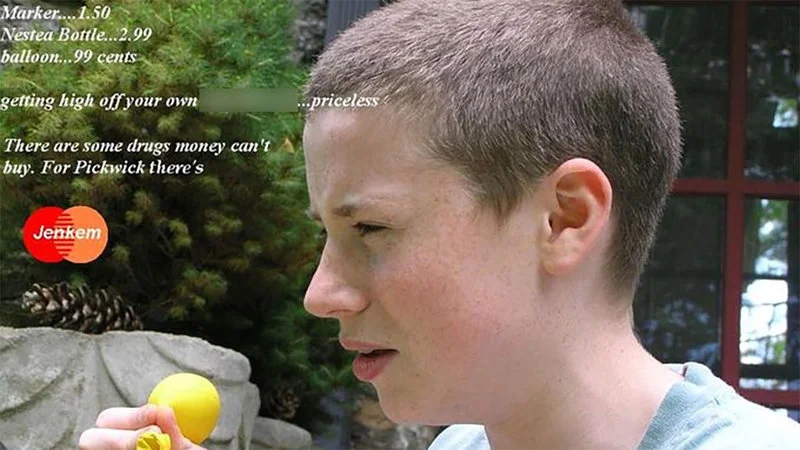
Jenkem is a 2007 hoax meme where Totse.com user Pickwick posted staged photos of himself inhaling fermented sewage gas, sparking widespread moral panic and media coverage.

Jenkem is both a real (if poorly documented) inhalant used by street children in Zambia and one of the internet's most memorable drug hoaxes. In 2007, a forum user named "Pickwick" on Totse.com posted staged photos of himself allegedly huffing fermented sewage gas, sparking a moral panic that reached local police departments and national news networks before being exposed as a prank6. The incident became a touchstone for how easily online trolling could hijack mainstream media.

TL;DR

Jenkem is both a real (if poorly documented) inhalant used by street children in Zambia and one of the internet's most memorable drug hoaxes.

Overview

Jenkem refers to an inhalant supposedly made by fermenting human feces and urine in a sealed container, then huffing the resulting gas. Reports from the mid-1990s described Zambian street children using the substance as a cheap alternative to glue-sniffing2. The internet version of jenkem, however, is primarily remembered as a 2007 hoax that fooled law enforcement and cable news into treating it as a genuine drug epidemic sweeping American schools3.

The meme sits at the intersection of shock humor, media criticism, and trolling culture. It demonstrated how a single forum post with gross-out photos could travel from a niche messageboard to a Fox News broadcast, with a sheriff's department acting as the unlikely bridge between the two5.

The real substance has roots in Zambia. The earliest known media mention comes from an Inter Press Service wire report on August 26, 1995, describing boys at a sewage pond in Lusaka's Garden Township scooping human waste into containers and inhaling the fumes after a week of fermentation3. A fifth-grade dropout named Mukela Nyambe told the reporter, "Old man, this is more potent than cannabis"10.

The name "jenkem" derives from Genkem, a South African glue brand that had become a generic term for glue-sniffing among children5. On September 18, 1998, The New York Times mentioned jenkem in a report on Zambian AIDS orphans, citing the nonprofit Fountain of Hope1. A year later, BBC News ran "Children high on sewage," describing 16-year-old Luke Mpande's preference for jenkem: "With glue, I just hear voices in my head. But with Jenkem, I see visions. I see my mother who is dead and I forget about the problems in my life"2.

In 2002, a joint report by Project Concern International Zambia and Fountain of Hope listed jenkem as the third most popular drug among Lusaka's street children, behind cannabis and glue5.

The internet hoax began on June 7, 2007, when a user called Pickwick on the now-defunct Totse.com forum posted photos documenting what he claimed was a jenkem experiment4. He described defecating into a glass bottle, capping it with a balloon, and leaving it in the sun. Over the following days, Pickwick posted updates showing the balloon inflating and the contents fermenting9. On June 13, he shared a detailed "trip report" claiming he'd passed out, experienced vivid hallucinations, and spoken gibberish to trees and rocks9.

Origin & Background

Platform
Totse.com (hoax), 4chan (amplification)
Key People
Pickwick
Date
2007 (internet hoax); 1995 (earliest media reports of real substance)

The real substance has roots in Zambia. The earliest known media mention comes from an Inter Press Service wire report on August 26, 1995, describing boys at a sewage pond in Lusaka's Garden Township scooping human waste into containers and inhaling the fumes after a week of fermentation. A fifth-grade dropout named Mukela Nyambe told the reporter, "Old man, this is more potent than cannabis".

The name "jenkem" derives from Genkem, a South African glue brand that had become a generic term for glue-sniffing among children. On September 18, 1998, The New York Times mentioned jenkem in a report on Zambian AIDS orphans, citing the nonprofit Fountain of Hope. A year later, BBC News ran "Children high on sewage," describing 16-year-old Luke Mpande's preference for jenkem: "With glue, I just hear voices in my head. But with Jenkem, I see visions. I see my mother who is dead and I forget about the problems in my life".

In 2002, a joint report by Project Concern International Zambia and Fountain of Hope listed jenkem as the third most popular drug among Lusaka's street children, behind cannabis and glue.

The internet hoax began on June 7, 2007, when a user called Pickwick on the now-defunct Totse.com forum posted photos documenting what he claimed was a jenkem experiment. He described defecating into a glass bottle, capping it with a balloon, and leaving it in the sun. Over the following days, Pickwick posted updates showing the balloon inflating and the contents fermenting. On June 13, he shared a detailed "trip report" claiming he'd passed out, experienced vivid hallucinations, and spoken gibberish to trees and rocks.

How It Spread

The hoax moved quickly from Totse to broader internet culture. The same day Pickwick posted, the story hit Digg under the title "Kid Makes Jenkem in a Civilized Country". On August 3, 2007, The Stranger's blog ran a post titled "High as Shit" that included a purported firsthand account of a jenkem trip.

On September 24, 2007, Pickwick posted a new thread titled "The jenkem thing was a hoax." He admitted the brown substance was flour, water, and Nutella, and the "urine" was beer mixed with water. "I never inhaled any poop gas and got high off it," he wrote. "I just don't want people to ever recognize me as the kid who huffed poop gas".

Two days after Pickwick's confession, on September 26, the Collier County Sheriff's Office in Naples, Florida, issued an internal intelligence bulletin that used Pickwick's staged photos. The bulletin originated from a concerned parent at Palmetto Ridge High School who'd heard about jenkem from her son. Despite no confirmed cases of use in Collier County, the bulletin declared "Jenkem is now a popular drug in American Schools" and listed slang terms including "Butthash," "Fruit from Crack Pipe," and "Leroy Jenkems".

The bulletin leaked online and the story exploded. Fox News covered it on November 6, 2007, with an article titled "Drug Made From Human Waste Causing Stink on Web, in Law Enforcement". The next day, a Fox News television segment aired in which anchor Jack Miller solemnly informed viewers that the street name for jenkem was "butthash". The clip spread widely, with the sheer absurdity of hearing "butthash" on cable news becoming its own joke.

How to Use This Meme

Jenkem as a meme typically appears in one of several forms:

1

Shock humor references — Casually mentioning jenkem in discussions about drugs or getting high, often to derail conversations or provoke disgust.

2

Media criticism — Referencing the Fox News "butthash" clip or the Collier County bulletin as examples of institutional gullibility. The phrase "butthash" itself became a punchline.

3

Trolling template — Following the original 4chan playbook of presenting jenkem as a real drug to naive audiences, particularly authority figures. The copypasta format, with detailed fake instructions, was designed to be forwarded to schools.

4

Reaction/callback — Dropping "jenkem" into any conversation about bizarre substances, moral panics, or media failures as a knowing reference.

Cultural Impact

The jenkem hoax became a frequently cited example of how internet trolls could manipulate mainstream media. BuzzFeed News later called it "the greatest internet hoax" and "the greatest fake drug hoax of all time". The incident predated Rickrolling by about a year but shared DNA with it: both involved internet users gleefully watching unsuspecting people fall for fabricated content.

The story also highlighted real failures in law enforcement intelligence gathering. The Collier County bulletin went out as an official document despite being based entirely on a single parent's report and photos from a forum post by a teenager who had already admitted to faking them. Palmetto Ridge High School's principal Roy Terry told reporters: "I'm sure that something like this can be done, but I have not heard of anybody doing it nor anyone at our school doing it at all".

The South Park reference in "Major Boobage" (2008) cemented jenkem in pop culture memory, though the show substituted cat urine for sewage in its parody. The American Dad reference four years later showed the concept still had comedy mileage.

Full History

The jenkem panic of 2007 was a case study in how internet trolling could exploit institutional credulity. But the story behind it had been building for over a decade.

Between 1995 and 2006, jenkem existed in a handful of English-language news articles as a grim detail about poverty in sub-Saharan Africa. The IPS wire report, the NYT feature, and the BBC piece all described the same narrow phenomenon: orphaned and abandoned children in Lusaka, Zambia, inhaling gases from fermented sewage because they couldn't afford glue or petrol. The Drug Enforcement Commission of Zambia confirmed it was real but legal, and Nason Banda of the agency described it as heartbreaking: "It hits right at the heart to see a human being coming down a level". John C. Zulu of Zambia's Ministry of Sport, Youth and Child Development told Salon.com in 2007 that jenkem use was actually less common than glue-sniffing, and that children said "it keeps them warm and makes them fearless".

The substance's pharmacology was never scientifically studied. No peer-reviewed journal examined its active compounds or mechanisms. Dr. Fumito Ichinose, a Boston anesthesia specialist who had studied hydrogen sulfide gas on mice, speculated to Salon.com that inhaling gases from jenkem could cause hypoxia, "a lack of oxygen flow to the body that could be alternately euphoric and physically dangerous". The drug information site Erowid concluded that "the jenkem stories that have been circulating in the U.S. media are almost certainly the strange result of a hoax" and stated they had "seen no credible evidence" of anyone in the U.S., Canada, or Europe inhaling sewage gas for psychoactive effects.

The pivot from obscure Zambian poverty detail to internet sensation happened entirely because of Pickwick. His Totse thread was compelling because it included photos at every stage, from production to the alleged trip itself. The flux64 WordPress blog archived portions of his posts, preserving the step-by-step narrative even after Totse went offline. Pickwick's "trip report" was vivid and specific: he described passing out for about a minute, seeing random people from his past like his second-grade teacher, hearing screeching and car noises, and staring at spots for long periods while talking to rocks. In his own conclusion, he said it was not enjoyable and he would "defiantly not" do it again.

After Pickwick's hoax confession, 4chan users launched a campaign to convince schools and law enforcement that jenkem was a real teen drug trend. According to BuzzFeed News, the Encyclopedia Dramatica article on jenkem was on the site's front page by June 2007. Someone from the Totse messageboard even emailed South Park Studios about the topic. The copypasta that circulated included detailed fake instructions and was specifically designed to be forwarded to school administrators.

The media response was striking in its range. Snopes initially rated the claim as "undetermined" before quickly reclassifying it as "false". About.com's urban legend expert David Emery concluded the reports were "based on faulty Internet research". The Smoking Gun noted that the Collier County alert "may be full of shit". But multiple local news stations ran the story uncritically. KIMT in Mason City, Iowa, WIFR-TV in Rockford, Illinois, and WINK News in Fort Myers, Florida, all reported on jenkem without noting the hoax. WSBT-TV in South Bend advised parents to "wait up for their children at night and not let their kids go to bed until they have seen them and smelled their breath". An Austin, Texas NBC affiliate interviewed an addiction counselor who speculated that "once it becomes OK with a certain group of adolescents, it becomes OK with a lot more".

The DEA's own response was muddled. Washington Post columnist Emil Steiner reported that a DEA spokesman insisted "there are people in America trying jenkem," calling it "dangerous, bad and stupid". But another DEA spokesman, Garrison Courtney, specified: "We wouldn't classify it as a drug so much because it's feces and urine".

The cultural afterlife of jenkem extended into pop culture. On March 26, 2008, the South Park episode "Major Boobage" featured Kenny becoming addicted to "cheesing," a drug involving cat urine, which was widely read as a jenkem reference. On March 25, 2012, the American Dad episode "Less Money, Mo' Problems" directly depicted the character Stan inhaling jenkem with a homeless man. On December 3, 2010, Florida news station WPTV ran a story on a purported jenkem lab discovered by law enforcement in Ft. Pierce, Florida. A skateboard magazine even adopted the name "Jenkem".

Fun Facts

The Collier County bulletin listed "Leroy Jenkems" as street slang for jenkem, blending the hoax with the Leeroy Jenkins meme.

Pickwick's "trip report" included the detail that he spoke to trees and rocks while under the supposed influence, and his friend considered getting an adult.

The Drug Enforcement Administration couldn't classify jenkem as a drug because, as spokesman Garrison Courtney put it, "it's feces and urine".

The first Urban Dictionary entry for "jenkem" was submitted on October 25, 2005, two years before the hoax went viral.

An Australian broadcaster, Ninemsn, summarized the American coverage by noting that "the world's foremost superpower, which spends more than any other nation on its war against drugs, could beeli-minated by its own feces".

Derivatives & Variations

"Butthash" as slang

— The Fox News segment where an anchor said "butthash" on live television became its own viral moment, with the clip circulated as an example of absurd news coverage[4].

South Park's "Cheesing"

— The March 2008 episode "Major Boobage" featured a jenkem-inspired drug plot involving cat urine[4].

American Dad episode

— The March 2012 episode "Less Money, Mo' Problems" directly depicted jenkem use[4].

Jenkem Magazine

— A skateboard magazine adopted the name, giving the hoax an unexpected afterlife in skate culture[6].

Copypasta variants

— Multiple versions of fake jenkem instructions circulated on 4chan and other boards, designed to be forwarded to school administrators[8].

Frequently Asked Questions

Jenkem

2007Hoax / moral panic / trollingclassic

Also known as: Butthash · Butt Hash · Leroy Jenkems

Jenkem is a 2007 hoax meme where Totse.com user Pickwick posted staged photos of himself inhaling fermented sewage gas, sparking widespread moral panic and media coverage.

Jenkem is both a real (if poorly documented) inhalant used by street children in Zambia and one of the internet's most memorable drug hoaxes. In 2007, a forum user named "Pickwick" on Totse.com posted staged photos of himself allegedly huffing fermented sewage gas, sparking a moral panic that reached local police departments and national news networks before being exposed as a prank. The incident became a touchstone for how easily online trolling could hijack mainstream media.

TL;DR

Jenkem is both a real (if poorly documented) inhalant used by street children in Zambia and one of the internet's most memorable drug hoaxes.

Overview

Jenkem refers to an inhalant supposedly made by fermenting human feces and urine in a sealed container, then huffing the resulting gas. Reports from the mid-1990s described Zambian street children using the substance as a cheap alternative to glue-sniffing. The internet version of jenkem, however, is primarily remembered as a 2007 hoax that fooled law enforcement and cable news into treating it as a genuine drug epidemic sweeping American schools.

The meme sits at the intersection of shock humor, media criticism, and trolling culture. It demonstrated how a single forum post with gross-out photos could travel from a niche messageboard to a Fox News broadcast, with a sheriff's department acting as the unlikely bridge between the two.

The real substance has roots in Zambia. The earliest known media mention comes from an Inter Press Service wire report on August 26, 1995, describing boys at a sewage pond in Lusaka's Garden Township scooping human waste into containers and inhaling the fumes after a week of fermentation. A fifth-grade dropout named Mukela Nyambe told the reporter, "Old man, this is more potent than cannabis".

The name "jenkem" derives from Genkem, a South African glue brand that had become a generic term for glue-sniffing among children. On September 18, 1998, The New York Times mentioned jenkem in a report on Zambian AIDS orphans, citing the nonprofit Fountain of Hope. A year later, BBC News ran "Children high on sewage," describing 16-year-old Luke Mpande's preference for jenkem: "With glue, I just hear voices in my head. But with Jenkem, I see visions. I see my mother who is dead and I forget about the problems in my life".

In 2002, a joint report by Project Concern International Zambia and Fountain of Hope listed jenkem as the third most popular drug among Lusaka's street children, behind cannabis and glue.

The internet hoax began on June 7, 2007, when a user called Pickwick on the now-defunct Totse.com forum posted photos documenting what he claimed was a jenkem experiment. He described defecating into a glass bottle, capping it with a balloon, and leaving it in the sun. Over the following days, Pickwick posted updates showing the balloon inflating and the contents fermenting. On June 13, he shared a detailed "trip report" claiming he'd passed out, experienced vivid hallucinations, and spoken gibberish to trees and rocks.

Origin & Background

Platform
Totse.com (hoax), 4chan (amplification)
Key People
Pickwick
Date
2007 (internet hoax); 1995 (earliest media reports of real substance)

The real substance has roots in Zambia. The earliest known media mention comes from an Inter Press Service wire report on August 26, 1995, describing boys at a sewage pond in Lusaka's Garden Township scooping human waste into containers and inhaling the fumes after a week of fermentation. A fifth-grade dropout named Mukela Nyambe told the reporter, "Old man, this is more potent than cannabis".

The name "jenkem" derives from Genkem, a South African glue brand that had become a generic term for glue-sniffing among children. On September 18, 1998, The New York Times mentioned jenkem in a report on Zambian AIDS orphans, citing the nonprofit Fountain of Hope. A year later, BBC News ran "Children high on sewage," describing 16-year-old Luke Mpande's preference for jenkem: "With glue, I just hear voices in my head. But with Jenkem, I see visions. I see my mother who is dead and I forget about the problems in my life".

In 2002, a joint report by Project Concern International Zambia and Fountain of Hope listed jenkem as the third most popular drug among Lusaka's street children, behind cannabis and glue.

The internet hoax began on June 7, 2007, when a user called Pickwick on the now-defunct Totse.com forum posted photos documenting what he claimed was a jenkem experiment. He described defecating into a glass bottle, capping it with a balloon, and leaving it in the sun. Over the following days, Pickwick posted updates showing the balloon inflating and the contents fermenting. On June 13, he shared a detailed "trip report" claiming he'd passed out, experienced vivid hallucinations, and spoken gibberish to trees and rocks.

How It Spread

The hoax moved quickly from Totse to broader internet culture. The same day Pickwick posted, the story hit Digg under the title "Kid Makes Jenkem in a Civilized Country". On August 3, 2007, The Stranger's blog ran a post titled "High as Shit" that included a purported firsthand account of a jenkem trip.

On September 24, 2007, Pickwick posted a new thread titled "The jenkem thing was a hoax." He admitted the brown substance was flour, water, and Nutella, and the "urine" was beer mixed with water. "I never inhaled any poop gas and got high off it," he wrote. "I just don't want people to ever recognize me as the kid who huffed poop gas".

Two days after Pickwick's confession, on September 26, the Collier County Sheriff's Office in Naples, Florida, issued an internal intelligence bulletin that used Pickwick's staged photos. The bulletin originated from a concerned parent at Palmetto Ridge High School who'd heard about jenkem from her son. Despite no confirmed cases of use in Collier County, the bulletin declared "Jenkem is now a popular drug in American Schools" and listed slang terms including "Butthash," "Fruit from Crack Pipe," and "Leroy Jenkems".

The bulletin leaked online and the story exploded. Fox News covered it on November 6, 2007, with an article titled "Drug Made From Human Waste Causing Stink on Web, in Law Enforcement". The next day, a Fox News television segment aired in which anchor Jack Miller solemnly informed viewers that the street name for jenkem was "butthash". The clip spread widely, with the sheer absurdity of hearing "butthash" on cable news becoming its own joke.

How to Use This Meme

Jenkem as a meme typically appears in one of several forms:

1

Shock humor references — Casually mentioning jenkem in discussions about drugs or getting high, often to derail conversations or provoke disgust.

2

Media criticism — Referencing the Fox News "butthash" clip or the Collier County bulletin as examples of institutional gullibility. The phrase "butthash" itself became a punchline.

3

Trolling template — Following the original 4chan playbook of presenting jenkem as a real drug to naive audiences, particularly authority figures. The copypasta format, with detailed fake instructions, was designed to be forwarded to schools.

4

Reaction/callback — Dropping "jenkem" into any conversation about bizarre substances, moral panics, or media failures as a knowing reference.

Cultural Impact

The jenkem hoax became a frequently cited example of how internet trolls could manipulate mainstream media. BuzzFeed News later called it "the greatest internet hoax" and "the greatest fake drug hoax of all time". The incident predated Rickrolling by about a year but shared DNA with it: both involved internet users gleefully watching unsuspecting people fall for fabricated content.

The story also highlighted real failures in law enforcement intelligence gathering. The Collier County bulletin went out as an official document despite being based entirely on a single parent's report and photos from a forum post by a teenager who had already admitted to faking them. Palmetto Ridge High School's principal Roy Terry told reporters: "I'm sure that something like this can be done, but I have not heard of anybody doing it nor anyone at our school doing it at all".

The South Park reference in "Major Boobage" (2008) cemented jenkem in pop culture memory, though the show substituted cat urine for sewage in its parody. The American Dad reference four years later showed the concept still had comedy mileage.

Full History

The jenkem panic of 2007 was a case study in how internet trolling could exploit institutional credulity. But the story behind it had been building for over a decade.

Between 1995 and 2006, jenkem existed in a handful of English-language news articles as a grim detail about poverty in sub-Saharan Africa. The IPS wire report, the NYT feature, and the BBC piece all described the same narrow phenomenon: orphaned and abandoned children in Lusaka, Zambia, inhaling gases from fermented sewage because they couldn't afford glue or petrol. The Drug Enforcement Commission of Zambia confirmed it was real but legal, and Nason Banda of the agency described it as heartbreaking: "It hits right at the heart to see a human being coming down a level". John C. Zulu of Zambia's Ministry of Sport, Youth and Child Development told Salon.com in 2007 that jenkem use was actually less common than glue-sniffing, and that children said "it keeps them warm and makes them fearless".

The substance's pharmacology was never scientifically studied. No peer-reviewed journal examined its active compounds or mechanisms. Dr. Fumito Ichinose, a Boston anesthesia specialist who had studied hydrogen sulfide gas on mice, speculated to Salon.com that inhaling gases from jenkem could cause hypoxia, "a lack of oxygen flow to the body that could be alternately euphoric and physically dangerous". The drug information site Erowid concluded that "the jenkem stories that have been circulating in the U.S. media are almost certainly the strange result of a hoax" and stated they had "seen no credible evidence" of anyone in the U.S., Canada, or Europe inhaling sewage gas for psychoactive effects.

The pivot from obscure Zambian poverty detail to internet sensation happened entirely because of Pickwick. His Totse thread was compelling because it included photos at every stage, from production to the alleged trip itself. The flux64 WordPress blog archived portions of his posts, preserving the step-by-step narrative even after Totse went offline. Pickwick's "trip report" was vivid and specific: he described passing out for about a minute, seeing random people from his past like his second-grade teacher, hearing screeching and car noises, and staring at spots for long periods while talking to rocks. In his own conclusion, he said it was not enjoyable and he would "defiantly not" do it again.

After Pickwick's hoax confession, 4chan users launched a campaign to convince schools and law enforcement that jenkem was a real teen drug trend. According to BuzzFeed News, the Encyclopedia Dramatica article on jenkem was on the site's front page by June 2007. Someone from the Totse messageboard even emailed South Park Studios about the topic. The copypasta that circulated included detailed fake instructions and was specifically designed to be forwarded to school administrators.

The media response was striking in its range. Snopes initially rated the claim as "undetermined" before quickly reclassifying it as "false". About.com's urban legend expert David Emery concluded the reports were "based on faulty Internet research". The Smoking Gun noted that the Collier County alert "may be full of shit". But multiple local news stations ran the story uncritically. KIMT in Mason City, Iowa, WIFR-TV in Rockford, Illinois, and WINK News in Fort Myers, Florida, all reported on jenkem without noting the hoax. WSBT-TV in South Bend advised parents to "wait up for their children at night and not let their kids go to bed until they have seen them and smelled their breath". An Austin, Texas NBC affiliate interviewed an addiction counselor who speculated that "once it becomes OK with a certain group of adolescents, it becomes OK with a lot more".

The DEA's own response was muddled. Washington Post columnist Emil Steiner reported that a DEA spokesman insisted "there are people in America trying jenkem," calling it "dangerous, bad and stupid". But another DEA spokesman, Garrison Courtney, specified: "We wouldn't classify it as a drug so much because it's feces and urine".

The cultural afterlife of jenkem extended into pop culture. On March 26, 2008, the South Park episode "Major Boobage" featured Kenny becoming addicted to "cheesing," a drug involving cat urine, which was widely read as a jenkem reference. On March 25, 2012, the American Dad episode "Less Money, Mo' Problems" directly depicted the character Stan inhaling jenkem with a homeless man. On December 3, 2010, Florida news station WPTV ran a story on a purported jenkem lab discovered by law enforcement in Ft. Pierce, Florida. A skateboard magazine even adopted the name "Jenkem".

Fun Facts

The Collier County bulletin listed "Leroy Jenkems" as street slang for jenkem, blending the hoax with the Leeroy Jenkins meme.

Pickwick's "trip report" included the detail that he spoke to trees and rocks while under the supposed influence, and his friend considered getting an adult.

The Drug Enforcement Administration couldn't classify jenkem as a drug because, as spokesman Garrison Courtney put it, "it's feces and urine".

The first Urban Dictionary entry for "jenkem" was submitted on October 25, 2005, two years before the hoax went viral.

An Australian broadcaster, Ninemsn, summarized the American coverage by noting that "the world's foremost superpower, which spends more than any other nation on its war against drugs, could beeli-minated by its own feces".

Derivatives & Variations

"Butthash" as slang

— The Fox News segment where an anchor said "butthash" on live television became its own viral moment, with the clip circulated as an example of absurd news coverage[4].

South Park's "Cheesing"

— The March 2008 episode "Major Boobage" featured a jenkem-inspired drug plot involving cat urine[4].

American Dad episode

— The March 2012 episode "Less Money, Mo' Problems" directly depicted jenkem use[4].

Jenkem Magazine

— A skateboard magazine adopted the name, giving the hoax an unexpected afterlife in skate culture[6].

Copypasta variants

— Multiple versions of fake jenkem instructions circulated on 4chan and other boards, designed to be forwarded to school administrators[8].

Frequently Asked Questions