Home›Memes›Brandjacking

Contents

  • Overview
  • Gallery
  • Origin
  • How It Spread
  • FAQ
  • References
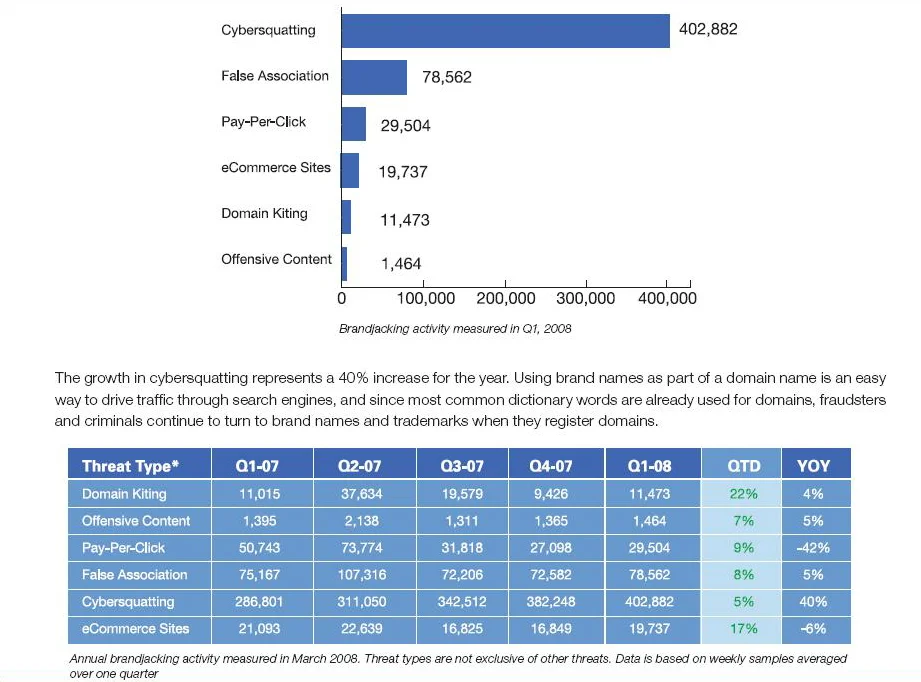
Bar chart and data table showing brandjacking threat types and quarterly statistics from 2007 to Q1 2008

Brandjacking

2007catchphraseclassic

Published November 26, 2026

Brandjacking is the act of hijacking a company or politician's social media campaign to flip the message back on its sponsor. Marketing software firm MarkMonitor coined the portmanteau in 2007 for a brand protection product, and by 2010 activists, hacktivists and 4chan pranksters had claimed the word for their own anti-corporate stunts2.

brand participation memes backfire memes protest memes hashtag memes late 2000s memes

Overview

Brandjacking campaigns usually center on a brand's own promotional hook, a hashtag, a solicitation for user-submitted content, an online poll or a corporate Q&A session. Participants coordinate to flood that hook with hostile material tied to a recall, a workplace scandal or a product failure, so the company's push reads like a public indictment instead of an ad2.

What separates it from basic threadjacking is intent and target. Threadjacking usually derails a forum thread toward a more provocative topic for its own sake. Brandjacking aims squarely at a corporation or politician and ties into a boycott or vigilante push, which is why it caught on with politically motivated users in the late 2000s2. Related slang in the same window, the sci-fi coinage "brainjacking" for hacking neural implants, and the business insult "brandwanking" for owners who obsess over logos instead of running their shop, shows how the -jacking suffix drifted through online jargon1.

Origin & Background

Platform
Trade press (viral spread on 4chan, Twitter)
Creator
MarkMonitor
Date
2007

US brand protection software company MarkMonitor coined "brandjacking" for its BrandJacking Index®, a quarterly report tracking online threats to corporate brands. The word first appeared in print on May 1, 2007 in a Business Week article titled "Brandjacking on the Web"2.

MarkMonitor intended the term for commercial threats, counterfeit storefronts, cybersquatted domains and phishing sites impersonating real companies, not the activist tactics it later described. The portmanteau splices "branding" and "hijacking," and it took shape against the older forum-era practice of threadjacking, which the two concepts are often compared with2.

How It Spread

Through the late 2000s the word stayed mostly inside PR and marketing trade press, where it described defensive worries like counterfeit sellers and impersonation accounts. By early 2010 that usage flipped: boycott organizers, hacktivist crews and 4chan prank threads adopted the label for offensive social-media stunts aimed at corporations and political campaigns2.

A common pattern was to answer a brand's own participation prompt with coordinated hostile replies. When a company invited user submissions under a promotional hashtag or asked followers to share a feel-good story, organized groups would fill the tag with a recent scandal or product-safety story instead. Hashtag hijacks of the early 2010s formalized the approach, and the two terms, brandjacking and hashtag hijacking, are often discussed together.

Adjacent -jacking slang spread alongside it in online glossaries. Urban Dictionary entries for "brainjacking," the fictional hacking of brain implants, and "brandwanking," small-business owners stuck on logo design instead of growth work, show how writers kept reusing the suffix for new targets1.

Timeline

2007-05-01

Business Week publishes 'Brandjacking on the Web,' the first print appearance of the term, drawing on MarkMonitor's BrandJacking Index® report.

2007

US brand protection firm MarkMonitor launches the BrandJacking Index®, a quarterly measure of online threats to branded entities.

2010

Activists, hacktivists and 4chan pranksters adopt 'brandjacking' for ad-hoc protests and boycott campaigns on social media.

Frequently Asked Questions

Brandjacking is the act of sabotaging a commercial or political social media campaign by hijacking its message and pointing it back at the sponsor, usually as part of a boycott or online vigilante push2.

US brand protection software firm MarkMonitor coined the word in 2007 for its BrandJacking Index® product, and Business Week ran it in print on May 1, 20072.

Brandjacking is a portmanteau of "branding" and "hijacking." It originally covered commercial threats like counterfeit storefronts, then shifted to describe activist raids on brand campaigns2.

Participants target a brand's chosen hashtag, poll or submission prompt and flood it with content tied to a scandal, lawsuit or product failure, so the promotional push works against the sponsor2.

The tactic stayed in use through the hashtag hijacks of the 2010s, and the -jacking suffix spawned adjacent slang like "brainjacking" and "brandwanking" in online glossaries1.

References (2)

  1. 1
    https://www.urbandictionary.com/define.php?term=Brandjacking
  2. 2
    https://knowyourmeme.com/memes/brandjacking

Quick Info

Year
2007
Origin
Trade press (viral spread on 4chan, Twitter)
Type
catchphrase
Status
classic
Creator
MarkMonitor

More like this

Epic Boobs Girl
Epic Boobs Girl
The Duck Song
The Duck Song
Blank Room Soup
Blank Room Soup
Then I Walk In
Then I Walk In
3 Orangutans 1 Blender
Blue Waffle
Blue Waffle
Jd Vance Side Eye
Jd Vance Side Eye
Man-Faye
Man-Faye
It's Me, It's Verity
Terrified IShowSpeed Covering His Mouth / Speed Scared
Vape Nation
Vape Nation
Cmon Do Something
Cmon Do Something

Tags

brandjackinghashtag hijackingactivismboycottmarketing

Related Memes

S

sciencemustfall

sciencemustfall

T

tonytigergate

tonytigergate

K2

kony-2012

kony 2012

BK

burger-king

burger king

H

hisnameisalex

hisnameisalex

HU

hands-up-dont-shoot

hands up dont shoot

Browse MemesTopicsCreatorsTrendingPlayAboutAdvertiseLegalPrivacy

© 2026 meme.com