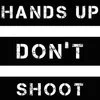
Hands Up Dont Shoot

2014Protest slogan / gestureclassic

Also known as: Hands Up · #HandsUpDontShoot · #HandsUp · Don't Shoot

Hands Up, Don't Shoot is a 2014 protest slogan and raised-hands gesture from Michael Brown's fatal Ferguson shooting, symbolizing surrender and becoming a defining Black Lives Matter symbol.

"Hands Up, Don't Shoot" is a protest slogan and gesture that emerged from the August 2014 police shooting of Michael Brown in Ferguson, Missouri. Born from eyewitness Dorian Johnson's account that Brown had raised his hands in surrender before being killed by Officer Darren Wilson, the phrase was adopted by street protesters and quickly spread across social media through hashtags like #HandsUpDontShoot1. The slogan became one of the defining symbols of the Black Lives Matter movement and sparked fierce debate after a 2015 Department of Justice report found no credible evidence that Brown had his hands up in surrender7.

TL;DR

"Hands Up, Don't Shoot" is a protest slogan and gesture that emerged from the August 2014 police shooting of Michael Brown in Ferguson, Missouri.

Overview

"Hands Up, Don't Shoot" combines a physical gesture (raising both hands above the head in a pose of surrender) with a verbal chant. The gesture mimics what witnesses initially claimed Michael Brown did moments before he was fatally shot by a Ferguson police officer on August 9, 20141. As a meme format, it moved beyond its original context to become a broad symbol of protest against police violence toward Black Americans. People at demonstrations, athletes on national television, and members of Congress on the House floor all performed the gesture as an act of solidarity24.

The phrase works on two levels. Literally, it describes a person surrendering to police while asking not to be shot. Symbolically, it represents a larger argument that Black Americans face lethal force even when compliant or unarmed11. This dual meaning is what gave it such power and such controversy.

On August 9, 2014, 18-year-old Michael Brown was shot and killed by Officer Darren Wilson in Ferguson, Missouri5. Brown's friend Dorian Johnson, who was present during the encounter, told media outlets that Brown had turned around with his hands raised and said, "I don't have a gun, stop shooting!"8. This account, broadcast widely in the hours after the shooting, became the factual basis for the slogan.

Brown's body lay in the street for more than four hours as residents gathered8. The grief and anger at the scene drew on years of racial tension and perceived police misconduct in Ferguson7. According to Tory Russell, co-founder of the activist group Hands Up United, a local activist named Brother Anthony Shahid was at the scene as more police arrived with dogs and weapons. Shahid said, "My hands are up; don't shoot me," and he and others began to chant3. The gesture and phrase fused together into a single slogan by Monday, August 11, when media first documented the combined form "Hands Up, Don't Shoot" during demonstrations9.

Within days, protesters had taken the cause to social media, tweeting with the hashtags #handsupdontshoot, #handsup, and #JusticeForMikeBrown1. Images of crowds with raised hands became some of the most striking visuals of the unrest.

Origin & Background

Platform
Ferguson, Missouri street protests (origin), Twitter (viral spread)
Key People
Dorian Johnson, Brother Anthony Shahid, Tory Russell / Hands Up United
Date
2014

On August 9, 2014, 18-year-old Michael Brown was shot and killed by Officer Darren Wilson in Ferguson, Missouri. Brown's friend Dorian Johnson, who was present during the encounter, told media outlets that Brown had turned around with his hands raised and said, "I don't have a gun, stop shooting!". This account, broadcast widely in the hours after the shooting, became the factual basis for the slogan.

Brown's body lay in the street for more than four hours as residents gathered. The grief and anger at the scene drew on years of racial tension and perceived police misconduct in Ferguson. According to Tory Russell, co-founder of the activist group Hands Up United, a local activist named Brother Anthony Shahid was at the scene as more police arrived with dogs and weapons. Shahid said, "My hands are up; don't shoot me," and he and others began to chant. The gesture and phrase fused together into a single slogan by Monday, August 11, when media first documented the combined form "Hands Up, Don't Shoot" during demonstrations.

Within days, protesters had taken the cause to social media, tweeting with the hashtags #handsupdontshoot, #handsup, and #JusticeForMikeBrown. Images of crowds with raised hands became some of the most striking visuals of the unrest.

How It Spread

Throughout August 2014, "Hands Up, Don't Shoot" appeared in headlines across national news outlets covering the growing protests. On August 13, USA Today published photographs of Ferguson protesters with arms raised, describing how the surrender sign had become a symbol of the movement. Two days later, Fast Company ran an article titled "'Hands Up, Don't Shoot' and the Growing Power of Protest Memes," comparing the gesture to earlier protest imagery like the hoodies worn after Trayvon Martin's death.

The Reverend Al Sharpton invoked the phrase at a rally near the courthouse in Clayton, Missouri, telling the crowd: "When their hands are up, you don't shoot. If you're angry, throw your arms up. If you want justice, throw your arms up".

On November 24, 2014, a St. Louis County grand jury declined to indict Darren Wilson, setting off a new wave of protests. Six days later, on November 30, five St. Louis Rams players (Tavon Austin, Kenny Britt, Stedman Bailey, Jared Cook, and Chris Givens) entered the field before their game against the Oakland Raiders with their hands raised. The gesture instantly dominated the sports news cycle. The St. Louis Police Officers Association called it "tasteless, offensive and inflammatory" and demanded the players be disciplined. The NFL refused, with spokesman Brian McCarthy stating the league would not punish the athletes. Wide receiver Stedman Bailey told reporters: "Violence should stop. There's a lot of violence going on here in St. Louis. We definitely hear about it all, and we just want it to stop".

A dispute then erupted over whether the Rams had apologized. Rams executive Kevin Demoff contacted police officials and said he "regretted any offense their officers may have taken," but denied issuing an apology. St. Louis County police chief Jon Belmar told his staff he "believed it to be an apology," a claim the Rams formally denied.

On December 1, 2014, several Democratic members of Congress, including New York's Hakeem Jeffries and Yvette Clarke and Texas' Al Green, performed the gesture on the House floor. That same day, walkout protests spread to New York, Chicago, San Francisco, and college campuses across the country.

How to Use This Meme

"Hands Up, Don't Shoot" is typically used as a protest chant and physical gesture rather than a traditional image macro. People raise both hands above their heads (palms out, fingers spread) while chanting the phrase. This is done at demonstrations, marches, vigils, or anywhere someone wants to signal solidarity with movements against police violence.

Online, the phrase appears as a hashtag (#HandsUpDontShoot or #HandsUp), usually accompanying images or videos of protests, or in response to news of police shootings of unarmed people. Photos of groups doing the gesture are often shared with the hashtag or the text overlaid.

Athletes and public figures have used it as a pregame or public-appearance gesture, entering a visible space with hands raised to make a political statement without saying a word.

Cultural Impact

The slogan crossed from street protest into nearly every layer of American public life. Five NFL players performing the gesture before a nationally televised game turned it into a sports controversy and free-speech flashpoint. The St. Louis Police Officers Association's demand for punishment, and the NFL's refusal to comply, played out over days of headlines.

Members of Congress brought it to the House floor on December 1, 2014, with Representatives Hakeem Jeffries, Yvette Clarke, and Al Green raising their hands during proceedings. The White House responded to the broader Ferguson crisis by announcing a review of police equipment programs and pushing for more officers to wear body cameras.

The activist group Hands Up United, based in Ferguson and formed in the wake of Brown's death, became a permanent police watchdog organization focused on racial and economic justice. Fast Company highlighted the phrase as part of a growing trend of "protest memes" that leverage visual media and social sharing for political organizing.

The phrase returned with force during the 2020 George Floyd protests, chanted at the White House, in Oakland, Columbus, and Detroit. Its use in the Terence Crutcher case in 2016, where video actually showed an unarmed man with hands raised being shot, gave the slogan a real-world example that matched its literal meaning.

Full History

The trajectory of "Hands Up, Don't Shoot" is a story about how a disputed eyewitness account became a global protest symbol, and what happened when official investigations challenged its factual basis.

The immediate aftermath of Michael Brown's death on August 9, 2014, was chaotic. Impromptu protests broke out that evening, with demonstrators chanting "We are Michael Brown!" and marching to the Ferguson Police Department headquarters. By the next day, protests had escalated to include looting and arson at local businesses. On Monday, August 11, police deployed rubber bullets and tear gas, and during standoffs, multiple men approached officers with hands raised saying "Don't shoot me". This was the moment media first captured the gesture and phrase working together as a unified slogan.

The hashtag #HandsUpDontShoot took off on Twitter and became a vehicle for sharing protest images nationwide. Notably, the slogan drew explicit comparisons to other recent cases. Montague Simmons of the Organization for Black Struggle in St. Louis explained that lingering frustration from the Trayvon Martin case and George Zimmerman's acquittal in 2013 had created a wellspring of anger that Ferguson tapped into. "I think it keyed into something that everybody's been feeling for a very long time," Simmons said.

The Rams' pregame gesture on November 30 was a turning point. Former 1968 Olympic bronze medalist John Carlos, famous for his black power salute alongside Tommie Smith in Mexico City, defended the players publicly. "If they choose to come out and raise their hands in support of whatever their emotions are, they have the right to do that," Carlos told the Associated Press. At the University of Missouri-St. Louis, sophomore Amber Whitaker, who is white, joined students chanting the slogan and argued the symbolism mattered regardless of what Brown was literally doing. "There are black men and women who are shot with their hands up," she said. "It may not apply exactly to Mike Brown, but it still happens".

The factual basis of the slogan came under direct challenge in March 2015. The U.S. Department of Justice, under Attorney General Eric Holder, released an 86-page report on the shooting. The report found that "there is no witness who has stated that Brown had his hands up in surrender whose statement is otherwise consistent with the physical evidence". Several witnesses who initially said Brown had his hands raised later recanted, admitting they had not actually seen the shooting. Forensic evidence, including three autopsies, showed Brown was moving toward Wilson when shot, and that Brown had earlier struggled with Wilson over his service weapon inside the police SUV.

Washington Post columnist Jonathan Capehart, who had covered the story from the beginning, wrote a piece titled "Hands Up, Don't Shoot! Was Built on a Lie," acknowledging that the DOJ findings forced him to confront "two uncomfortable truths: Brown never surrendered with his hands up, and Wilson was justified in shooting Brown". Yet Capehart also noted that the separate DOJ report on the Ferguson police department documented years of institutional racism and abuse, providing "background and much-needed context" for the community's explosion of anger.

The phrase refused to fade despite the DOJ findings. Then-Attorney General Eric Holder acknowledged it was "not only valid but essential to question how such a strong alternative version of events was able to take hold so swiftly and to be accepted so readily". Jeff Roorda, spokesman for the St. Louis Police Officers' Association, argued the narrative was making policing more dangerous: "Suddenly we have kids that are emboldened, and more than ever are non-compliant with the police". Activists countered that the slogan captured a reality larger than any single case. As one protester told NPR: "Just because I'm black and male, and you may have thoughts that I am criminal or I am a threat, doesn't make it so, and doesn't give you an excuse to kill or injure me".

The chant found grim new relevance in September 2016 when Terence Crutcher, a 40-year-old unarmed Black man, was shot and killed by a white police officer in Tulsa, Oklahoma. Police helicopter and dashcam footage showed Crutcher with his hands in the air before being shot. One helicopter pilot can be heard saying, "Looks like a bad dude, too," seconds before Crutcher fell.

In 2020, the killing of George Floyd reignited protests across the country, and "Hands Up, Don't Shoot" returned as a rallying cry at demonstrations from the White House to Oakland, California. NBA star Stephen Curry and his wife Ayesha were filmed chanting the phrase at a protest. Michigan Governor Gretchen Whitmer led marchers in Detroit using the chant.

On September 7, 2025, Dorian Johnson himself was shot and killed at a block of apartments in Ferguson, not far from where Brown had died. Ferguson police confirmed the shooting was a domestic incident involving a claim of self-defense, and stated no police officers were involved. Johnson was 33 years old. His death closed a painful circle for the community where the phrase was born.

Fun Facts

The earliest known use of "Hands up" as a protest chant predates Ferguson. During 2009 student protests in London, demonstrators trapped by riot police on Westminster Bridge raised their hands and shouted "Hands up" to show they weren't provoking the police.

John Carlos, the 1968 Olympic black power salute athlete, publicly defended the Rams players' right to make the gesture, drawing a direct line between the two acts of protest across four decades.

The Rams never formally apologized for their players' gesture, despite St. Louis County police chief Jon Belmar telling his staff that Rams executive Kevin Demoff had apologized. Demoff told ESPN and CNN he had never used the word "apologize".

Rams head coach Jeff Fisher described the gesture as a "choice to exercise their free speech" and said no players would be disciplined, but declined to answer further questions, saying "I'm a head coach. I'm not a politician, an activist, or an expert on societal issues".

Dorian Johnson, whose eyewitness account gave rise to the phrase, was himself shot and killed in Ferguson on September 7, 2025, in what police described as a domestic incident.

Derivatives & Variations

#HandsUpDontShoot / #HandsUp hashtags:

The primary social media vehicles for sharing protest images and organizing demonstrations, used across Twitter, Instagram, and Facebook from August 2014 onward[1].

Rams "hands up" pregame gesture:

Five St. Louis Rams players entering the field with raised hands on November 30, 2014, creating one of the most visible athlete-protest moments before Colin Kaepernick's kneeling[2].

Congressional floor gesture:

Democratic representatives performing the gesture during House proceedings on December 1, 2014[4].

Hands Up United:

Activist organization formed in Ferguson in the direct wake of the slogan's creation, still active as a police watchdog and racial justice group[14].

"I Can't Breathe" crossover:

The phrase frequently appeared alongside the Eric Garner-inspired "I Can't Breathe" slogan during the overlapping protest movements of late 2014 and the 2020 George Floyd protests[3].

Frequently Asked Questions

References (24)

  1. 1
    USA TODAYarticle
  2. 2
  3. 3
  4. 4
  5. 5
    Copypastaencyclopedia
  6. 6
  7. 7
  8. 8
  9. 9
  10. 10
  11. 11
  12. 12
  13. 13
  14. 14
  15. 15
  16. 16
  17. 17
  18. 18
  19. 19
    USA TODAYarticle
  20. 20
  21. 21
  22. 22
  23. 23
  24. 24

HandsUpDontShoot

2014Protest slogan / gestureclassic

Also known as: Hands Up · #HandsUpDontShoot · #HandsUp · Don't Shoot

Hands Up, Don't Shoot is a 2014 protest slogan and raised-hands gesture from Michael Brown's fatal Ferguson shooting, symbolizing surrender and becoming a defining Black Lives Matter symbol.

"Hands Up, Don't Shoot" is a protest slogan and gesture that emerged from the August 2014 police shooting of Michael Brown in Ferguson, Missouri. Born from eyewitness Dorian Johnson's account that Brown had raised his hands in surrender before being killed by Officer Darren Wilson, the phrase was adopted by street protesters and quickly spread across social media through hashtags like #HandsUpDontShoot. The slogan became one of the defining symbols of the Black Lives Matter movement and sparked fierce debate after a 2015 Department of Justice report found no credible evidence that Brown had his hands up in surrender.

TL;DR

"Hands Up, Don't Shoot" is a protest slogan and gesture that emerged from the August 2014 police shooting of Michael Brown in Ferguson, Missouri.

Overview

"Hands Up, Don't Shoot" combines a physical gesture (raising both hands above the head in a pose of surrender) with a verbal chant. The gesture mimics what witnesses initially claimed Michael Brown did moments before he was fatally shot by a Ferguson police officer on August 9, 2014. As a meme format, it moved beyond its original context to become a broad symbol of protest against police violence toward Black Americans. People at demonstrations, athletes on national television, and members of Congress on the House floor all performed the gesture as an act of solidarity.

The phrase works on two levels. Literally, it describes a person surrendering to police while asking not to be shot. Symbolically, it represents a larger argument that Black Americans face lethal force even when compliant or unarmed. This dual meaning is what gave it such power and such controversy.

On August 9, 2014, 18-year-old Michael Brown was shot and killed by Officer Darren Wilson in Ferguson, Missouri. Brown's friend Dorian Johnson, who was present during the encounter, told media outlets that Brown had turned around with his hands raised and said, "I don't have a gun, stop shooting!". This account, broadcast widely in the hours after the shooting, became the factual basis for the slogan.

Brown's body lay in the street for more than four hours as residents gathered. The grief and anger at the scene drew on years of racial tension and perceived police misconduct in Ferguson. According to Tory Russell, co-founder of the activist group Hands Up United, a local activist named Brother Anthony Shahid was at the scene as more police arrived with dogs and weapons. Shahid said, "My hands are up; don't shoot me," and he and others began to chant. The gesture and phrase fused together into a single slogan by Monday, August 11, when media first documented the combined form "Hands Up, Don't Shoot" during demonstrations.

Within days, protesters had taken the cause to social media, tweeting with the hashtags #handsupdontshoot, #handsup, and #JusticeForMikeBrown. Images of crowds with raised hands became some of the most striking visuals of the unrest.

Origin & Background

Platform
Ferguson, Missouri street protests (origin), Twitter (viral spread)
Key People
Dorian Johnson, Brother Anthony Shahid, Tory Russell / Hands Up United
Date
2014

On August 9, 2014, 18-year-old Michael Brown was shot and killed by Officer Darren Wilson in Ferguson, Missouri. Brown's friend Dorian Johnson, who was present during the encounter, told media outlets that Brown had turned around with his hands raised and said, "I don't have a gun, stop shooting!". This account, broadcast widely in the hours after the shooting, became the factual basis for the slogan.

Brown's body lay in the street for more than four hours as residents gathered. The grief and anger at the scene drew on years of racial tension and perceived police misconduct in Ferguson. According to Tory Russell, co-founder of the activist group Hands Up United, a local activist named Brother Anthony Shahid was at the scene as more police arrived with dogs and weapons. Shahid said, "My hands are up; don't shoot me," and he and others began to chant. The gesture and phrase fused together into a single slogan by Monday, August 11, when media first documented the combined form "Hands Up, Don't Shoot" during demonstrations.

Within days, protesters had taken the cause to social media, tweeting with the hashtags #handsupdontshoot, #handsup, and #JusticeForMikeBrown. Images of crowds with raised hands became some of the most striking visuals of the unrest.

How It Spread

Throughout August 2014, "Hands Up, Don't Shoot" appeared in headlines across national news outlets covering the growing protests. On August 13, USA Today published photographs of Ferguson protesters with arms raised, describing how the surrender sign had become a symbol of the movement. Two days later, Fast Company ran an article titled "'Hands Up, Don't Shoot' and the Growing Power of Protest Memes," comparing the gesture to earlier protest imagery like the hoodies worn after Trayvon Martin's death.

The Reverend Al Sharpton invoked the phrase at a rally near the courthouse in Clayton, Missouri, telling the crowd: "When their hands are up, you don't shoot. If you're angry, throw your arms up. If you want justice, throw your arms up".

On November 24, 2014, a St. Louis County grand jury declined to indict Darren Wilson, setting off a new wave of protests. Six days later, on November 30, five St. Louis Rams players (Tavon Austin, Kenny Britt, Stedman Bailey, Jared Cook, and Chris Givens) entered the field before their game against the Oakland Raiders with their hands raised. The gesture instantly dominated the sports news cycle. The St. Louis Police Officers Association called it "tasteless, offensive and inflammatory" and demanded the players be disciplined. The NFL refused, with spokesman Brian McCarthy stating the league would not punish the athletes. Wide receiver Stedman Bailey told reporters: "Violence should stop. There's a lot of violence going on here in St. Louis. We definitely hear about it all, and we just want it to stop".

A dispute then erupted over whether the Rams had apologized. Rams executive Kevin Demoff contacted police officials and said he "regretted any offense their officers may have taken," but denied issuing an apology. St. Louis County police chief Jon Belmar told his staff he "believed it to be an apology," a claim the Rams formally denied.

On December 1, 2014, several Democratic members of Congress, including New York's Hakeem Jeffries and Yvette Clarke and Texas' Al Green, performed the gesture on the House floor. That same day, walkout protests spread to New York, Chicago, San Francisco, and college campuses across the country.

How to Use This Meme

"Hands Up, Don't Shoot" is typically used as a protest chant and physical gesture rather than a traditional image macro. People raise both hands above their heads (palms out, fingers spread) while chanting the phrase. This is done at demonstrations, marches, vigils, or anywhere someone wants to signal solidarity with movements against police violence.

Online, the phrase appears as a hashtag (#HandsUpDontShoot or #HandsUp), usually accompanying images or videos of protests, or in response to news of police shootings of unarmed people. Photos of groups doing the gesture are often shared with the hashtag or the text overlaid.

Athletes and public figures have used it as a pregame or public-appearance gesture, entering a visible space with hands raised to make a political statement without saying a word.

Cultural Impact

The slogan crossed from street protest into nearly every layer of American public life. Five NFL players performing the gesture before a nationally televised game turned it into a sports controversy and free-speech flashpoint. The St. Louis Police Officers Association's demand for punishment, and the NFL's refusal to comply, played out over days of headlines.

Members of Congress brought it to the House floor on December 1, 2014, with Representatives Hakeem Jeffries, Yvette Clarke, and Al Green raising their hands during proceedings. The White House responded to the broader Ferguson crisis by announcing a review of police equipment programs and pushing for more officers to wear body cameras.

The activist group Hands Up United, based in Ferguson and formed in the wake of Brown's death, became a permanent police watchdog organization focused on racial and economic justice. Fast Company highlighted the phrase as part of a growing trend of "protest memes" that leverage visual media and social sharing for political organizing.

The phrase returned with force during the 2020 George Floyd protests, chanted at the White House, in Oakland, Columbus, and Detroit. Its use in the Terence Crutcher case in 2016, where video actually showed an unarmed man with hands raised being shot, gave the slogan a real-world example that matched its literal meaning.

Full History

The trajectory of "Hands Up, Don't Shoot" is a story about how a disputed eyewitness account became a global protest symbol, and what happened when official investigations challenged its factual basis.

The immediate aftermath of Michael Brown's death on August 9, 2014, was chaotic. Impromptu protests broke out that evening, with demonstrators chanting "We are Michael Brown!" and marching to the Ferguson Police Department headquarters. By the next day, protests had escalated to include looting and arson at local businesses. On Monday, August 11, police deployed rubber bullets and tear gas, and during standoffs, multiple men approached officers with hands raised saying "Don't shoot me". This was the moment media first captured the gesture and phrase working together as a unified slogan.

The hashtag #HandsUpDontShoot took off on Twitter and became a vehicle for sharing protest images nationwide. Notably, the slogan drew explicit comparisons to other recent cases. Montague Simmons of the Organization for Black Struggle in St. Louis explained that lingering frustration from the Trayvon Martin case and George Zimmerman's acquittal in 2013 had created a wellspring of anger that Ferguson tapped into. "I think it keyed into something that everybody's been feeling for a very long time," Simmons said.

The Rams' pregame gesture on November 30 was a turning point. Former 1968 Olympic bronze medalist John Carlos, famous for his black power salute alongside Tommie Smith in Mexico City, defended the players publicly. "If they choose to come out and raise their hands in support of whatever their emotions are, they have the right to do that," Carlos told the Associated Press. At the University of Missouri-St. Louis, sophomore Amber Whitaker, who is white, joined students chanting the slogan and argued the symbolism mattered regardless of what Brown was literally doing. "There are black men and women who are shot with their hands up," she said. "It may not apply exactly to Mike Brown, but it still happens".

The factual basis of the slogan came under direct challenge in March 2015. The U.S. Department of Justice, under Attorney General Eric Holder, released an 86-page report on the shooting. The report found that "there is no witness who has stated that Brown had his hands up in surrender whose statement is otherwise consistent with the physical evidence". Several witnesses who initially said Brown had his hands raised later recanted, admitting they had not actually seen the shooting. Forensic evidence, including three autopsies, showed Brown was moving toward Wilson when shot, and that Brown had earlier struggled with Wilson over his service weapon inside the police SUV.

Washington Post columnist Jonathan Capehart, who had covered the story from the beginning, wrote a piece titled "Hands Up, Don't Shoot! Was Built on a Lie," acknowledging that the DOJ findings forced him to confront "two uncomfortable truths: Brown never surrendered with his hands up, and Wilson was justified in shooting Brown". Yet Capehart also noted that the separate DOJ report on the Ferguson police department documented years of institutional racism and abuse, providing "background and much-needed context" for the community's explosion of anger.

The phrase refused to fade despite the DOJ findings. Then-Attorney General Eric Holder acknowledged it was "not only valid but essential to question how such a strong alternative version of events was able to take hold so swiftly and to be accepted so readily". Jeff Roorda, spokesman for the St. Louis Police Officers' Association, argued the narrative was making policing more dangerous: "Suddenly we have kids that are emboldened, and more than ever are non-compliant with the police". Activists countered that the slogan captured a reality larger than any single case. As one protester told NPR: "Just because I'm black and male, and you may have thoughts that I am criminal or I am a threat, doesn't make it so, and doesn't give you an excuse to kill or injure me".

The chant found grim new relevance in September 2016 when Terence Crutcher, a 40-year-old unarmed Black man, was shot and killed by a white police officer in Tulsa, Oklahoma. Police helicopter and dashcam footage showed Crutcher with his hands in the air before being shot. One helicopter pilot can be heard saying, "Looks like a bad dude, too," seconds before Crutcher fell.

In 2020, the killing of George Floyd reignited protests across the country, and "Hands Up, Don't Shoot" returned as a rallying cry at demonstrations from the White House to Oakland, California. NBA star Stephen Curry and his wife Ayesha were filmed chanting the phrase at a protest. Michigan Governor Gretchen Whitmer led marchers in Detroit using the chant.

On September 7, 2025, Dorian Johnson himself was shot and killed at a block of apartments in Ferguson, not far from where Brown had died. Ferguson police confirmed the shooting was a domestic incident involving a claim of self-defense, and stated no police officers were involved. Johnson was 33 years old. His death closed a painful circle for the community where the phrase was born.

Fun Facts

The earliest known use of "Hands up" as a protest chant predates Ferguson. During 2009 student protests in London, demonstrators trapped by riot police on Westminster Bridge raised their hands and shouted "Hands up" to show they weren't provoking the police.

John Carlos, the 1968 Olympic black power salute athlete, publicly defended the Rams players' right to make the gesture, drawing a direct line between the two acts of protest across four decades.

The Rams never formally apologized for their players' gesture, despite St. Louis County police chief Jon Belmar telling his staff that Rams executive Kevin Demoff had apologized. Demoff told ESPN and CNN he had never used the word "apologize".

Rams head coach Jeff Fisher described the gesture as a "choice to exercise their free speech" and said no players would be disciplined, but declined to answer further questions, saying "I'm a head coach. I'm not a politician, an activist, or an expert on societal issues".

Dorian Johnson, whose eyewitness account gave rise to the phrase, was himself shot and killed in Ferguson on September 7, 2025, in what police described as a domestic incident.

Derivatives & Variations

#HandsUpDontShoot / #HandsUp hashtags:

The primary social media vehicles for sharing protest images and organizing demonstrations, used across Twitter, Instagram, and Facebook from August 2014 onward[1].

Rams "hands up" pregame gesture:

Five St. Louis Rams players entering the field with raised hands on November 30, 2014, creating one of the most visible athlete-protest moments before Colin Kaepernick's kneeling[2].

Congressional floor gesture:

Democratic representatives performing the gesture during House proceedings on December 1, 2014[4].

Hands Up United:

Activist organization formed in Ferguson in the direct wake of the slogan's creation, still active as a police watchdog and racial justice group[14].

"I Can't Breathe" crossover:

The phrase frequently appeared alongside the Eric Garner-inspired "I Can't Breathe" slogan during the overlapping protest movements of late 2014 and the 2020 George Floyd protests[3].

Frequently Asked Questions

References (24)

  1. 1
    USA TODAYarticle
  2. 2
  3. 3
  4. 4
  5. 5
    Copypastaencyclopedia
  6. 6
  7. 7
  8. 8
  9. 9
  10. 10
  11. 11
  12. 12
  13. 13
  14. 14
  15. 15
  16. 16
  17. 17
  18. 18
  19. 19
    USA TODAYarticle
  20. 20
  21. 21
  22. 22
  23. 23
  24. 24