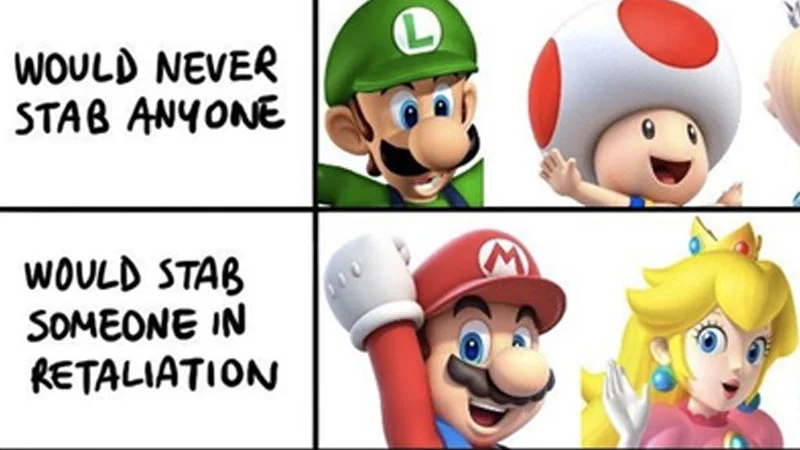
Character Stabbing Chart
Published November 1, 2026
Character Stabbing Chart is a mock alignment chart that sorts fictional and real figures by how likely they are to stab someone, and in what manner. Twitter user @eleanoot posted the first version on August 12, 2018, and within ten days Steven Universe, Pokémon, and Super Mario fans had each made franchise-specific editions. The Super Mario chart later earned over 41,000 upvotes on r/gaming in a single day that October.
Overview
Each Character Stabbing Chart has five horizontal rows that escalate in violent intent1. Rows read, from top to bottom: 'would never stab anyone,' 'would stab someone in retaliation,' yells 'I won't hesitate, bitch,' 'would stab without warning,' and 'would stab as a warning'6. Creators pick a cast, often from one franchise, and sort each character into whichever row fits their personality.
Posts tend to spark argument in the comments over who belongs where, with fans defending or contesting placements for borderline characters2. The deadpan tone of the row labels, especially the quoted 'I won't hesitate' line, carries most of the humor.
Gallery
Origin & Background
How It Spread
Timeline
2018-08-12
Twitter user @eleanoot posts the first known Character Stabbing Chart with cartoon characters sorted across five rows.
2018-08-12
Redditor Vecus adapts the chart for Steven Universe on r/stevenuniverse, reaching 3,000+ points by mid-October.
2018-08-13
Tumblr user superpokemondork posts a Pokémon edition, which gathers 6,700+ notes in two months.
2018-08-22
Tumblr user ghostgrimey publishes a Super Mario edition of the chart.
2018-10-08
Redditor dickfromaccounting reshares the Mario chart to r/gaming, where it earns 41,000+ upvotes and 500 comments in 24 hours.
How to Use This Meme
Typically, a creator grabs a blank chart template, picks a franchise or friend group, and sorts each character into one of the five stabbing-disposition rows. Creators tend to pair characters with the row that fits their personality more than their canonical actions. Captions often include tongue-in-cheek defenses of borderline placements.
Frequently Asked Questions
References (6)
- 1
- 2
- 3
- 4
- 5
- 6