Distance Tok

2024Photo slideshow / TikTok sound trendsemi-active

Also known as: DistanceTok

Distance Tok is a 2024 TikTok slideshow trend of blurry, zoomed-in photos of distant landmarks like the Chicago skyline, set to a slowed "Light Club" remix and mocking impossible visibility.

Distance Tok is a TikTok photo slideshow trend where creators show blurry, zoomed-in photos of far-off landmarks like city skylines and mountain ranges, set to a slowed remix of Blizzard's "Light Club," implying these structures are visible from seemingly impossible distances. The trend kicked off in early 2024 when a slideshow featuring the Chicago skyline photographed from across Lake Michigan went mega-viral, and it quickly spawned a wave of increasingly absurd parodies mocking the format's grand conclusions.

TL;DR

Distance Tok is a TikTok photo slideshow trend where creators show blurry, zoomed-in photos of far-off landmarks like city skylines and mountain ranges, set to a slowed remix of Blizzard's "Light Club," implying these structures are visible from seemingly impossible distances.

Overview

Distance Tok slideshows follow a specific formula: a series of zoomed-in, often grainy photos showing a distant object (a city skyline, a mountain peak, a landmark) that seems too far away to be visible, paired with the eerie, slowed-down "Light Club" sound that gives the whole thing a creepy, conspiratorial vibe2. The format plays on the awe of seeing something that "shouldn't" be visible due to distance, curvature, or atmospheric conditions. What started as a semi-serious astronomy and geography trend quickly became a magnet for parodies, as creators realized the dramatic music and blurry photos could make literally anything look profound.

The TikTok sound that defines Distance Tok traces back to May 6, 2022, when TikToker @xsfarchives posted a video using a slowed remix of Blizzard's "Light Club"2. Throughout 2023, creators on TikTok used this sound primarily for astronomy-themed photo slideshows pointing out celestial and atmospheric oddities.

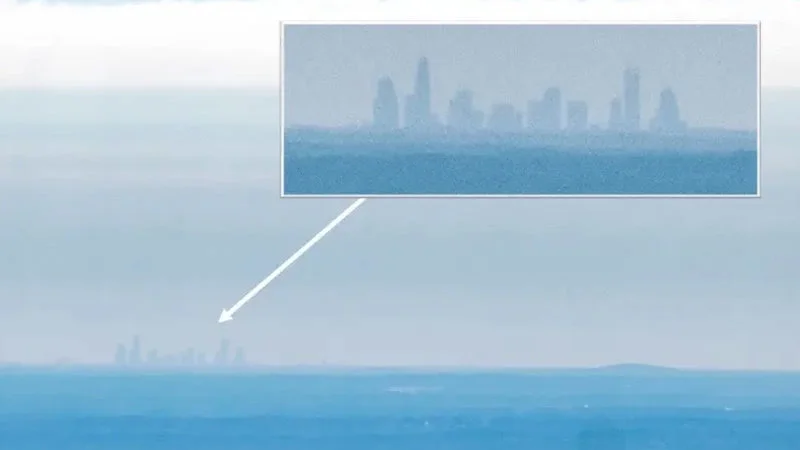
The trend's breakout moment came on February 26, 2024, when TikToker @carlosbarrero_ posted a slideshow set to the sound featuring photos of Chicago's skyline seen from across Lake Michigan2. The source photos were originally taken by photographer Joshua Nowicki in 2015 from Grand Mere State Park in Stevensville, Michigan, roughly 60 miles from Chicago1. Under normal conditions, the skyline should be hidden below the horizon at that distance due to Earth's curvature. What Nowicki captured was a superior mirage, where a temperature inversion near the lake surface bends light and projects an image of the skyline above where it actually sits1. The slideshow racked up approximately 15 million plays and 1.4 million likes over 16 days2.

Origin & Background

Platform
TikTok
Key People
@carlosbarrero_, @xsfarchives, Joshua Nowicki
Date
2024

The TikTok sound that defines Distance Tok traces back to May 6, 2022, when TikToker @xsfarchives posted a video using a slowed remix of Blizzard's "Light Club". Throughout 2023, creators on TikTok used this sound primarily for astronomy-themed photo slideshows pointing out celestial and atmospheric oddities.

The trend's breakout moment came on February 26, 2024, when TikToker @carlosbarrero_ posted a slideshow set to the sound featuring photos of Chicago's skyline seen from across Lake Michigan. The source photos were originally taken by photographer Joshua Nowicki in 2015 from Grand Mere State Park in Stevensville, Michigan, roughly 60 miles from Chicago. Under normal conditions, the skyline should be hidden below the horizon at that distance due to Earth's curvature. What Nowicki captured was a superior mirage, where a temperature inversion near the lake surface bends light and projects an image of the skyline above where it actually sits. The slideshow racked up approximately 15 million plays and 1.4 million likes over 16 days.

How It Spread

By early March 2024, earnest Distance Tok slideshows were popping up across TikTok. On March 2, 2024, @carlosbarrero_ followed up with a slideshow claiming to show Mount Everest visible from northern India, pulling in over 15.8 million plays and 3.2 million likes within 11 days. On March 10, TikToker @si_schools posted a video claiming to show the New York City skyline from vantage points in Maryland, Massachusetts, and Vermont, which picked up over 363,500 plays and 24,700 likes in three days.

The increasingly far-fetched claims started drawing skepticism, and parodies arrived almost immediately. On March 10, 2024, TikToker @jums300 posted a mock Distance Tok slideshow about seeing a Chick-fil-A location from across the road, earning over 2.2 million plays and 230,400 likes in three days. Two days later, @jj3948 pushed the joke further with a slideshow about a "View of Red Colored Pencil from Earbuds," which hit over 1.2 million plays and 138,900 likes in a single day.

The parody wave effectively split Distance Tok into two camps: sincere creators genuinely awed by atmospheric phenomena and long-distance sightlines, and comedians who realized the dramatic "Light Club" sound could make any mundane observation feel like a conspiracy revelation.

How to Use This Meme

A typical Distance Tok slideshow involves a few common steps. Start with a text overlay naming a distant landmark or object and the viewing location (the more improbable the distance, the better). Include several blurry, heavily zoomed photos that may or may not actually show the claimed object. Set the whole thing to the "Light Club" slowed remix sound. The tone is typically one of breathless discovery, as if you've uncovered something nobody else noticed.

For parody versions, creators pick something absurdly close or mundane (a fast food restaurant across the street, a pencil on a desk) and apply the same dramatic framing, using the contrast between the format's gravity and the subject's ordinariness for comedic effect.

Cultural Impact

The science behind the original Chicago skyline photos is real and well-documented. The mirage Nowicki captured is caused by a temperature inversion over Lake Michigan, where a layer of cool air near the surface bends light in a way that projects distant objects above the horizon. ABC57 covered Nowicki's photography and the atmospheric refraction science in detail, and the station returned to the dunes with Nowicki in April 2016 to document similar sightings, producing an Emmy-nominated piece called "Skyline Skepticism".

Distance Tok tapped into a broader appetite for "things that seem impossible but are real" content on TikTok, sitting alongside flat earth debunking videos and atmospheric science clips. The parody phase, though, is what gave the trend its staying power and cultural footprint, turning it into a recognizable format that could be applied to any subject.

Fun Facts

The Chicago skyline photos that fueled the viral breakout were almost a decade old by the time they went viral on TikTok, having been shot by Joshua Nowicki in 2015.

The same atmospheric conditions that create the Chicago mirage also cause "ground clutter" on weather radar, bending radar beams back toward Earth's surface in a visible ring pattern.

The parody versions of Distance Tok often outperformed the sincere ones in engagement, with @jums300's Chick-fil-A joke hitting 2.2 million plays compared to @si_schools' earnest New York skyline video at 363,500.

Derivatives & Variations

Mundane object parodies:

Slideshows applying the Distance Tok format to comically close or trivial subjects, like a Chick-fil-A across the road or a pencil on a desk[2].

Astronomy Distance Tok:

The original pre-viral use of the sound for genuine astronomy and atmospheric phenomena slideshows on TikTok in 2023[2].

Frequently Asked Questions

DistanceTok

2024Photo slideshow / TikTok sound trendsemi-active

Also known as: DistanceTok

Distance Tok is a 2024 TikTok slideshow trend of blurry, zoomed-in photos of distant landmarks like the Chicago skyline, set to a slowed "Light Club" remix and mocking impossible visibility.

Distance Tok is a TikTok photo slideshow trend where creators show blurry, zoomed-in photos of far-off landmarks like city skylines and mountain ranges, set to a slowed remix of Blizzard's "Light Club," implying these structures are visible from seemingly impossible distances. The trend kicked off in early 2024 when a slideshow featuring the Chicago skyline photographed from across Lake Michigan went mega-viral, and it quickly spawned a wave of increasingly absurd parodies mocking the format's grand conclusions.

TL;DR

Distance Tok is a TikTok photo slideshow trend where creators show blurry, zoomed-in photos of far-off landmarks like city skylines and mountain ranges, set to a slowed remix of Blizzard's "Light Club," implying these structures are visible from seemingly impossible distances.

Overview

Distance Tok slideshows follow a specific formula: a series of zoomed-in, often grainy photos showing a distant object (a city skyline, a mountain peak, a landmark) that seems too far away to be visible, paired with the eerie, slowed-down "Light Club" sound that gives the whole thing a creepy, conspiratorial vibe. The format plays on the awe of seeing something that "shouldn't" be visible due to distance, curvature, or atmospheric conditions. What started as a semi-serious astronomy and geography trend quickly became a magnet for parodies, as creators realized the dramatic music and blurry photos could make literally anything look profound.

The TikTok sound that defines Distance Tok traces back to May 6, 2022, when TikToker @xsfarchives posted a video using a slowed remix of Blizzard's "Light Club". Throughout 2023, creators on TikTok used this sound primarily for astronomy-themed photo slideshows pointing out celestial and atmospheric oddities.

The trend's breakout moment came on February 26, 2024, when TikToker @carlosbarrero_ posted a slideshow set to the sound featuring photos of Chicago's skyline seen from across Lake Michigan. The source photos were originally taken by photographer Joshua Nowicki in 2015 from Grand Mere State Park in Stevensville, Michigan, roughly 60 miles from Chicago. Under normal conditions, the skyline should be hidden below the horizon at that distance due to Earth's curvature. What Nowicki captured was a superior mirage, where a temperature inversion near the lake surface bends light and projects an image of the skyline above where it actually sits. The slideshow racked up approximately 15 million plays and 1.4 million likes over 16 days.

Origin & Background

Platform
TikTok
Key People
@carlosbarrero_, @xsfarchives, Joshua Nowicki
Date
2024

The TikTok sound that defines Distance Tok traces back to May 6, 2022, when TikToker @xsfarchives posted a video using a slowed remix of Blizzard's "Light Club". Throughout 2023, creators on TikTok used this sound primarily for astronomy-themed photo slideshows pointing out celestial and atmospheric oddities.

The trend's breakout moment came on February 26, 2024, when TikToker @carlosbarrero_ posted a slideshow set to the sound featuring photos of Chicago's skyline seen from across Lake Michigan. The source photos were originally taken by photographer Joshua Nowicki in 2015 from Grand Mere State Park in Stevensville, Michigan, roughly 60 miles from Chicago. Under normal conditions, the skyline should be hidden below the horizon at that distance due to Earth's curvature. What Nowicki captured was a superior mirage, where a temperature inversion near the lake surface bends light and projects an image of the skyline above where it actually sits. The slideshow racked up approximately 15 million plays and 1.4 million likes over 16 days.

How It Spread

By early March 2024, earnest Distance Tok slideshows were popping up across TikTok. On March 2, 2024, @carlosbarrero_ followed up with a slideshow claiming to show Mount Everest visible from northern India, pulling in over 15.8 million plays and 3.2 million likes within 11 days. On March 10, TikToker @si_schools posted a video claiming to show the New York City skyline from vantage points in Maryland, Massachusetts, and Vermont, which picked up over 363,500 plays and 24,700 likes in three days.

The increasingly far-fetched claims started drawing skepticism, and parodies arrived almost immediately. On March 10, 2024, TikToker @jums300 posted a mock Distance Tok slideshow about seeing a Chick-fil-A location from across the road, earning over 2.2 million plays and 230,400 likes in three days. Two days later, @jj3948 pushed the joke further with a slideshow about a "View of Red Colored Pencil from Earbuds," which hit over 1.2 million plays and 138,900 likes in a single day.

The parody wave effectively split Distance Tok into two camps: sincere creators genuinely awed by atmospheric phenomena and long-distance sightlines, and comedians who realized the dramatic "Light Club" sound could make any mundane observation feel like a conspiracy revelation.

How to Use This Meme

A typical Distance Tok slideshow involves a few common steps. Start with a text overlay naming a distant landmark or object and the viewing location (the more improbable the distance, the better). Include several blurry, heavily zoomed photos that may or may not actually show the claimed object. Set the whole thing to the "Light Club" slowed remix sound. The tone is typically one of breathless discovery, as if you've uncovered something nobody else noticed.

For parody versions, creators pick something absurdly close or mundane (a fast food restaurant across the street, a pencil on a desk) and apply the same dramatic framing, using the contrast between the format's gravity and the subject's ordinariness for comedic effect.

Cultural Impact

The science behind the original Chicago skyline photos is real and well-documented. The mirage Nowicki captured is caused by a temperature inversion over Lake Michigan, where a layer of cool air near the surface bends light in a way that projects distant objects above the horizon. ABC57 covered Nowicki's photography and the atmospheric refraction science in detail, and the station returned to the dunes with Nowicki in April 2016 to document similar sightings, producing an Emmy-nominated piece called "Skyline Skepticism".

Distance Tok tapped into a broader appetite for "things that seem impossible but are real" content on TikTok, sitting alongside flat earth debunking videos and atmospheric science clips. The parody phase, though, is what gave the trend its staying power and cultural footprint, turning it into a recognizable format that could be applied to any subject.

Fun Facts

The Chicago skyline photos that fueled the viral breakout were almost a decade old by the time they went viral on TikTok, having been shot by Joshua Nowicki in 2015.

The same atmospheric conditions that create the Chicago mirage also cause "ground clutter" on weather radar, bending radar beams back toward Earth's surface in a visible ring pattern.

The parody versions of Distance Tok often outperformed the sincere ones in engagement, with @jums300's Chick-fil-A joke hitting 2.2 million plays compared to @si_schools' earnest New York skyline video at 363,500.

Derivatives & Variations

Mundane object parodies:

Slideshows applying the Distance Tok format to comically close or trivial subjects, like a Chick-fil-A across the road or a pencil on a desk[2].

Astronomy Distance Tok:

The original pre-viral use of the sound for genuine astronomy and atmospheric phenomena slideshows on TikTok in 2023[2].

Frequently Asked Questions