Emergence First Page
Published November 22, 2026
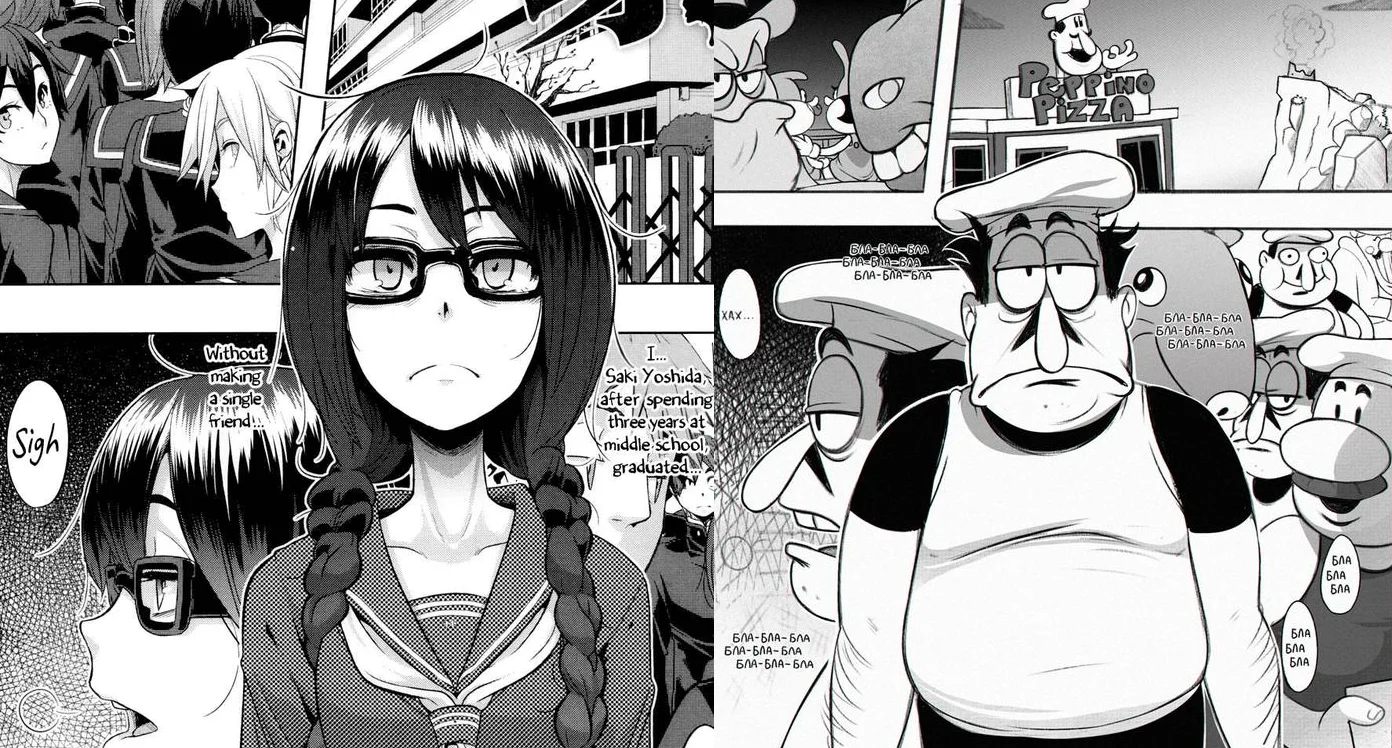
Emergence First Page / Saki Yoshida Redraws is a redraw format based on the opening page of ShinDol's 2013 hentai manga, where protagonist Saki Yoshida stares blankly while reflecting on her loneliness after graduation. Anime and VTuber artists swap Saki for other characters in the identical pose and braids, trading on shock from the infamous story that follows. By October 2022, Hololive fan redraws on Twitter were clearing 40,000 likes.
Overview
Each redraw copies the original page's composition, specifically Saki's stiff forward-facing stance, her twin braids, and the melancholy inner monologue, then substitutes another anime or VTuber character into the frame 1. The humor works through dark implication: anyone placed in Saki's position is tacitly dropped into the story that follows, which readers of Emergence know takes a horrifying turn 3.
Tone across versions stays deadpan to mirror the source page, and captions often lift Saki's lonely-graduate monologue verbatim. Artists who pick VTubers with existing braids, like Hololive's Ninomae Ina'nis, land the closest visual resemblance with the least redesign work 1. Posts seldom spell out the Emergence First Page reference, since the whole joke depends on readers recognizing the source.
Gallery
Origin & Background
How It Spread
Timeline
2013-07-26
ShinDol publishes the first chapter of Emergence, introducing Saki Yoshida on page one.
2018-08-18
An r/Animemes user posts a Megumin redraw, the earliest known meme edit of the first page.
2022-10-25
Twitter artist Koahri posts a Ninomae Ina'nis redraw that clears 40,000 likes.
2024-10-15
NaSteR posts a Kobo Kanaeru redraw that reaches 15,500 likes in under a month.
How to Use This Meme
Most redraws keep Saki's rigid frontal pose, her two long braids, and her flat gaze, then redesign only the face and clothing to match the chosen character. Captions often reuse Saki's original monologue about graduating alone, though character-specific jokes also work. Posts typically assume readers recognize the source page without explanation, which is where the shock-value payoff comes in.