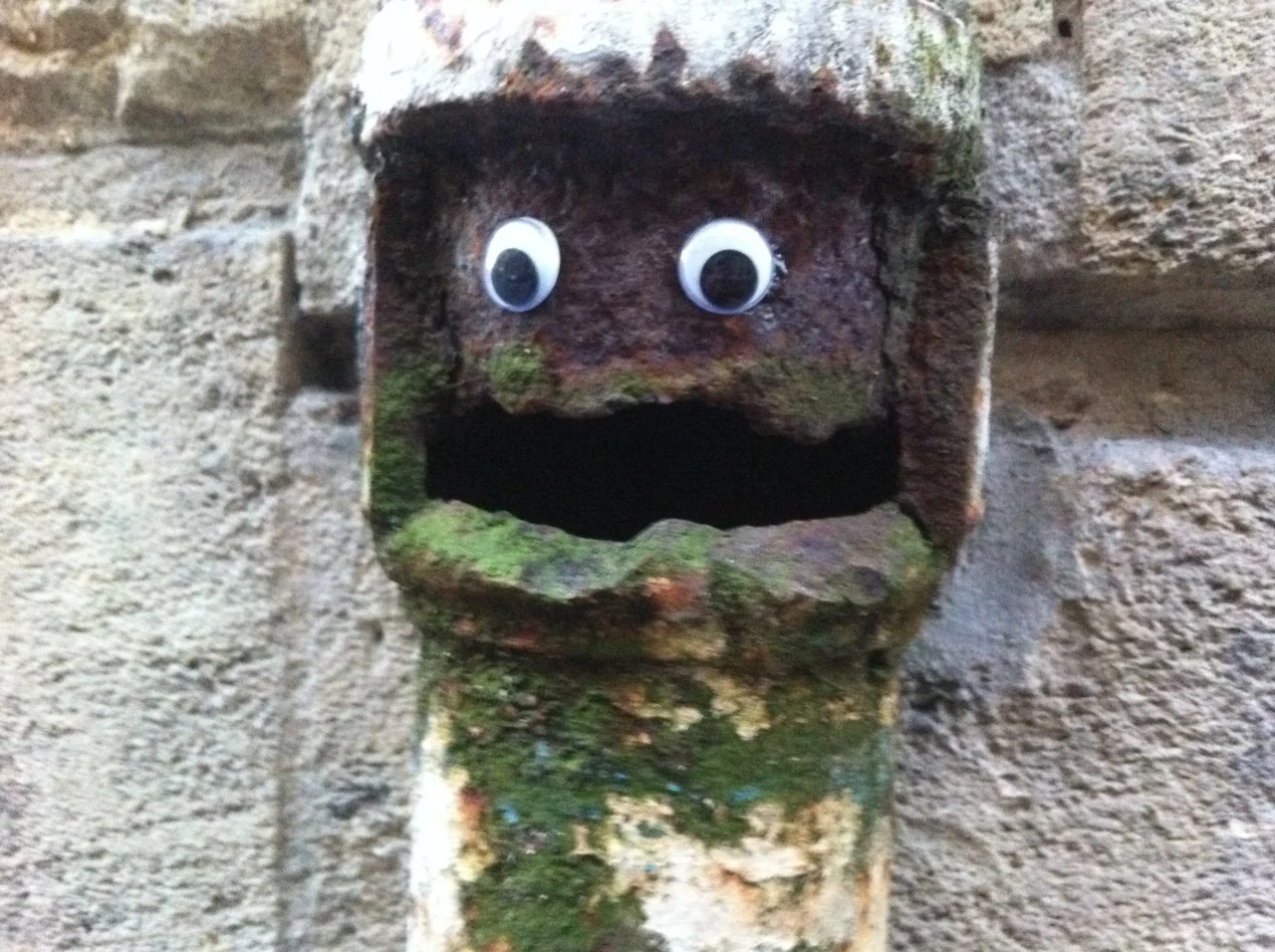
Eyebombing
Published August 20, 2026
Eyebombing is a street-art practice where people stick googly eyes on inanimate objects in public spaces, turning fire hydrants, mailboxes, and lamp posts into little faces. Two Danish artists coined the name in October 2011 when they registered eyebombing.com and set the rule that only wiggle eyes on public objects count.
Overview
Eyebombing is the act of sticking a pair of wiggle eyes on an inanimate object in a public space so the object appears to have a face. Fire hydrants, mailboxes, parking meters, drainpipes, and broken sidewalk fixtures are common targets, and photos of the results are shared online1.
The practice was formally defined and named by two Danish artists who set two strict rules for what counts: the eyes must be physical googly eyes (not drawn or Photoshopped), and the object must be found in public rather than staged at home2. That definition separates eyebombing from earlier googly-eye photo projects that used household junk3.
Gallery
Origin & Background
How It Spread
How to Use This Meme
The typical eyebomb involves buying a bag of self-adhesive wiggle eyes, walking around a neighborhood, and pressing a pair onto anything with two features that could pass as eye sockets. Common targets include bolts on fire hydrants, ventilation grilles, tree knots, and rusted padlocks. The convention set by eyebombing.com is that the eyes are physical, the surface is public, and the photograph is taken in place rather than staged2.
Frequently Asked Questions
References (6)
- 1
- 2
- 3
- 4
- 5
- 6