Gamergate
Published August 20, 2026
Gamergate is a 2014 online harassment campaign and hashtag movement that grew from allegations about indie developer Zoe Quinn and reframed itself as a fight over ethics in video game journalism. The controversy drove women out of the industry with death threats and shaped years of internet culture war debates.
Overview
Gamergate is the umbrella term for a 2014 online controversy and harassment campaign that grew out of a personal blog post about indie game developer Zoe Quinn and hardened into a Twitter movement claiming to fight for ethics in video game journalism2. Supporters gathered under the #GamerGate hashtag to demand disclosure of conflicts between reporters and developers; critics catalogued a coordinated pattern of doxxing and death threats aimed mostly at women in the industry2.
Gamergate bundles a set of linked events: the 'Zoe Post' allegations, threats that drove developer Brianna Wu and critic Anita Sarkeesian from their homes2, 4chan's ban on Gamergate discussion, and the leaked GameJournoPros mailing list showing gaming press coordinating on story approach3. The story played out on Twitter, YouTube, Reddit and 8chan across late 2014 and 2015, and became one of the defining internet culture war episodes of the mid-2010s.
Gallery
Origin & Background
How It Spread
Cultural Impact
Fun Facts
The single Kotaku article Nathan Grayson wrote about Quinn covered Game Jam, a Pepsi and Mountain Dew sponsored reality show that reportedly cost around $400,000 before developers walked off set6.
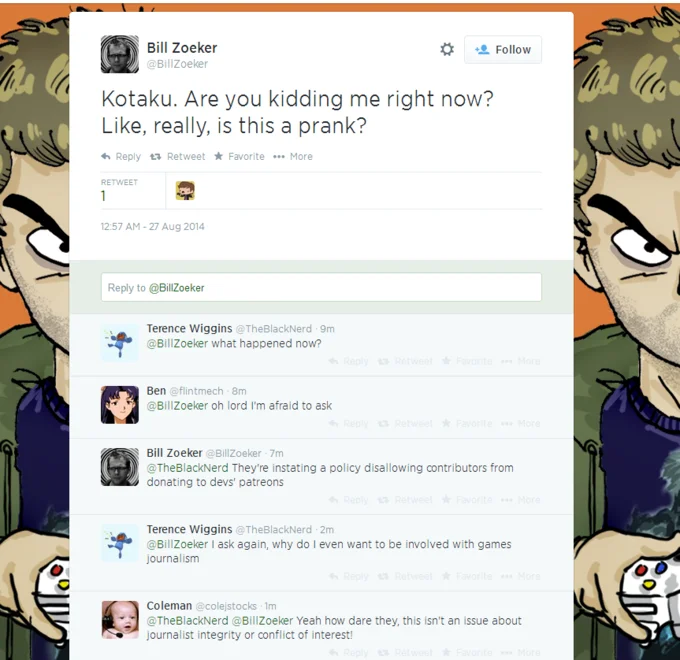
Kotaku's response to the pressure was a policy change: staff were banned from donating to developer Patreons and told to disclose any personal ties5.
The GameJournoPros leak included Ars Technica editor Kyle Orland floating a public letter of support signed by 'as many sympathetic journalists/developers as we can'3.
NPR reported that both Quinn and developer Brianna Wu left their homes over safety fears, and that the FBI said it would look into threats made during Gamergate2.
The Honey Badger Brigade's Calgary Expo eviction was framed by its own press release as an act of political discrimination, with the group later citing the Canadian Charter of Rights and Freedoms in a legal letter9.
Derivatives & Variations
Oppressed GamerGater, an image macro started by developer Brianna Wu in October 2014 as mockery of the movement and quickly reappropriated by 8chan users who flipped it back on her side[4].
#ExpoGate, the hashtag documenting the Honey Badger Brigade's April 2015 eviction from Calgary Expo[7].
Frequently Asked Questions
References (9)
- 1
- 2
- 3
- 4
- 5
- 6
- 7
- 8
- 9