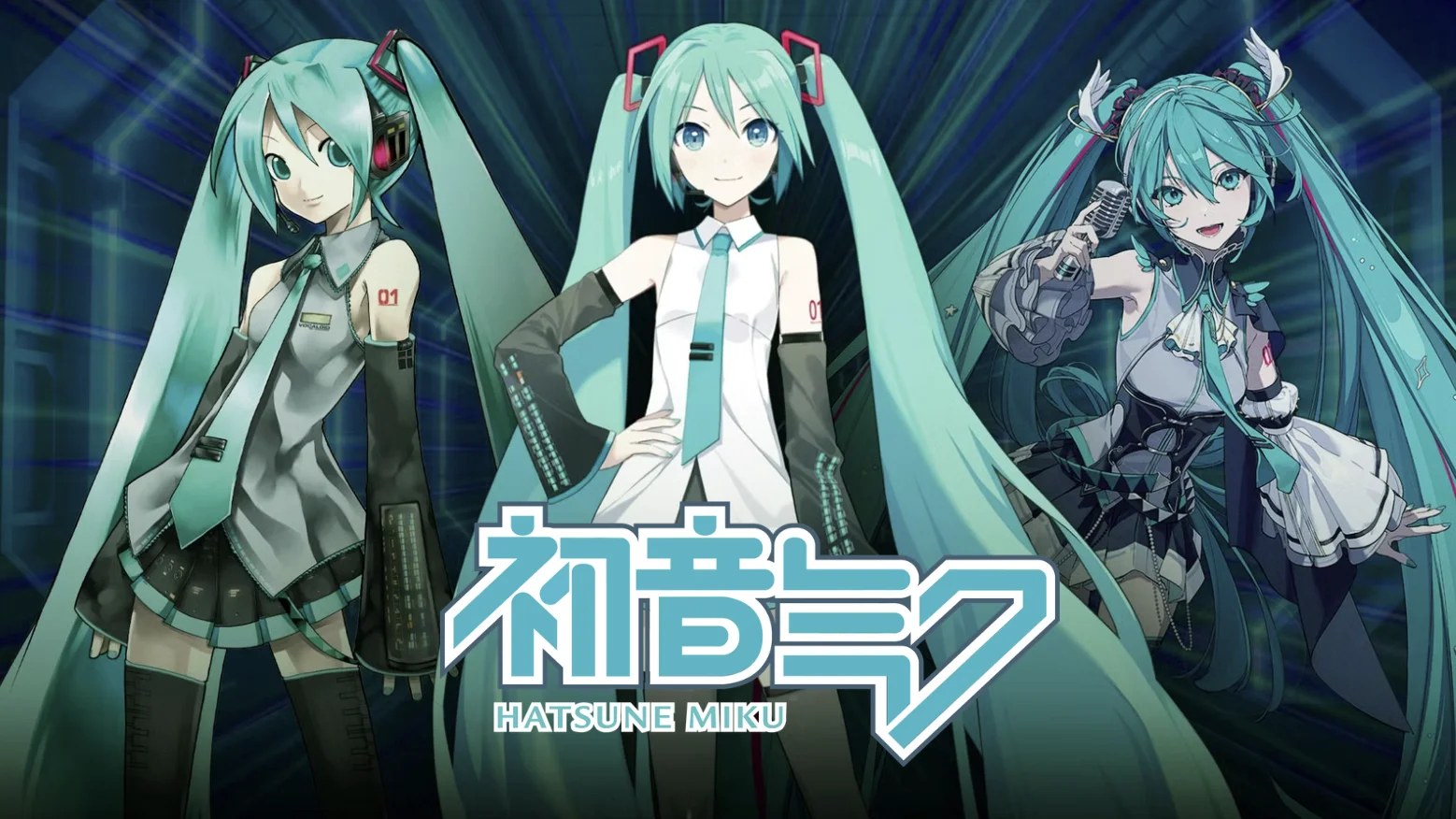
Hatsune Miku (初音ミク)
Published August 26, 2026
Hatsune Miku (初音ミク) is a Vocaloid singing synthesizer released by Crypton Future Media on August 31, 2007, paired with a turquoise-haired anime character that fans turned into what has been called the world's first virtual idol5. Built around Yamaha's VOCALOID2 engine and voice samples from Japanese voice actress Saki Fujita, the software outsold every other music production tool of its year and grew into a global pop star with holographic concerts, Louis Vuitton stage costumes, and a Late Show with David Letterman appearance.
Overview
Miku's software takes a melody and lyrics as input and outputs sung vocals using Yamaha's VOCALOID2 engine and voice samples from Japanese voice actress Saki Fujita1. The mascot herself was designed as a hybrid life form of human and electronic parts, with costume details lifted straight from Yamaha's 1980s DX-series FM synthesizer, a reference Crypton lobbied Yamaha to allow1. Her official settings were kept deliberately thin: a name, a height of 158 cm, a weight of 42 kg, and a handful of illustrations, leaving everything else blank for users to fill in1.
That blank canvas is what turned Hatsune Miku (初音ミク) from a 15,750 yen audio plugin into a shared internet character. Producers upload original songs to Nico Nico Douga and YouTube, illustrators draw her in new outfits, animators cut music videos, and other users remix the results1. Crypton project lead Hiroyuki Sasaki compared her to a faceless mannequin whose emotions live outside her, inside whoever happens to be making the current song (translated from Japanese)2. Fan-made derivatives, from the chibi leek-waving spinoff Hachune Miku to entire sub-characters, quickly outnumbered anything the company shipped itself2.
Gallery
Origin & Background
How It Spread
How to Use This Meme
Producing a Miku track means opening the Vocaloid editor, typing in a melody note by note along with hiragana or English lyrics, then tuning phrase attacks, vibrato, and note releases so the output stops sounding mechanical1. Most fan work is then posted to Nico Nico Douga, YouTube, or piapro so illustrators and animators can attach visuals2.
Cultural Impact
Fun Facts
Crypton first tried to hire about ten pop singers but was turned down over fears of vocal clones and unlicensed covers, which is how the project ended up with a voice actor instead1
Her outfit copies parts of Yamaha's 1980s DX-series digital synthesizer, and Crypton had to talk Yamaha's team into signing off on the reference1
Two months of daily 10-hour tuning sessions left the Crypton development staff saying they had grown an indescribable affection for the character (translated from Japanese)4
Crypton's biggest pre-launch worry was that Miku's voice would flood adult content sites, but Sasaki said the fan community self-regulated and pushed such work underground on its own2
Her published bio lists only a name, 158 cm height, and 42 kg weight, a gap Crypton kept intentionally so buyers could imagine the rest1
Derivatives & Variations
Hachune Miku, a chibi leek-waving spinoff Crypton credits with steering fan output toward gag content while pushing adult work underground[2]
Kagamine Rin and Len, the second Character Vocal Series release from December 2007, which shipped about 20,000 copies in its first year[2]
piapro, Crypton's official user content platform launched in December 2007, which crossed 100,000 members by mid-2008[2]
Vocaloid Opera THE END (2013), the first opera composed for a Vocaloid lead, staged by Keiichiro Shibuya with visuals by YKBX and set architecture by Shohei Shigematsu[7]
Hatsune Miku Expo (2014), a touring showcase of Miku-branded concerts and fan events that ran in Los Angeles and New York[6]
Frequently Asked Questions
References (7)
- 1
- 2
- 3
- 4
- 5
- 6
- 7