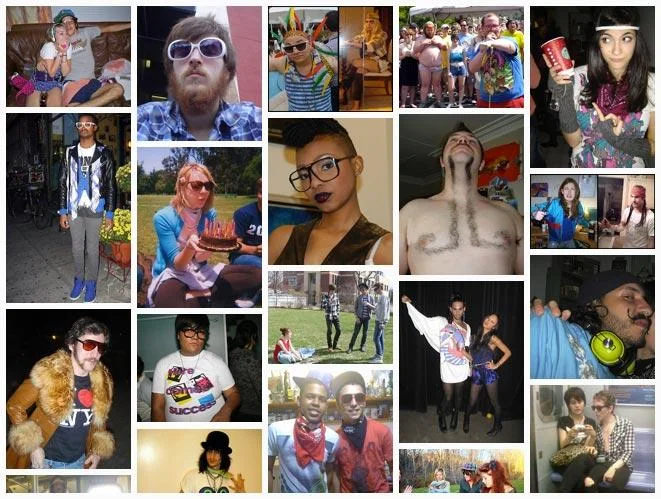
Hipster
Published August 28, 2026
Hipster is a stereotype label for young urbanites who signal alternative taste through indie music, thrift fashion, and studied nonconformity. The tag got scooped up from 1940s jazz slang, dusted off in Malcolm Gladwell's 2000 book, and by the mid-2000s it powered a wave of blogs, satires, and hate groups that made hipster-bashing one of the internet's favorite pastimes.
Overview
The Hipster stereotype is mostly a visual and behavioral shorthand rather than a single image or video: thick-framed glasses, thrifted flannel, ironic mustaches, cans of PBR, single-speed bikes, and coffee shops with exposed brick and reclaimed wood. Online, the joke almost always aims at the gap between how a hipster wants to be seen (independent, ahead of the curve) and how outsiders read them (mainstream cosplayers who all shop the same three Brooklyn blocks)5.
The format is old enough that it splits into eras. Early 2000s blogs like The Hipster Handbook played it mostly as ethnography, cataloguing slang and dress codes. By the late 2000s the tone hardened into pure mockery, with Tumblr accounts like Unhappy Hipsters pairing sparse design-magazine photography with captions about melancholy loft dwellers7, and Stuff Hipsters Hate turning a Brooklyn friend group's inside jokes into a book deal6. What ties every era together is a fixation on ironic consumption: the idea that the marketing wrapped around a product matters more to the wearer than the product itself5.
Origin & Background
How It Spread
How to Use This Meme
The Hipster label is usually deployed as an insult or a self-deprecating brag. A common convention is to pair it with a specific consumption habit that "used to be" cool: drinking PBR before it was ironic, listening to a band before they signed, moving to a neighborhood before it was expensive5. Image jokes typically stack visual markers like thick-framed glasses, a beanie in warm weather, tattoos, thrifted flannel, a fixed-gear bike, and an expensive pour-over coffee, often with a caption calling out the wearer's studied nonconformity. Self-identification is a paradox baked into the format: the running joke is that a "real" hipster would never admit to being one.
Cultural Impact
Fun Facts
A New York Times review once called Charles Bukowski's boozy alter ego "the hipster's mask for his softness"3
Chicago musician Wesley Willis sold his self-recorded CDs to a "goateed hipster" in Wicker Park's Double Door club, an early 1990s print sighting of the word in its modern Brooklyn-adjacent sense2
Unhappy Hipsters built an entire blog by adding gloomy captions to Dwell magazine photos of minimalist interiors7
Stuff Hipsters Hate's writers later spun the blog into books, including a murder mystery set in the same Bushwick lofts they wrote satire about6
Rolling Stone's 1998 review of Liz Phair's Whitechocolatespaceegg took a shot at "indie rockers... beefing up their sound with gratuitous electronic gadgetry," the exact aesthetic hipster critics later mocked4
Frequently Asked Questions
References (9)
- 1
- 2
- 3
- 4
- 5
- 6
- 7
- 8
- 9