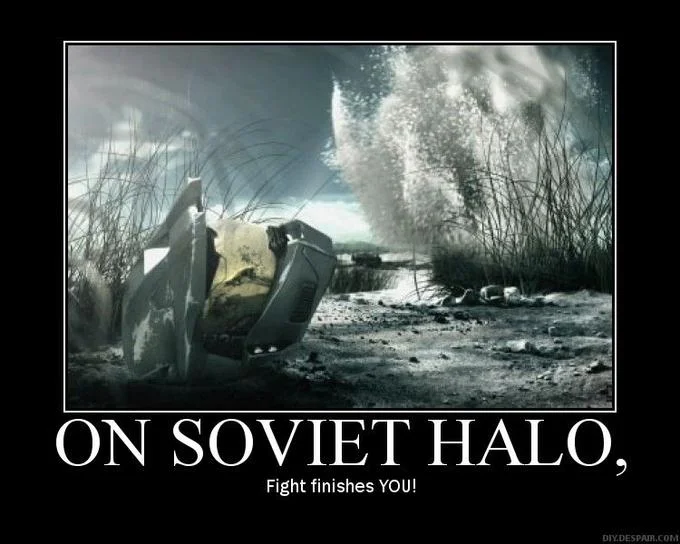
In Soviet Russia
Published July 27, 2026
Also known as: In Soviet Russia Meme · ISR
A classic joke format that reverses the subject and object of common phrases to create unexpected humor, typically involving Soviet or Russian cultural elements. The format became iconic in early online culture and holds as a staple of absurdist humor.
Overview
The format follows a strict inversion. A statement about American life is paired with a Russian version where the object of the sentence acts on the subject, as in 'In America, you watch television. In Soviet Russia, television watches you'2. Half the comedy sits in the surveillance-state punchline, the other half in the exaggerated fake-Russian delivery that Yakov Smirnoff turned into a career.
Online, the joke works precisely because it is corny. Users deploy the setup as a low-effort punchline generator, often ironically, mocking predictable humor while still writing the format sincerely. It moved from discussion boards into image macros and demotivational posters, and stayed a reference point in ironic meme circles long after mainstream comedy dropped the bit3.
The format's origins lie in Russian comedian Yakov Smirnoff, who used reversal-based humor extensively in his stand-up routines throughout the 1980s and 1990s. His comedic style capitalized on culture shock between Soviet and American society, with the reversal format serving as the primary vehicle for his jokes. When online culture emerged, early adopters, many of whom were college students and tech enthusiasts familiar with comedy, brought this format into online spaces. It became one of the first widely-recognized meme formats to emerge from real-world comedy and make the transition to the internet. The format's peak coincided with the rise of image macro memes and forum-based communities in the early 2000s.
Gallery
Origin & Background
The format traces back to Russian comedian Yakov Smirnoff's stand-up comedy routines in the 1980s-1990s, which frequently employed the reversal joke structure. The phrase 'In Soviet Russia' became shorthand for this comedic format when it migrated to internet culture in the 1990s.
How It Spread
How to Use This Meme
The template typically pairs two sentences. The first states a normal American activity following the pattern 'In America, subject verbs object.' The second flips it: 'In Soviet Russia, object verbs subject.' Common conventions include a Yakov Smirnoff-style faux Russian accent when the line is spoken aloud and an implied nod to Soviet surveillance or scarcity, though the funniest versions often abandon internal logic entirely2.
Create Your OwnCultural Impact
Fun Facts
Yakov Smirnoff's comedy albums and TV appearances brought the format to mainstream consciousness before the internet
The format was one of the earliest examples of user-generated joke templates that spread across the internet
Countless variations emerged involving other countries and ideologies using the reversal structure
The format inspired meta-jokes about the format itself, with people noting how overused it had become
It stays a go-to format for introducing people to internet meme history and meme structure
The In Soviet Russia meme has been shared millions of times across social media
You can create your own In Soviet Russia meme using free tools like Imgflip
In Soviet Russia first appeared in 1990
The meme is still remixed and adapted by creators
Brands and marketers have used In Soviet Russia in their campaigns
The meme is still remixed and adapted by creators
Derivatives & Variations
Country Reversal Memes
Variations using other countries instead of Soviet Russia
(1990)Ideology Reversals
Applying the structure to political and philosophical concepts
(1990)Technology Reversals
Using the format to comment on computers, internet, and modern technology
(1990)Frequently Asked Questions
References (15)
- 1In Soviet Russia, Wikipediaencyclopedia
- 2In Soviet Russia on Redditcommunity
- 3In Soviet Russia, Know Your Memeencyclopedia
- 4
- 5
- 6
- 7
- 8
- 9
- 10In Soviet Russia, Memedroidcommunity
- 11In Soviet Russia, 9GAGcommunity
- 12
- 13
- 14
- 15