Looney Tunes

1930animated seriesclassic

Published September 5, 2026

Looney Tunes / Merrie Melodies is Warner Bros.' animated short comedy series that started in the 1930s and introduced Bugs Bunny, Porky Pig, Daffy Duck, and the catchphrase "What's up, doc?"1. The name is so embedded in pop culture that "looney tunes" turned into slang for someone acting silly or unhinged.

Overview

The Looney Tunes / Merrie Melodies shorts built humor on rapid-fire slapstick, fourth-wall breaks, and one-upmanship between recurring characters like Bugs Bunny, Elmer Fudd, Daffy Duck, and Porky Pig3. The house style was shaped across the 1940s and 50s by directors including Chuck Jones, Friz Freleng, Bob Clampett, Robert McKimson, and Frank Tashlin, whose gag timing became a template that later animators openly copied2.

Beyond the shorts themselves, the name works as slang. Calling someone "looney tunes" means they are acting silly, weird, or unhinged, a usage documented on Urban Dictionary alongside the cartoon definition5. Bugs Bunny's line "What's up, doc?" is quoted so often that it functions on its own as a callback to the series6.

Origin & Background

Platform
Theatrical shorts (Warner Bros.)
Creator
Hugh Harman and Rudolf Ising
Date
1930

The first pilot short in the franchise was Bosko, the Talk-Ink Kid, produced in 1929 by Hugh Harman and Rudolf Ising, though it was not publicly released until Cartoon Network aired it on Toonheads: The Lost Cartoons in 20004. Warner Bros. launched the series to compete with Walt Disney's Mickey Mouse shorts and to showcase songs from the studio's music library2.

Bugs Bunny, who became the face of the brand, first appeared as an unnamed rabbit in Porky's Hare Hunt in 1938, voiced by Mel Blanc4. The character was redesigned and formally introduced in A Wild Hare in 1940, the short where he first delivered "What's up, doc?" while being chased by Elmer Fudd1.

How It Spread

The shorts ran theatrically for decades and later moved into Saturday morning TV blocks, which kept the characters in front of new audiences well past the original theatrical run4. Cartoon Network and Boomerang reruns pushed the franchise through the 1990s and 2000s, and vintage uploads on YouTube gave the shorts a second life online1.

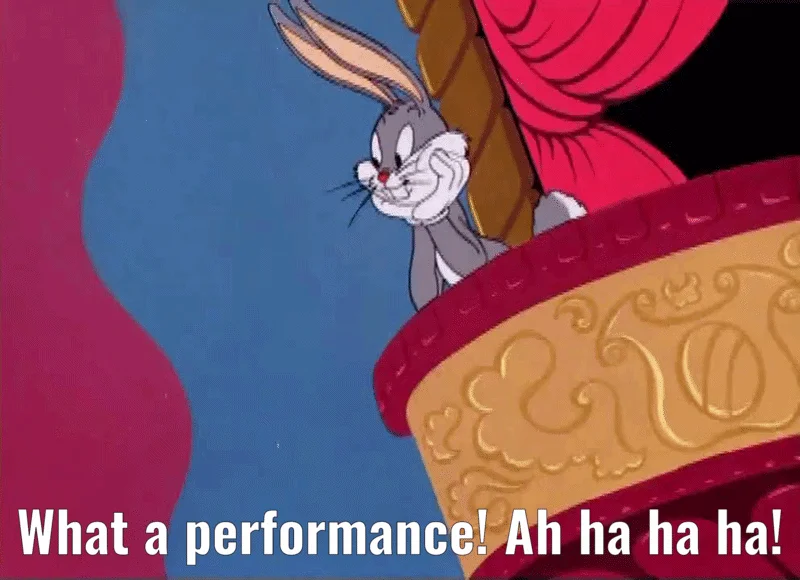
On the internet, Looney Tunes filtered into meme culture through reaction images, gif loops, and quotes. Urban Dictionary entries treat the name both as shorthand for the cartoons and as an insult for erratic behavior5. Clips from A Wild Hare and Porky's Hare Hunt still circulate as source material for Bugs Bunny reaction memes3.

How to Use This Meme

Calling something or someone "looney tunes" typically signals cartoonish craziness or unpredictable behavior5. Fans also quote lines like "What's up, doc?" or the sign-off "That's all, folks!" to reference the series directly1.

Frequently Asked Questions