Pansexuality
Published September 20, 2026
Pansexuality, also known as Omnisexuality, is a sexual orientation defined by attraction to people of any sex or gender identity. Coined in 1917 as a critique of Freud and rebuilt online through a 2003 Urban Dictionary entry, a 2011 Tumblr pride flag and celebrity coming-outs, the label grew into one of the most-searched LGBTQ identity terms of the 2010s.
Overview
Pansexual writers describe attraction that isn't sorted by gender at all, explicitly including nonbinary, intersex and trans people rather than folding them into a two-option model1. That framing pushes the label past the male-and-female split that bisexuality is often read as covering, and the difference between the two terms has been argued over in pan and bi spaces for more than a decade1.
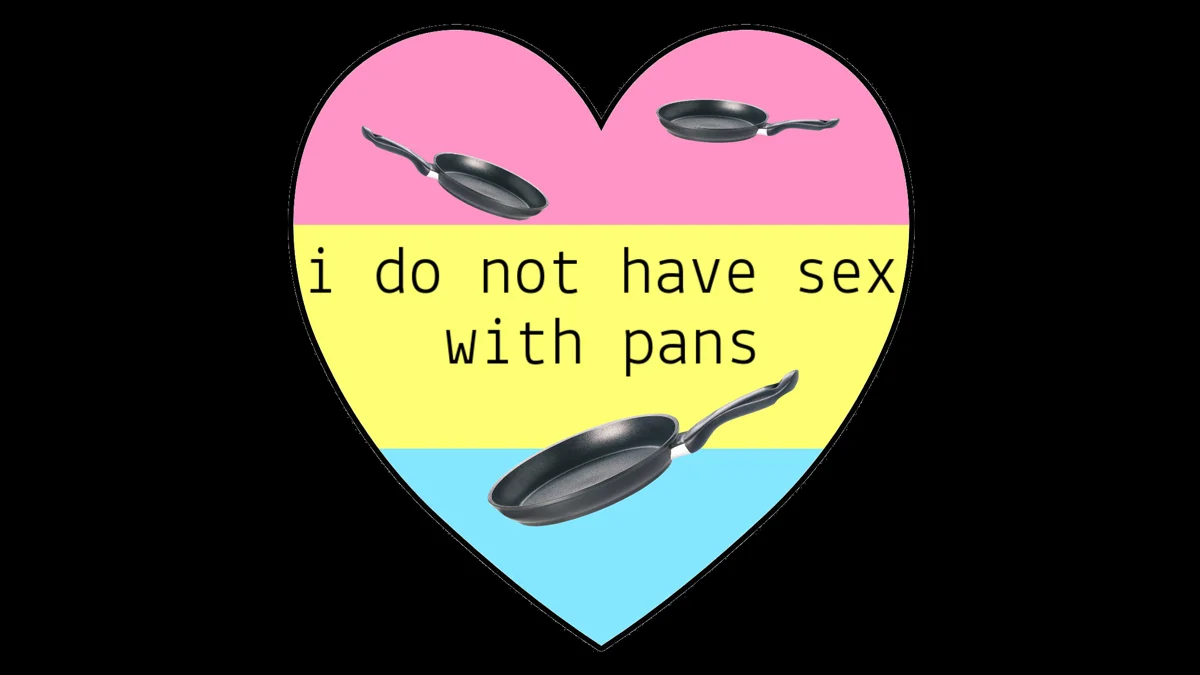
The identity comes with its own visual shorthand. The pansexual pride flag, three horizontal stripes of pink, yellow and blue posted to Tumblr in 2011 by user JustJasper, became the standard graphic used in profile bios and pride events3. A running joke about pansexuals being attracted to frying pans grew alongside the label, half self-deprecating from pan users and half a lazy jab from critics, and it now shows up as a shared in-community gag.
Celebrity coming-outs pushed the word further into pop-culture press. Educator Laci Green identified as pansexual in a 2012 YouTube video2 and vlogger Jim Chapman published an explainer in 20144, both helping wider audiences hear the term before Miley Cyrus's 2015 Elle interview made it front-page material.
Origin & Background
How It Spread
Timeline
How to Use This Meme
People use "pansexual" mainly as a self-identifier in bios, dating profiles and coming-out posts, typically paired with the pink-yellow-blue pride flag and standard pronoun tags. Coming-out posts and videos are a common convention, such as Morgan Marsh's 2014 clip filming her father's reaction5. Inside pan communities, jokes about being "attracted to frying pans" often show up as a shared bit.