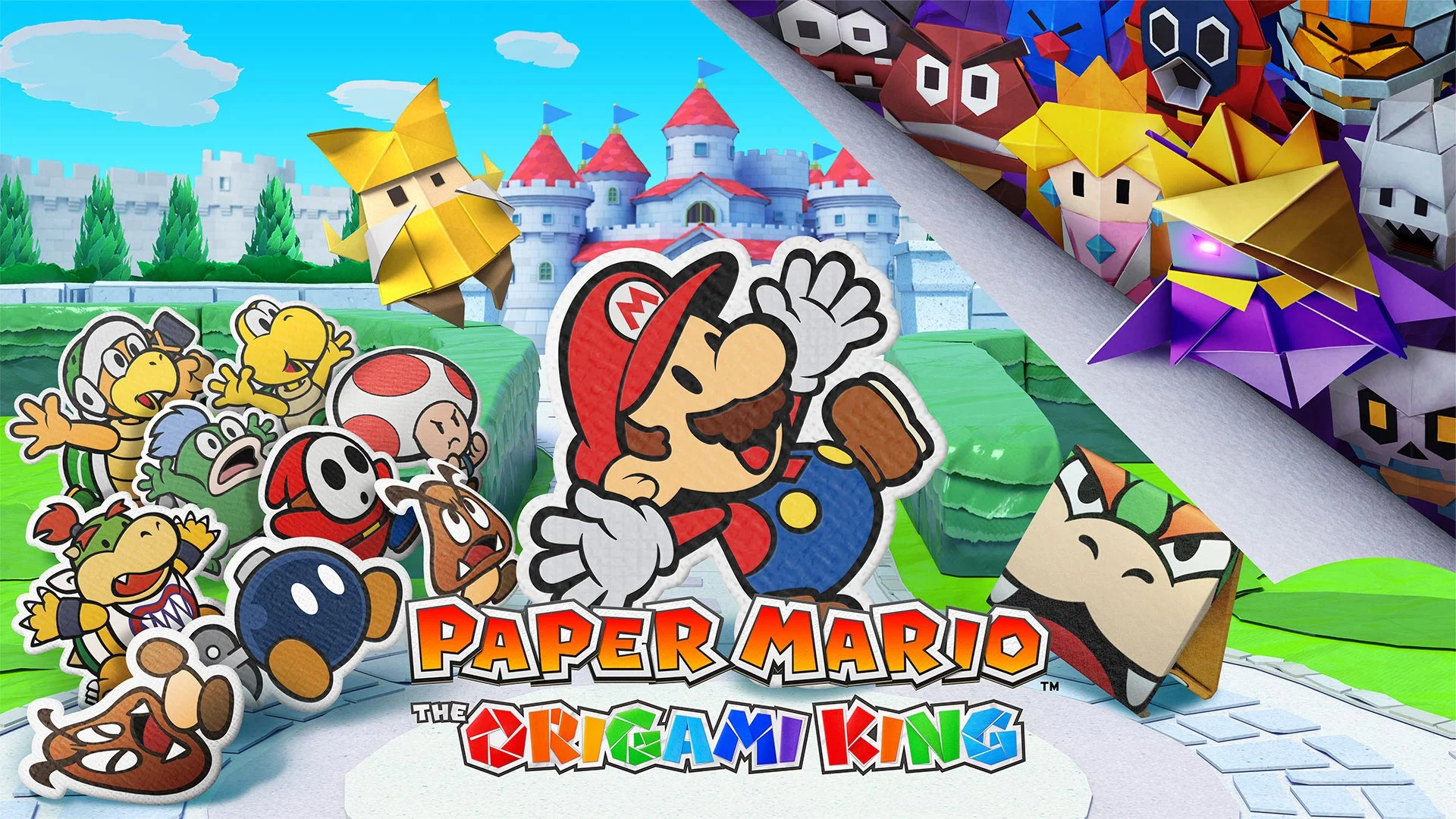
Paper Mario
Published September 20, 2026
Paper Mario is Nintendo's pop-up book styled role-playing game series, launched in 2000 by developer Intelligent Systems on the Nintendo 64. Born from the wreckage of a canceled Super Mario RPG sequel after Square left Nintendo, the franchise grew into six mainline entries and a spinoff, giving fans a fiercely defended favorite in The Thousand-Year Door.
Overview
The Paper Mario games mix turn-based JRPG combat with Super Mario platforming, drawing characters as flat 2D sprites that flip sideways to reveal their paper edge when they turn1. Battles use timed button presses on Mario's jump and hammer, while a rotating cast of partner characters supplies field abilities and combat moves1. Every entry loops back to the same premise, with Mario chasing Bowser and a mystical relic, from the Star Rod in the original to the folded paper crown of The Origami King3.
Later games broke that template. Super Paper Mario dropped RPG battles for sidescrolling action with dimension-flipping puzzles3. Sticker Star and Color Splash swapped experience points for consumable stickers and paint cards3. The Origami King introduced a ring-battle grid where the player rotates concentric circles to line up enemies before the attack lands3.
Gallery
Origin & Background
How It Spread
Timeline
How to Use This Meme
The series template runs on a party system, where the player picks one active partner whose ability (sneaking, breaking blocks, sailing across gaps) unlocks progress in the overworld and adds a support move in battle1. Combat is turn-based with an action-command layer, so timing a button press mid-jump boosts damage or blocks incoming hits3.
Frequently Asked Questions
References (8)
- 1
- 2
- 3
- 4
- 5
- 6
- 7
- 8