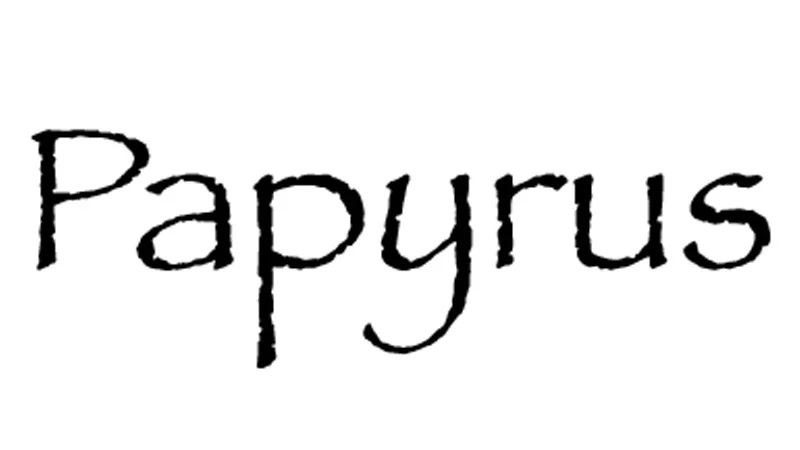
Papyrus (Font)
Published September 20, 2026
Papyrus is a 1982 typeface designed by Chris Costello to look like hand-lettered script on ancient papyrus paper, and it went on to earn a reputation as one of the internet's most mocked fonts. Its use in the 2009 blockbuster Avatar sparked years of ridicule, a viral Saturday Night Live sketch with Ryan Gosling, and eventually a second life in the 2020s as the signature look of Hood Irony meme accounts on Instagram.
Overview
The Papyrus story splits into two eras: a graphic-design punchline that peaked with 2009's Avatar, and a genuine meme comeback that started with a hidden Instagram Stories font and grew into a signature look for Hood Irony pages. Papyrus has high-contrast, calligraphic edges and slightly ragged strokes meant to evoke ink on ancient paper, which is exactly why it turned up on spa doors, small-zoo signs, and cheap pamphlets across the 90s and 2000s1. Once critics started keeping tabs on those sightings, the font became shorthand for lazy design.
The comedy comes from the mismatch between what the font wants to be (elegant, timeless, faintly mystical) and where it usually ends up: menus, real-estate flyers, and a nearly three-hour James Cameron blockbuster. Gizmodo summed up the general mood by calling Papyrus "the second most hated font of all time (because nothing is worse than Comic Sans)"2. By 2023, Instagram meme accounts flipped the joke on its head: instead of pointing at Papyrus in the wild, they started deliberately setting their own edits in it, making the font itself the punchline3.
Gallery
Origin & Background
How It Spread
Timeline
Frequently Asked Questions
References (8)
- 1
- 2
- 3
- 4
- 5
- 6
- 7
- 8