Quarantine Day X

2020Image macro / reaction image seriesdead

Also known as: Day X of Quarantine · Quarantine Day

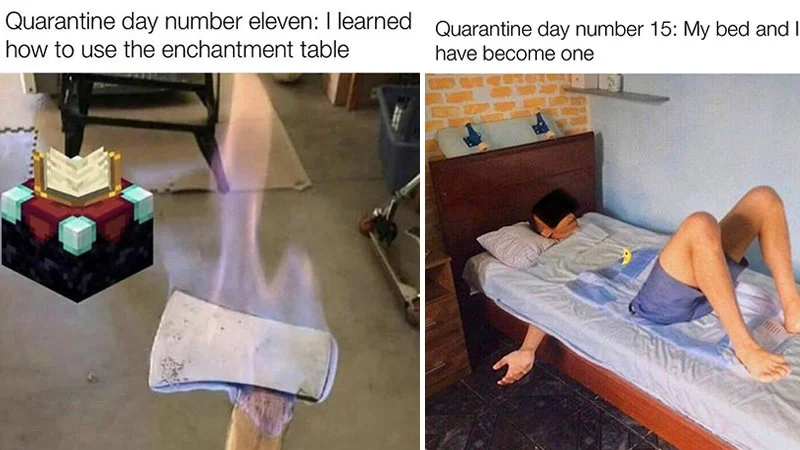
Quarantine Day X is a March 2020 image-macro meme where users captioned photos with "Quarantine Day [number]:" to document increasingly absurd pandemic lockdown behavior.

Quarantine Day X is a meme format from March 2020 where people captioned photos or videos with "Quarantine Day [number]:" followed by increasingly bizarre behavior supposedly caused by pandemic lockdown boredom. The format spread across Twitter, Reddit, and Facebook during the early weeks of COVID-19 stay-at-home orders, with posts showing everything from removing strawberry seeds with tweezers to performing surgery on oranges1. The meme became one of the defining humor formats of early pandemic internet culture, functioning as a collective coping mechanism for the psychological toll of self-isolation2.

TL;DR

Quarantine Day X is a meme format from March 2020 where people captioned photos or videos with "Quarantine Day [number]:" followed by increasingly bizarre behavior supposedly caused by pandemic lockdown boredom.

Overview

Quarantine Day X follows a simple formula: a text caption reading "Quarantine Day [number]:" paired with an image or video depicting absurd, mundane, or mentally deteriorating behavior. The number in the caption implies how many days the poster has spent in lockdown, with higher numbers typically corresponding to stranger activities3. Common themes include performing pointlessly detailed tasks, losing grip on social norms, talking to inanimate objects, and physical appearance declining over time1.

The format worked because it was instantly relatable. Millions of people worldwide were stuck at home at the same time, experiencing the same slow erosion of routine and sanity. The meme gave that shared experience a punchline.

The format emerged in early March 2020 as COVID-19 lockdowns began rolling out globally. On March 14, 2020, Twitter user @iamTannenbaum posted one of the earliest viral examples, showing a comparison between "day 1" and "day 2" of quarantine3. The tweet picked up over 6,400 likes and 778 retweets, establishing the basic template that thousands of others would follow.

The timing was key. Governments across the world were issuing stay-at-home orders during the second week of March, and the format gave people a ready-made structure to joke about their new reality.

Origin & Background

Platform
Twitter
Creator
@iamTannenbaum
Date
2020

The format emerged in early March 2020 as COVID-19 lockdowns began rolling out globally. On March 14, 2020, Twitter user @iamTannenbaum posted one of the earliest viral examples, showing a comparison between "day 1" and "day 2" of quarantine. The tweet picked up over 6,400 likes and 778 retweets, establishing the basic template that thousands of others would follow.

The timing was key. Governments across the world were issuing stay-at-home orders during the second week of March, and the format gave people a ready-made structure to joke about their new reality.

How It Spread

Within days of the first posts, Quarantine Day X exploded across every major platform. On March 19, 2020, Twitter user @tweeterpaul_ posted a variant showing someone meticulously removing every seed from a strawberry using tweezers, earning over 5,500 likes. That same day, *Jeopardy!* champion James Holzhauer joined in with a photo of two Lego heads mounted on poles, captioned "Quarantine day 7: we start warning the other lego minis to stay out of our village," which pulled in over 2,000 likes.

Reddit picked up the format almost immediately. On March 20, 2020, user tsiikiiko posted to r/BlackPeopleTwitter with a photo series of someone performing delicate "surgery" on an orange and cradling the pieces like newborns. The post hit 15,200 upvotes. A day later, user \_NotSlimShady shared an image on r/memes of someone recreating Will Smith's isolation scenes from *I Am Legend* during their own quarantine, which became one of the format's biggest hits at nearly 53,000 upvotes.

Facebook saw massive engagement as well. On March 28, 2020, the meme page 475K posted a curated collection of Quarantine Day X images that racked up 21,000 likes, 145,000 shares, and 5,700 comments. The same day, Redditor Cheeto49 posted another version to r/dankmemes that earned 21,600 upvotes.

Academic researchers later documented how the meme spread internationally, noting that "many users around the world exploited internet memes as a digital source of humour to cope with the negative psychological effects of quarantining".

How to Use This Meme

The format is straightforward:

1

Write "Quarantine Day [number]:" as the caption. Higher numbers suggest more time spent in isolation and typically correspond to weirder behavior.

2

Pair it with a photo or video showing an absurd, bored, or unhinged activity. Common choices include talking to household objects, performing needlessly precise tasks, re-enacting movie scenes solo, or showing physical transformation (weight gain, wild hair, unwashed appearance).

3

For series posts, show a progression. "Day 1" might be calm and organized, while "Day 15" shows complete chaos.

Cultural Impact

Quarantine Day X was one of several meme formats that helped define the humor of early pandemic internet culture. Academic study of these memes found that quarantine humor centered around "quarantine day comparisons focusing on the perceived effects of home quarantines on physical and mental well-being, quarantine routines, and physical appearance predictions at the end of quarantine".

Researchers analyzing COVID-19 memes noted that intertextuality was "a productive resource establishing connections between quarantine practices and popular texts," and that the humor relied on "anomalous juxtapositions of different texts" where "incongruity resolution is largely dependent on the combined meanings of verbal and visual components". In plain terms: the jokes worked because people mashed up their boring quarantine reality with dramatic movie scenes or absurd activities, and you needed both the caption and the image to get the punchline.

The format had a built-in expiration date. As lockdowns eased and quarantine stopped being a novel experience, the meme naturally faded. By mid-2020, most people had moved on to other pandemic humor formats. But for those first few weeks of March and April 2020, Quarantine Day X was everywhere.

Fun Facts

The *I Am Legend* recreation post on r/memes was one of the format's top performers, with nearly 53,000 upvotes and a Reddit award.

James Holzhauer, famous for his record-breaking *Jeopardy!* streak, was one of many celebrities who participated in the format.

The Facebook collection posted by page 475K on March 28 was shared 145,000 times, making it one of the most widely distributed single posts in the format's history.

Academic researchers published peer-reviewed studies specifically analyzing Quarantine Day X and similar pandemic memes, examining how verbal and visual elements combine to create humor in crisis situations.

The format's peak lasted roughly two weeks (mid-to-late March 2020), making it one of the most compressed viral cycles for a major meme format.

Frequently Asked Questions

QuarantineDayX

2020Image macro / reaction image seriesdead

Also known as: Day X of Quarantine · Quarantine Day

Quarantine Day X is a March 2020 image-macro meme where users captioned photos with "Quarantine Day [number]:" to document increasingly absurd pandemic lockdown behavior.

Quarantine Day X is a meme format from March 2020 where people captioned photos or videos with "Quarantine Day [number]:" followed by increasingly bizarre behavior supposedly caused by pandemic lockdown boredom. The format spread across Twitter, Reddit, and Facebook during the early weeks of COVID-19 stay-at-home orders, with posts showing everything from removing strawberry seeds with tweezers to performing surgery on oranges. The meme became one of the defining humor formats of early pandemic internet culture, functioning as a collective coping mechanism for the psychological toll of self-isolation.

TL;DR

Quarantine Day X is a meme format from March 2020 where people captioned photos or videos with "Quarantine Day [number]:" followed by increasingly bizarre behavior supposedly caused by pandemic lockdown boredom.

Overview

Quarantine Day X follows a simple formula: a text caption reading "Quarantine Day [number]:" paired with an image or video depicting absurd, mundane, or mentally deteriorating behavior. The number in the caption implies how many days the poster has spent in lockdown, with higher numbers typically corresponding to stranger activities. Common themes include performing pointlessly detailed tasks, losing grip on social norms, talking to inanimate objects, and physical appearance declining over time.

The format worked because it was instantly relatable. Millions of people worldwide were stuck at home at the same time, experiencing the same slow erosion of routine and sanity. The meme gave that shared experience a punchline.

The format emerged in early March 2020 as COVID-19 lockdowns began rolling out globally. On March 14, 2020, Twitter user @iamTannenbaum posted one of the earliest viral examples, showing a comparison between "day 1" and "day 2" of quarantine. The tweet picked up over 6,400 likes and 778 retweets, establishing the basic template that thousands of others would follow.

The timing was key. Governments across the world were issuing stay-at-home orders during the second week of March, and the format gave people a ready-made structure to joke about their new reality.

Origin & Background

Platform
Twitter
Creator
@iamTannenbaum
Date
2020

The format emerged in early March 2020 as COVID-19 lockdowns began rolling out globally. On March 14, 2020, Twitter user @iamTannenbaum posted one of the earliest viral examples, showing a comparison between "day 1" and "day 2" of quarantine. The tweet picked up over 6,400 likes and 778 retweets, establishing the basic template that thousands of others would follow.

The timing was key. Governments across the world were issuing stay-at-home orders during the second week of March, and the format gave people a ready-made structure to joke about their new reality.

How It Spread

Within days of the first posts, Quarantine Day X exploded across every major platform. On March 19, 2020, Twitter user @tweeterpaul_ posted a variant showing someone meticulously removing every seed from a strawberry using tweezers, earning over 5,500 likes. That same day, *Jeopardy!* champion James Holzhauer joined in with a photo of two Lego heads mounted on poles, captioned "Quarantine day 7: we start warning the other lego minis to stay out of our village," which pulled in over 2,000 likes.

Reddit picked up the format almost immediately. On March 20, 2020, user tsiikiiko posted to r/BlackPeopleTwitter with a photo series of someone performing delicate "surgery" on an orange and cradling the pieces like newborns. The post hit 15,200 upvotes. A day later, user \_NotSlimShady shared an image on r/memes of someone recreating Will Smith's isolation scenes from *I Am Legend* during their own quarantine, which became one of the format's biggest hits at nearly 53,000 upvotes.

Facebook saw massive engagement as well. On March 28, 2020, the meme page 475K posted a curated collection of Quarantine Day X images that racked up 21,000 likes, 145,000 shares, and 5,700 comments. The same day, Redditor Cheeto49 posted another version to r/dankmemes that earned 21,600 upvotes.

Academic researchers later documented how the meme spread internationally, noting that "many users around the world exploited internet memes as a digital source of humour to cope with the negative psychological effects of quarantining".

How to Use This Meme

The format is straightforward:

1

Write "Quarantine Day [number]:" as the caption. Higher numbers suggest more time spent in isolation and typically correspond to weirder behavior.

2

Pair it with a photo or video showing an absurd, bored, or unhinged activity. Common choices include talking to household objects, performing needlessly precise tasks, re-enacting movie scenes solo, or showing physical transformation (weight gain, wild hair, unwashed appearance).

3

For series posts, show a progression. "Day 1" might be calm and organized, while "Day 15" shows complete chaos.

Cultural Impact

Quarantine Day X was one of several meme formats that helped define the humor of early pandemic internet culture. Academic study of these memes found that quarantine humor centered around "quarantine day comparisons focusing on the perceived effects of home quarantines on physical and mental well-being, quarantine routines, and physical appearance predictions at the end of quarantine".

Researchers analyzing COVID-19 memes noted that intertextuality was "a productive resource establishing connections between quarantine practices and popular texts," and that the humor relied on "anomalous juxtapositions of different texts" where "incongruity resolution is largely dependent on the combined meanings of verbal and visual components". In plain terms: the jokes worked because people mashed up their boring quarantine reality with dramatic movie scenes or absurd activities, and you needed both the caption and the image to get the punchline.

The format had a built-in expiration date. As lockdowns eased and quarantine stopped being a novel experience, the meme naturally faded. By mid-2020, most people had moved on to other pandemic humor formats. But for those first few weeks of March and April 2020, Quarantine Day X was everywhere.

Fun Facts

The *I Am Legend* recreation post on r/memes was one of the format's top performers, with nearly 53,000 upvotes and a Reddit award.

James Holzhauer, famous for his record-breaking *Jeopardy!* streak, was one of many celebrities who participated in the format.

The Facebook collection posted by page 475K on March 28 was shared 145,000 times, making it one of the most widely distributed single posts in the format's history.

Academic researchers published peer-reviewed studies specifically analyzing Quarantine Day X and similar pandemic memes, examining how verbal and visual elements combine to create humor in crisis situations.

The format's peak lasted roughly two weeks (mid-to-late March 2020), making it one of the most compressed viral cycles for a major meme format.

Frequently Asked Questions